 From smart meters to GenAI decision support
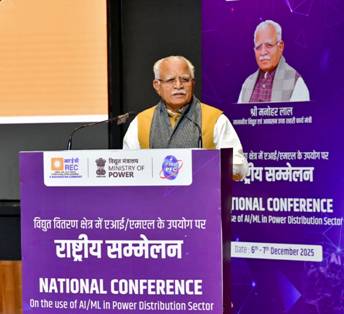
Addressing participants, Shri Manohar Lal listed concrete AI/ML use cases that the power sector must adopt: smart meter analytics for revenue protection, digital twins for asset management, predictive maintenance, theft-detection intelligence, appliance-level consumer insights, automated outage prediction and GenAI-based decision support. He said these tools can both raise the consumer experience and improve DISCOM operational efficiency.
Consumer engagement as a cornerstone
The Minister stressed that successful technology adoption depends on active consumer engagement. He urged utilities and solution providers to address misinformation, build trust and involve consumers in pilots so households understand the benefits of smart metering and energy-management tools. According to Shri Lal, empowered customers will help reduce losses and improve demand response outcomes.
Collaboration across the ecosystem
Shri Lal lauded industry, state utilities, innovators, academia and technology partners for participating in the conference. He praised pilots presented by DISCOMs, Advanced Metering Infrastructure Service Providers (AMISPs), Technology Solution Providers (TSPs) and Home Automation Solution Providers (HASPs) and urged DISCOMs to partner with the broader ecosystem to scale successful solutions.
Government focus on scale and security
Secretary, Ministry of Power Shri Pankaj Agarwal reiterated the government’s commitment to deepen digitalisation in distribution. He highlighted the need for capacity building, secure data-sharing frameworks and interoperability standards so innovative solutions can be scaled nationwide while protecting consumer privacy and system integrity.
National call for innovation: winners named
The conference involved a countrywide call for innovation that drew 195 applications from DISCOMs, AMISPs, TSPs and HASPs. After initial screening, 51 solutions were shortlisted for jury evaluation. Winners announced include TNPDCL (Tamil Nadu) and MP East (Madhya Pradesh) in the DISCOM category; Tata Power and Apraava Energy among AMISPs; Pravah and Flock Energy in the TSP category; and Tata Power in the Home Automation category.
The winning solutions ranged from smart meter analytics for revenue protection and precise consumer indexing to unified real-time grid intelligence, behavioural demand response systems and consumer appliance analytics showing a mix of revenue protection, demand flexibility and customer-facing innovation.
Recognition and scale-up
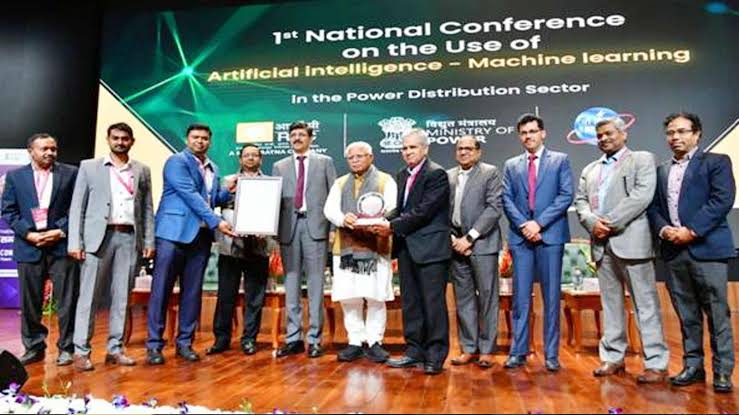
Winners presented live demonstrations to the jury and delegates on the second day. Shri Manohar Lal felicitated the teams and encouraged rapid scale-up across states, saying validated pilots should be moved quickly into wider deployments so benefits accrue to consumers and DISCOMs alike.
New tools: STELLAR and an ISGF handbook
The Minister launched STELLAR (Strategic Expansion for Long Term Load Adequacy and Resilience), a planning tool developed by the Central Electricity Authority (CEA) designed to help DISCOMs conduct resource adequacy studies and prepare long-term plans. India Smart Grid Forum (ISGF) also unveiled a comprehensive Handbook on AI, ML, AR/VR and Robotics Solutions and a Roadmap for Electric Utilities that lists 174 use cases, including 45 from Indian utilities.
What this means for DISCOMs and consumers
The combined push policy, toolkits and on-ground pilots signals a move from isolated experiments to system-level digital transformation. By using AI/ML for theft detection, outage prevention and demand forecasting, DISCOMs can reduce commercial and technical losses, optimise procurement costs and reinvest savings into infrastructure and service quality. For consumers, smarter networks promise fewer outages, clearer billing and appliances that automate energy savings.
Next steps and policy priorities
Officials said the Ministry will focus on interoperability standards, secure data-sharing protocols and training to build a skilled workforce across utilities. Continued collaboration with the private sector and academia, along with timely policy support, will be essential to convert promising pilots into nationwide deployments.