 Multiple Inspections as Visibility Fails to Improve
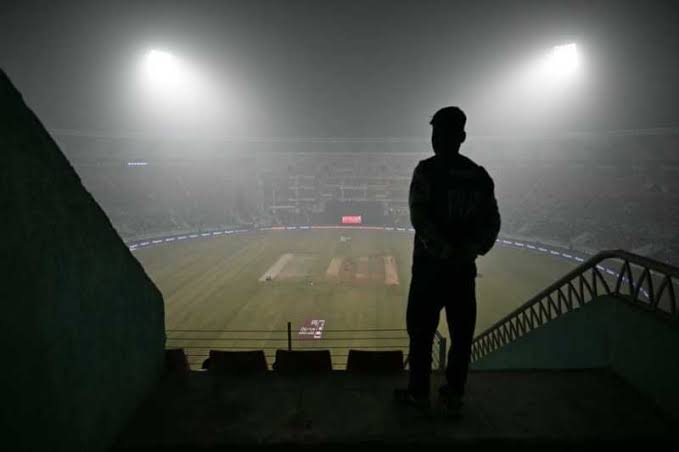
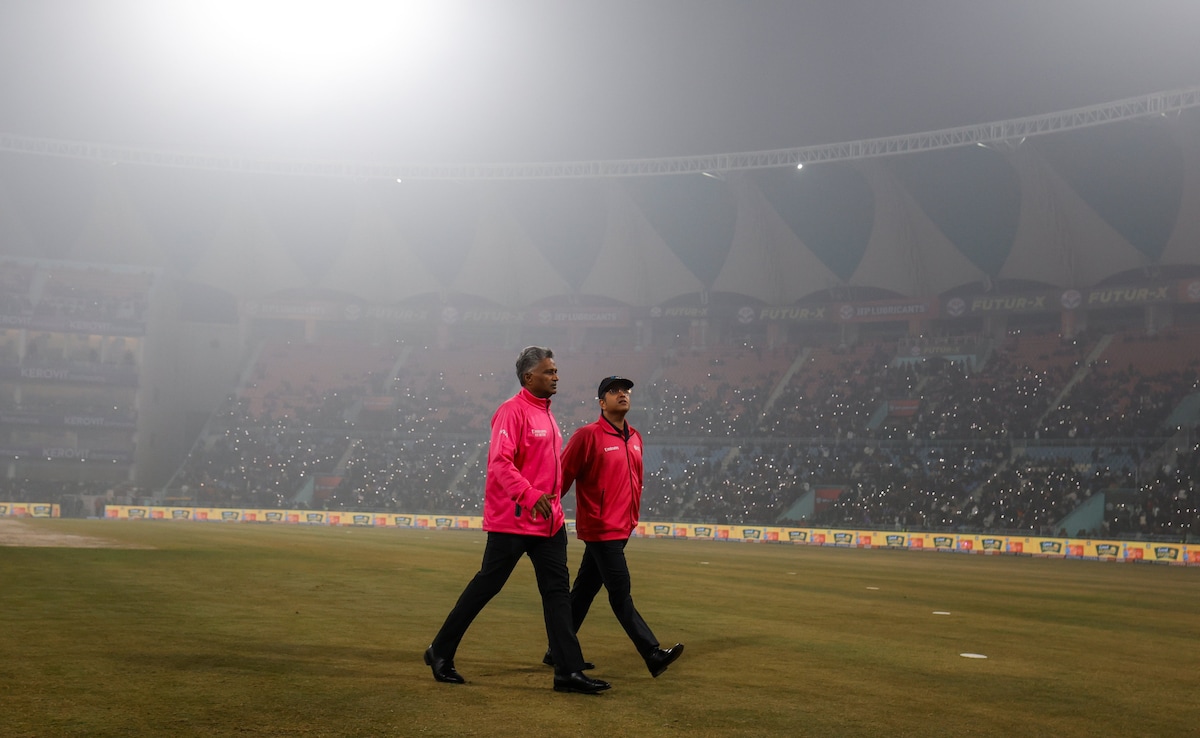
A thick blanket of fog engulfed the stadium well before the scheduled toss time, forcing officials to delay proceedings. The first inspection took place at 6:50 pm, with umpires assessing visibility from the pitch and boundary. However, the fog showed no signs of lifting, leading to successive inspections at 7:30 pm, 8:00 pm, 8:30 pm, and 9:00 pm.
During one of the inspections, an umpire stood near the pitch while his colleague walked towards the boundary rope to check whether the ball and fielders could be seen clearly. With floodlights reflecting heavily off the fog, visibility tests consistently failed. The pitch remained under covers throughout, protected by a large cloth rug.
Final Call Taken After Senior Officials Step In
The decisive inspection was conducted at 9:25 pm, following discussions between the on-field umpires and senior BCCI official Rajiv Shukla, who was present at the venue. With visibility worsening instead of improving, the umpires officially abandoned the contest in the interest of player safety.
Spectators who had waited patiently in chilly conditions were left disappointed, while both teams remained confined to their dressing rooms for most of the evening.
Series Situation and Team Updates
With the match abandoned, India continue to lead the five-match T20I series 2–1. South Africa now have just one opportunity left to level the series when the teams meet for the fifth and final T20I at the Narendra Modi Stadium in Ahmedabad.
Earlier in the day, the India Meteorological Department had issued an orange alert for very dense fog across several districts of Uttar Pradesh, a forecast that ultimately proved accurate. Notably, this was the first time Lucknow hosted a T20I in December.
India also suffered a setback before the match, with vice-captain Shubman Gill ruled out due to a foot injury sustained during training. Sanju Samson was expected to replace him in the playing XI, though the change remained academic following the abandonment.
Questions Raised Over Winter Scheduling
The washout triggered widespread criticism from fans and former players, many of whom questioned the logic behind scheduling night matches in northern venues during winter months. Fog, smog and low temperatures have frequently disrupted cricket in cities such as Delhi, Lucknow, Chandigarh and Dharamshala during this time of year.
Cricket experts have warned that delaying play often worsens the situation, as fog typically thickens later in the evening. Calls are growing louder for the BCCI to reassess venue selection and scheduling patterns to avoid repeat disruptions.
Focus Shifts to Ahmedabad Finale
All eyes will now be on Ahmedabad, where clearer weather conditions are expected to provide a fitting conclusion to the series. Both teams will hope for uninterrupted play as South Africa look to draw level and India aim to seal the series on home soil.
The Lucknow abandonment serves as a reminder of how environmental conditions can significantly impact international sport, reinforcing the need for climate-aware scheduling in the future.