 High-Level Participation Marks the Inauguration
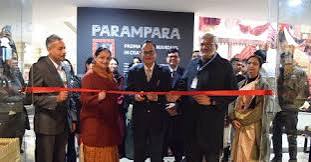
The inauguration ceremony was attended by several senior officials from the Government of India and the science and textiles ecosystem. Dr. Parvinder Maini, Scientific Secretary at the Office of the Principal Scientific Adviser (OPSA), was present alongside Prof. Sood.
Other dignitaries included Dr. M. Beena, Development Commissioner (Handlooms), and Ms. Padmini Singla, Joint Secretary (Fibre), from the Ministry of Textiles. Senior officials such as Shri Ashok Malhotra, Mission Director of the National Technical Textiles Mission, Shri Anuj Ojha, Joint Development Commissioner (Handicrafts), and Dr. Avinash Agarwal, Director of IIT Jodhpur, also attended the event.
Celebrating Craft, Technology and Design
The Kalanubhaav exhibition presents a curated selection of artisanal products that reflect both traditional craftsmanship and contemporary innovation. A key highlight is Kalaanubhav.in, a digital platform developed to enhance the visibility and market reach of artisan products.
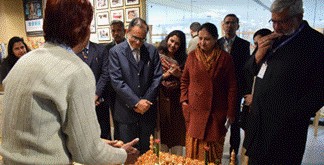
Visitors can also experience immersive initiatives such as the Dharohar phygital museum, which combines physical displays with digital tools to tell the stories of indigenous crafts in engaging ways.
The Kunj: A Platform for Artisans
The Kunj, where the exhibition is being held, is a first-of-its-kind initiative aimed at empowering artisans by providing them with sustained market access. The space has been envisioned as a bridge between traditional craft communities and modern consumers.
Aligned with the Government of India’s vision of taking artisans “from gaon to global,” The Kunj seeks to elevate India’s craft sector through curated exhibitions, design support and digital outreach.
PSA Highlights Collaborative Model
Addressing visitors at the inauguration, Prof. Ajay Kumar Sood invited the public to explore the exhibition and appreciate the fusion of heritage and innovation. He noted that the collaboration demonstrates how ministries and Science & Technology clusters can work together to preserve cultural heritage while expanding economic opportunities.
He also encouraged stakeholders to scale up such initiatives across regions, emphasising that technology-enabled interventions can play a transformative role in strengthening artisan livelihoods.
JCKIC’s Role in Artisan Empowerment
JCKIC focuses on supporting artisan communities through science and technology-enabled solutions. Its initiatives include design registration, Geographical Indication (GI) support, and the use of advanced tools such as augmented and virtual reality to document and promote crafts.
The Ministry of Textiles has allocated a dedicated space at The Kunj for JCKIC, enabling sustained showcasing of Rajasthan’s traditional and technology-enabled craft innovations.
S&T Clusters Driving Regional Innovation
The exhibition also highlights the broader Science & Technology Clusters initiative, a flagship programme of the Office of the Principal Scientific Adviser launched in 2020 on the recommendations of the Prime Minister’s Science, Technology and Innovation Advisory Council.
Currently, eight S&T Clusters are operational across India, including JCKIC in Jodhpur. These clusters adopt a consortium-based, demand-driven approach to address region-specific challenges through coordinated innovation aligned with national priorities such as Atmanirbhar Bharat.