 Dr. Michael V. Williams of Mount Carmel School highlighted the contributions of the Christian community in education and healthcare, stressing the enduring impact of minority institutions beyond their own communities. Md. Tauhid Alam from Jamia Hamdard emphasized inclusive governance aligned with the vision of Sabka Saath, Sabka Vishwas, Sabka Vikas. Prof. Harbans Singh of Khalsa College drew lessons from Gurubani, advocating coexistence and collective prosperity as lived traditions.Addressing challenges faced by Buddhist and Jain communities, Acharya Yeshi Phuntsok and Dr. Indu Jain called for responsive action from the NCM. Veteran Parsi leader Shri Marazban Nariman Zaiwalla detailed various minority-focused programmes, positioning the NCM as a bridge connecting India’s diverse communities to shared civic engagement.
During an open session, participants from various minority communities raised questions ranging from Minority Certificates to the implementation of government schemes. This active engagement reflected a commitment to dialogue and collaborative problem-solving, highlighting the importance of citizen participation in governance.
Ms. Alka Upadhyaya, Secretary of NCM, elaborated on government initiatives aimed at the upliftment of minority communities, covering areas such as education, skill development, financial support, and empowerment. She emphasized that these schemes are guided by the principle of leaving no community behind, ensuring equal opportunities for all.
She also reaffirmed NCM’s role in safeguarding the rights of religious minorities, addressing their issues, and facilitating continuous engagement with State Governments and stakeholders. Since its inception, the Commission has been pivotal in fostering an inclusive and equitable society, reflecting India’s commitment to diversity, social harmony, and progress.
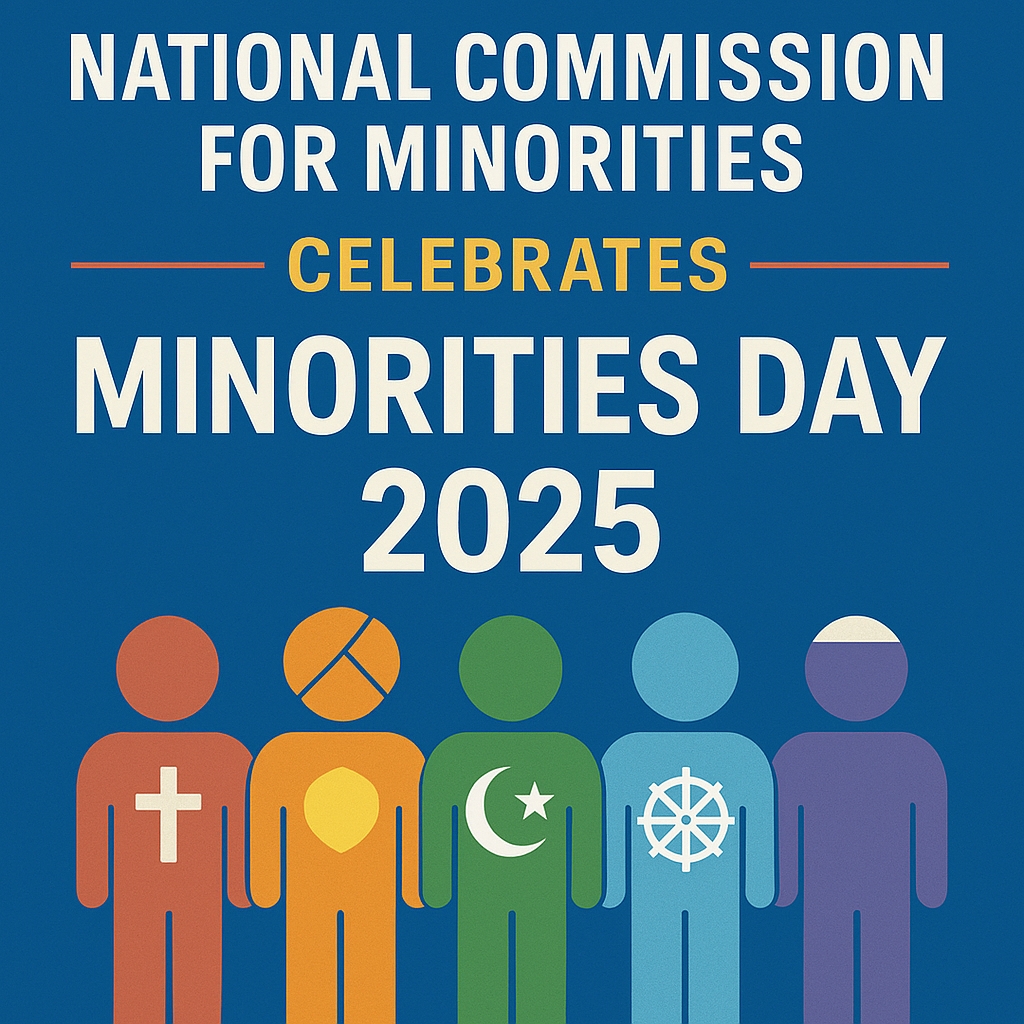
The Minorities Day celebration highlighted the ongoing efforts of the National Commission for Minorities to create a society where every community has a voice, access to opportunities, and a platform for their aspirations to be fulfilled. Continuous dialogue, policy initiatives, and community engagement remain central to achieving these goals.