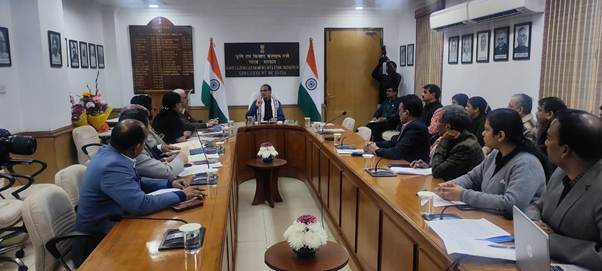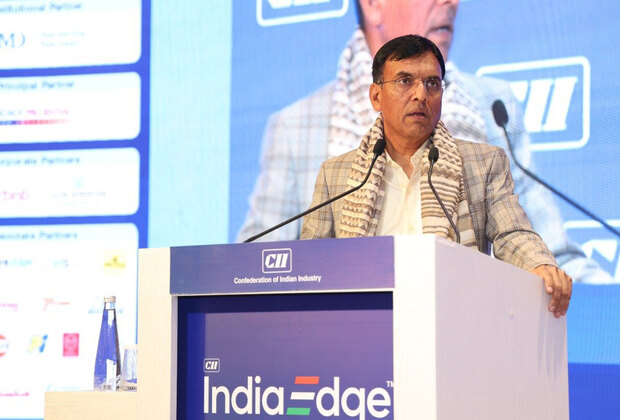
“The Indian sports ecosystem is now in its youth, and it is the need of the hour to strengthen it in every possible way so that it has a bright future,” Dr. Mandaviya said, underlining that all approvals were driven by an athlete-centric approach.
Focus on World-Class Training Infrastructure
Among the most significant approvals is the procurement of the Poligras Paris GT Zero hockey turf for the SAI National Sports Science Centre (NSSC) in Bengaluru. The facility serves as the primary training hub for India’s men’s and women’s national hockey teams, as well as their ‘A’ squads.
The new turf is expected to provide playing conditions aligned with international competition standards, giving Indian hockey players a vital edge during training and preparation for major global tournaments.
Modernisation at Karni Singh Shooting Range
The Governing Body also approved the replacement of existing electronic shooting targets with advanced laser target systems at the Karni Singh Shooting Range (KSSR) in Delhi. KSSR is regarded as the training backbone for India’s elite and emerging shooters.
The shift to laser technology is aimed at improving training efficiency, precision analysis, and safety, while also reducing maintenance requirements associated with conventional electronic systems.
Multipurpose Halls to Boost Athlete Development
In another major step, the SAI Governing Body approved the construction of three multipurpose halls at SAI National Centres of Excellence (NCOE) Chhatrapati Sambhajinagar, SAI Netaji Subhas National Institute of Sports (NSNIS) Patiala, and SAI Lakshmibai National College of Physical Education (LNCPE) Trivandrum.
The facility at Chhatrapati Sambhajinagar will include a weather-proof boxing training zone, a dedicated strength and conditioning area, and indoor courts for volleyball and badminton, enabling comprehensive year-round training.
At NSNIS Patiala, the new hall is expected to significantly enhance indoor training capacity while integrating sports science, conditioning, performance analysis, and recovery support under one roof.
LNCPE Trivandrum, India’s premier academic and high-performance training institution, will also benefit from a multipurpose hall designed to support uninterrupted academic and athletic activities throughout the year.
New Synthetic Tracks in Jalpaiguri and Bhopal
The Governing Body further approved the construction of a 400-metre, eight-lane synthetic athletics track at the SAI Sports Training Centre (STC) in Jalpaiguri, West Bengal. Despite limited infrastructure, the centre has consistently produced strong results at regional and national competitions.
Recognising its growing importance as an athletics hub, the committee noted that the new track would help unlock the centre’s full potential.
Additionally, a new synthetic track was approved for SAI Regional Centre, Bhopal, which caters to athletes across multiple disciplines and has produced international-level performers, including Olympians.
Athlete-Centric Vision for Global Success
Dr. Mandaviya reiterated that the infrastructure push is closely linked to India’s long-term medal ambitions at events such as the Commonwealth Games and the Olympic Games. He stressed that providing athletes with the best possible facilities is essential for sustained international success.
The approvals reflect the government’s broader commitment to building a robust sports ecosystem that nurtures young talent and supports elite athletes through world-class infrastructure.