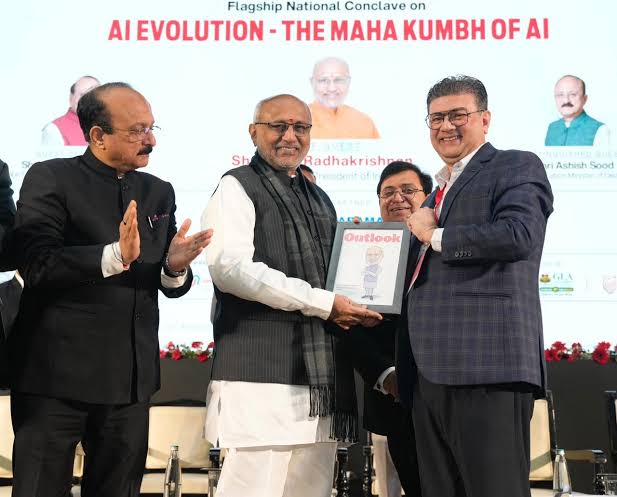
New Delhi, December 23: Vice-President of India Shri C.P. Radhakrishnan on Monday said that Artificial Intelligence must be used positively and ethically for human welfare, asserting that India has both the capability and responsibility to guide the world in shaping responsible AI development.
He said Artificial Intelligence is no longer a futuristic idea but a present-day reality that is influencing healthcare diagnostics, climate modelling, governance, education, finance, and national security. AI, he noted, is reshaping the way societies grow and how individuals live and work.
 Technology Should Inspire Confidence, Not Fear
The Vice-President cautioned against pessimism surrounding modern scientific and technological developments. Drawing parallels with the introduction of computers, which initially faced resistance before transforming the world, he said every technological advancement brings both opportunities and challenges.
The real responsibility, he stressed, lies in ensuring that technology is harnessed in a positive, constructive, and humane manner. Artificial Intelligence, he added, must be seen as a tool to enhance human capabilities rather than a threat to them.
India’s Rising Global Standing in AI
Highlighting India’s growing prominence, Shri Radhakrishnan said the country has emerged among the leading nations in the field of Artificial Intelligence. At the same time, he warned against complacency in an era of rapid global change.
He urged policymakers, institutions, and industry leaders to ensure that India does not miss the race to keep pace with developed nations. Staying competitive in AI, he said, is crucial for economic strength, innovation, and strategic autonomy.
AI Education from an Early Age
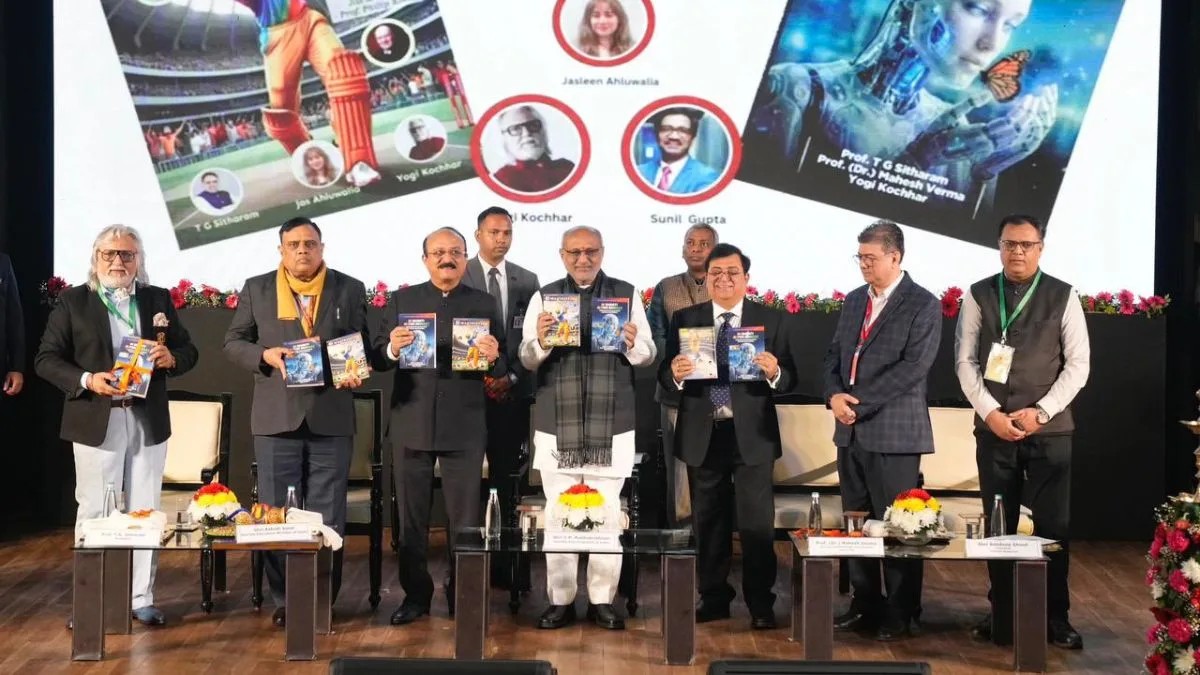
The Vice-President expressed satisfaction at releasing AI curricula during the conclave. He stressed that Artificial Intelligence should be integrated into school and college education as a core component of learning.
Early exposure to AI, he said, will equip students with critical thinking, analytical abilities, and problem-solving skills essential for a technology-driven future. He also emphasised that educational institutions must continuously evolve to keep pace with rapid technological change.
According to him, schools and universities should transform into AI knowledge hubs and centres of innovation that nurture talent and research aligned with future needs.
Demographic Advantage and Viksit Bharat Vision
Highlighting India’s demographic strength, the Vice-President noted that nearly 65 per cent of the country’s population is under the age of 35. This demographic dividend, if properly harnessed, can propel India to the forefront of global AI leadership.
He said Artificial Intelligence will play a vital role in India’s journey towards a self-reliant, inclusive, and technologically empowered Aatma Nirbhar Bharat and the vision of Viksit Bharat @ 2047.
Ethics Must Guide Artificial Intelligence
Stressing the importance of ethical and responsible AI, Shri Radhakrishnan said no scientific advancement should harm humanity. Technology, he said, must ultimately help people live happier, more prosperous, and dignified lives.
Artificial Intelligence should augment human intelligence and decision-making, not replace human values. Ethical principles, transparency, and accountability must guide AI deployment to ensure it serves social welfare and the public good.
India’s Role in Shaping the Global AI Future
Concluding his address, the Vice-President expressed confidence that India, with its vast talent pool, democratic values, and long civilisational ethos, will adopt AI responsibly and also guide the world in shaping its future.
The conclave was attended by Delhi Education Minister Shri Ashish Sood, Guru Gobind Singh Indraprastha University Vice-Chancellor Prof. (Dr.) Mahesh Verma, AICTE representatives, Outlook magazine officials, along with scientists, researchers, academicians, and students.