
Policy Reset for India’s Shipbuilding Sector
Union Minister Sarbananda Sonowal said the notification of the guidelines marks a decisive policy reset for the shipbuilding sector. He emphasised that Prime Minister Narendra Modi’s leadership has anchored India’s maritime growth in self-reliance, innovation, and long-term industrial confidence.
According to the ministry, the newly notified guidelines provide a transparent and accountable framework for implementation, ensuring efficient utilisation of public funds while encouraging private sector participation across the shipbuilding value chain.
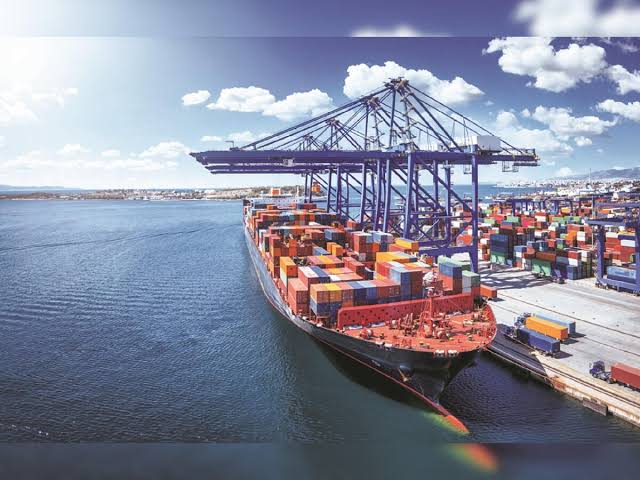 Shipbuilding Financial Assistance Scheme Explained
The Shipbuilding Financial Assistance Scheme, with a corpus of ₹24,736 crore, will offer direct financial support to Indian shipyards. Assistance will range between 15% and 25% of the contract value per vessel, depending on the category of ships being built.
The scheme introduces graded incentives for small normal, large normal, and specialised vessels, along with additional benefits for series orders. Disbursement will be milestone-based and backed by security instruments to ensure accountability and timely execution.
Linking Shipbuilding with Recycling and Circular Economy
A key feature of the SBFAS is the introduction of a Shipbreaking Credit Note. Ship owners scrapping vessels at Indian yards will receive a credit equivalent to 40% of the scrap value, which can be used for new ship construction in India.
This provision aims to integrate ship recycling with new shipbuilding, supporting a circular economy while strengthening domestic yards. Independent valuation and third-party assessments have been made mandatory to enhance governance.
Long-Term Capacity Building Through SbDS
The Shipbuilding Development Scheme, with an outlay of ₹19,989 crore, focuses on long-term infrastructure and capability creation. It provides for the development of greenfield shipbuilding clusters and modernisation of existing brownfield shipyards.
Greenfield clusters will receive 100% capital support for common infrastructure through a 50:50 Centre–State special purpose vehicle, while existing yards will be eligible for 25% capital assistance for critical upgrades.
Technology, Skills and Financial Risk Coverage
The SbDS also envisages the establishment of an India Ship Technology Centre under the Indian Maritime University. The centre will focus on research, ship design, innovation, and skills development to build a future-ready workforce.
Additionally, a Credit Risk Coverage Framework will provide government-backed insurance for
pre-shipment, post-shipment, and vendor-default risks, improving project bankability and financial
resilience.
Employment, Security and Vision 2047
Over the next decade, the SBFAS alone is expected to support shipbuilding projects worth nearly ₹96,000 crore, generating employment across the maritime value chain. The ministry projects that India’s commercial shipbuilding capacity could rise to 4.5 million gross tonnage per annum by 2047.
Both schemes will remain valid until March 31, 2036, with an in-principle extension up to 2047. Together, they are expected to strengthen maritime security, promote indigenous technology, and position India as a major global shipbuilding nation.