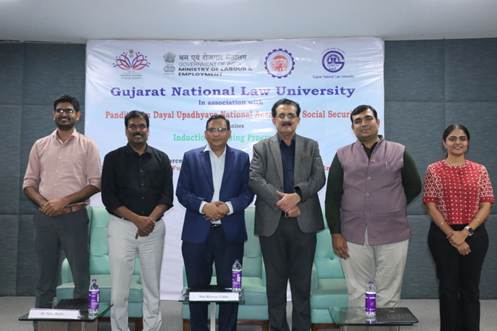
GNLU Hosts EPFO Training Valedictory
The training programme, which began on 1st December 2025, comprised 81 sessions over 26 days, totaling 121.5 hours of intensive instruction. A total of 62 officers participated, gaining comprehensive knowledge on criminal law, civil law, constitutional provisions, evidence act, POSH act, cyber laws, labour codes, contract law, procurement management, rajbhasha, professional etiquette, and personal grooming.
 Special Session on Goal Setting
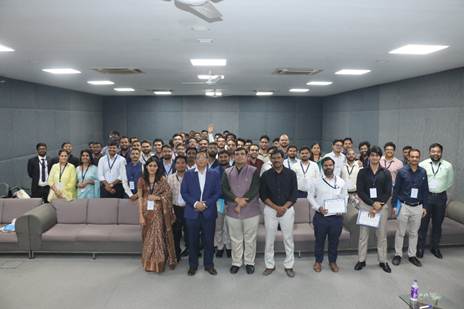
On 26th December, the National Institute of Design (NID), Gandhinagar organized a special interactive session on “Motivation Through Goal Setting” for PG students and EPFO trainees. Dr. Bhavin Kothari facilitated the discussion emphasizing discipline, willpower, coordination, consistency, and strategic goal achievement. Rizwan Uddin, RPFC-I and Chief Learning Officer (CLO), PDUNASS, appreciated the participants for their active engagement and dedication to implementing their personal and professional goals.
Key Highlights from the Valedictory
During the final sessions, Shri Rizwan Uddin and Dr. Nitin Malik, Registrar GNLU, addressed the trainees. Officers were educated on the responsibilities of principal employers toward contractual employees, referencing landmark judgements such as HSWCL Vs RPFC (Calcutta High Court) and FCI vs RPFC (Delhi High Court). Trainees shared feedback in an open discussion, and Shri Hardik Parikh, Course Coordinator, submitted the comprehensive training report.
The programme stressed customer-centric service delivery, legal literacy in public service, responsive and collaborative functioning, and securing optimal benefits for stakeholders. Trainees were motivated to apply the knowledge acquired to serve the national interest effectively and ethically.
Capacity Building and Future Readiness
The four-week induction programme underscores EPFO’s commitment to building competent officers capable of addressing modern challenges in employee provident fund management. This initiative strengthens governance, reinforces accountability, and aligns with India’s broader vision of professional excellence in public service.