 Science at the Heart of Modi 3.0 Reforms
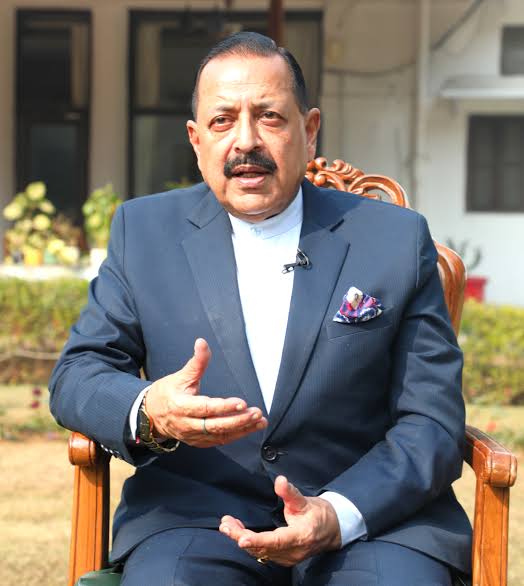
According to the Minister, the SHANTI Bill represents a defining departure from convention by integrating science, economy, industry, and business into a unified reform framework. He noted that despite science being a critical driver of industrial growth and global competitiveness, India had historically not framed scientific advancement within its reform narrative.
Dr Jitendra Singh said Modi 3.0 will be remembered for breaking long-standing barriers in sectors that determine India’s technological and economic trajectory. Unlike earlier reform phases driven by political or strategic compulsions, this phase is focused on future-readiness, innovation ecosystems, and science-driven economic expansion.
Historic Breakthrough in Nuclear Sector
The Minister described the SHANTI Bill as a historic reform in India’s nuclear sector, breaking a six-decade-old stalemate that had constrained its civilian potential. He said the Bill unlocks new opportunities for peaceful, clean, and sustainable nuclear energy while maintaining uncompromising standards of safety, sovereignty, and public interest.
Dr Singh underlined that such a reform was inconceivable for decades and became possible only due to Prime Minister Modi’s ability to dismantle legacy taboos and align Indian policies with global best practices, without compromising national priorities.
Clean Energy and Net Zero Commitments
Reiterating India’s long-standing commitment to the peaceful use of nuclear energy, the Minister recalled the vision of Dr Homi Bhabha, who had envisaged atomic science as a tool for development, healthcare, and energy security. The SHANTI Bill strengthens this philosophy by enabling civilian expansion in clean power generation, medical applications, and advanced research.
Dr Jitendra Singh highlighted that India’s nuclear power capacity has doubled from around 4.4 GW in 2014 to nearly 8.7 GW today. He added that the government has set an ambitious roadmap to reach nearly 100 GW of nuclear capacity by 2047, allowing nuclear energy to meet about 10 percent of India’s electricity demand and support its Net Zero commitments.
Supporting AI, Quantum and Digital Economy
Emphasising future technological demands, the Minister said that emerging sectors such as artificial intelligence, quantum computing, and data-driven industries require uninterrupted, round-the-clock power. Unlike intermittent renewable sources, nuclear energy provides stable baseload power essential for sustaining advanced digital infrastructure and strategic industries.
He also noted India’s growing focus on Small Modular Reactors, which are suitable for dense urban centres, industrial corridors, and emerging economic zones, further strengthening energy security while maintaining environmental responsibility.
Healthcare and Broad Stakeholder Support
Dr Jitendra Singh drew attention to the expanding role of nuclear science in healthcare, particularly in cancer diagnosis and treatment through nuclear medicine and isotopes. He said atomic science has increasingly become a force for human welfare, saving lives and enhancing public health outcomes.
The Minister noted that the SHANTI Bill has received widespread support from the scientific community, industry, startups, and the innovation ecosystem. This broad acceptance, he said, reflects a national consensus on the urgent need to modernise India’s nuclear and science governance frameworks.
The SHANTI Bill, Dr Singh concluded, exemplifies Modi 3.0’s reform-first approach, where science-led policymaking is shaping India’s journey towards becoming a developed nation by 2047.