Symbol of Cultural Revival and Development
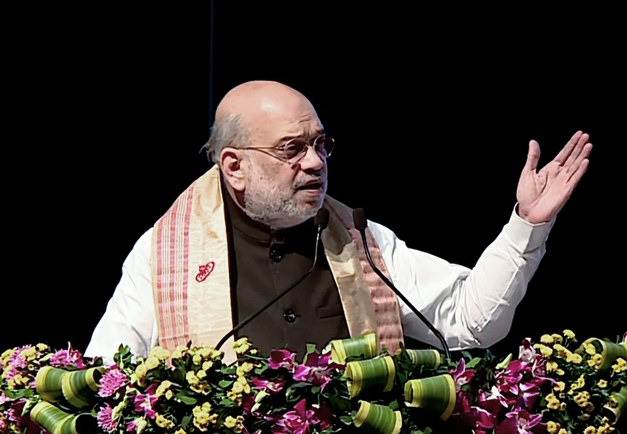
Addressing the gathering, Shri Amit Shah described the Jyoti–Bishnu Auditorium as a powerful symbol of Assam’s cultural resurgence and developmental progress. Built at an estimated cost of ₹291 crore, the state-of-the-art auditorium has a seating capacity of around 5,000 and is dedicated to two towering figures of Assamese art and literature Jyoti Prasad Agarwala and Bishnu Prasad Rabha.
He said that the centre reflects the state’s renewed commitment to safeguarding its cultural roots while moving forward on the path of modern development.
Tribute to Assam’s Cultural Icons
Shri Shah highlighted the immense contributions of Jyoti Prasad Agarwala, who laid the foundation of Assamese cinema by directing the state’s first film, Joymoti. By blending music, drama, literature, and patriotism, Agarwala ignited a spirit of freedom and self-respect among the people of Assam.
He noted that this cultural awakening later strengthened the freedom movement, eventually ensuring Assam’s rightful place in independent India through the leadership of figures such as Gopinath Bordoloi.
Bishnu Prasad Rabha’s Role in the Freedom Movement
The Union Home Minister also paid tribute to art guru Bishnu Prasad Rabha, describing him as a revolutionary who connected workers, farmers, tribal communities, and ordinary citizens with the freedom struggle through art. Rabha used simple yet powerful expressions to raise awareness against colonial exploitation, social injustice, and inequality.
According to Shri Shah, Rabha’s legacy remains a guiding force in keeping Assam’s cultural and social fabric alive.
Major Boost to Policing and Public Safety
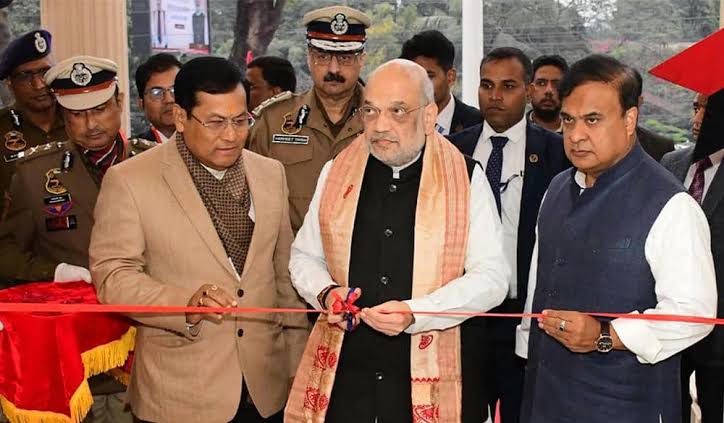
Alongside the cultural centre, Shri Amit Shah inaugurated the newly constructed Police Commissioner’s Office in Guwahati, built at a cost of ₹111 crore. He said the modern facility is equipped with advanced infrastructure and technology to enhance policing efficiency.
The Integrated Command and Control Centre, constructed at a cost of ₹178 crore, was also inaugurated. The facility is designed to translate the vision of smart policing into reality by enabling real-time monitoring, coordination, and rapid response.
New Criminal Laws and Justice Delivery
The Union Home Minister also inaugurated a state-level exhibition showcasing India’s three new criminal laws. He stated that these reforms aim to ensure timely justice, from trial courts to the Supreme Court, within a defined timeframe in the coming years.
The exhibition seeks to raise public awareness about the new legal framework and its role in strengthening the justice delivery system in Assam.
Assam’s Transformation Under Modi Government
Reflecting on Assam’s journey over the past decade, Shri Amit Shah said the state had earlier suffered from violence, blockades, bomb blasts, and prolonged unrest. Under the leadership of Prime Minister Shri Narendra Modi, Assam has moved away from instability and onto a sustained path of peace and development over the last 11 years.
He noted that peace accords with various insurgent groups have brought over 10,000 youth into the mainstream, creating a stable environment for investment, tourism, and infrastructure growth.
Strong Stand on Infiltration
Shri Shah alleged that earlier governments had introduced policies that enabled the settlement of infiltrators in Assam, posing a threat to the state’s art, culture, language, and identity. He said that large-scale encroachments had occurred across the state as a result.
Over the past decade, and particularly during the last five years, more than 1.29 lakh bighas of land have been cleared of encroachments. The Home Minister asserted that decisive action against infiltration is essential to protect Assam’s cultural heritage.
Looking Ahead
Shri Amit Shah stated that the government remains committed to safeguarding Assam’s identity while accelerating development. From industrial investments and improved infrastructure to cultural preservation and enhanced security, Assam is now moving forward in step with the rest of the nation.