New Delhi: Vice President of India Shri C. P. Radhakrishnan on Thursday said that climate action should be viewed not as a limitation on India’s development, but as a strategic opportunity to accelerate inclusive growth, strengthen energy security and build a future-ready economy.
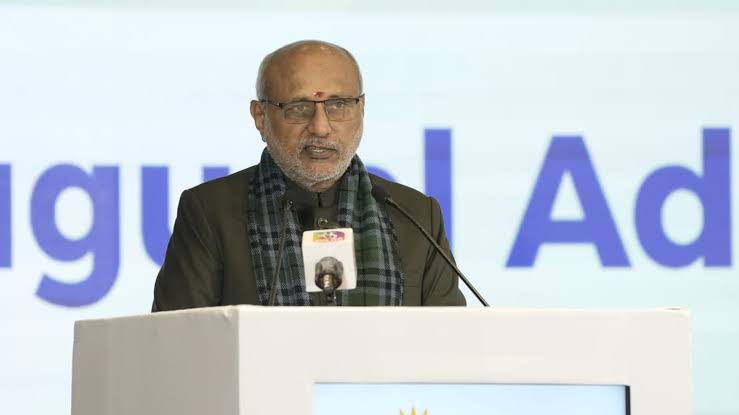 Climate Responsibility Anchored in Civilisational Ethos
The Vice President said Indian philosophy has always stressed balance and restraint, long before sustainability became a global concern. He referred to traditional water conservation systems, sustainable agricultural practices and biodiversity preservation as examples of this ethos.
Concepts such as Prakriti (nature) and Aparigraha (non-possessiveness), he said, underline an ethical framework that encourages responsible consumption and respect for the environment. These values, he added, continue to inform India’s contemporary climate policies.
Balancing Growth, Equity and Responsibility
Highlighting India’s development journey over the past decade, Shri Radhakrishnan said the country has consistently sought to strike a balance between economic growth and social equity, as well as between present needs and future responsibilities.
Under the leadership of Prime Minister Shri Narendra Modi, he said, India has redefined how a developing nation approaches climate responsibility, demonstrating that environmental stewardship and economic progress can move forward together.
Panchamrit Commitments and Low-Carbon Pathway
Referring to India’s Panchamrit commitments announced at COP-26, the Vice President said these targets provide a clear and credible pathway towards a low-carbon future. The commitments include achieving net-zero emissions by 2070, while ensuring that development priorities are not compromised.
He stressed that India’s climate goals reflect a sense of responsibility towards future generations, while recognising the developmental challenges faced by emerging economies.
Need for Homegrown Clean Technologies
Stressing the importance of clean-technology manufacturing, Shri Radhakrishnan said a developed India cannot rely solely on imported technologies or fragile global supply chains. He called for a strong focus on homegrown clean technologies, resilient manufacturing systems and a future-ready workforce.
India, he noted, is steadily emerging as a global manufacturing hub in renewable energy, energy storage, green hydrogen, electric mobility, sustainable materials and climate-smart agriculture. This transformation, he said, is turning the vision of “Make in India” into “Make in India for the World.”
Industry, Start-ups and Innovation
The Vice President observed that Indian companies are making significant investments in solar module production, battery manufacturing, electric vehicle components, green fuels and electrolysers. At the same time, start-ups are driving innovation in climate data analytics, energy efficiency, waste management and digital climate solutions.
Such innovation-led growth, he said, has the potential to create jobs, strengthen energy security and position India as a leader in the global clean energy transition.
Global Cooperation Without Dependence
On the issue of international collaboration, Shri Radhakrishnan said climate change is a shared global challenge that demands collective action. India’s approach to partnerships, he explained, is based on cooperation without dependence.
As a founding force behind the International Solar Alliance, he said India has mobilised countries of the Global South around affordable and scalable solar solutions. Similarly, India’s leadership of the Coalition for Disaster Resilient Infrastructure reflects a proactive approach to safeguarding development gains against climate-induced risks.
Wide Participation at the Forum
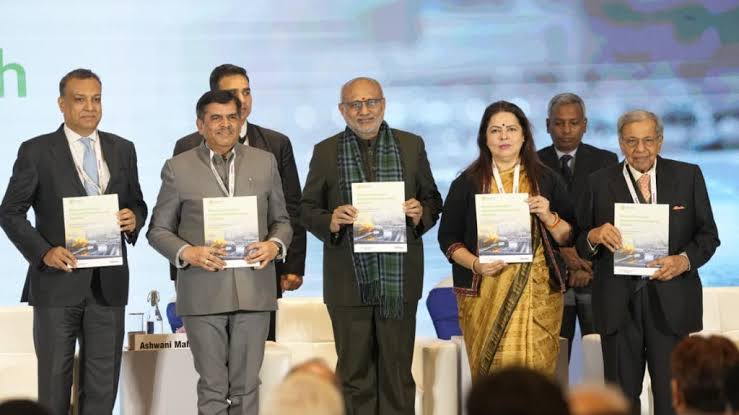
The Bharat Climate Forum 2026 witnessed participation from policymakers, industry leaders, academics and experts from India and abroad. Among those present were former Rajya Sabha MP Shri N. K. Singh, former Union Minister Smt. Meenakshi Lekhi, Shri Sumant Sinha and Dr. Ashwani Mahajan.