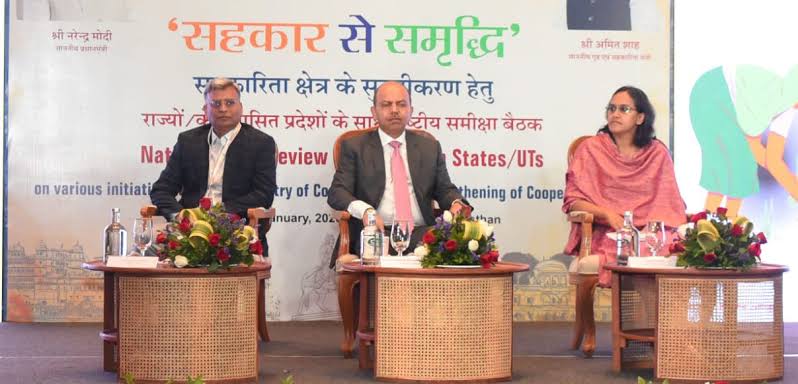
Guided by the vision of Prime Minister Narendra Modi, who has consistently advocated “Sahkar se Samriddhi” as a pathway to people-centric development, the Ministry of Cooperation under the leadership of Union Minister Amit Shah has been pursuing wide-ranging reforms. These reforms aim to strengthen cooperative institutions, improve transparency and expand their economic footprint across the country.
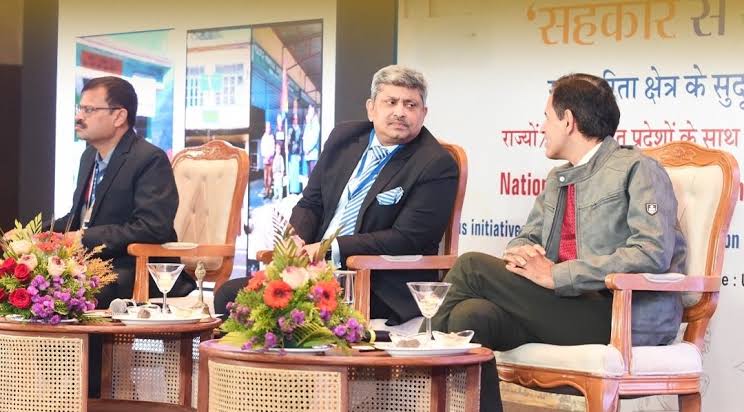
The Udaipur workshop was attended by Secretaries and Registrars of Cooperative Societies from States and Union Territories, along with senior officials and stakeholders from across the cooperative ecosystem. The event was inaugurated by Dr. Ashish Kumar Bhutani, Secretary, Ministry of Cooperation, in the presence of senior ministry officials and dignitaries. Smt. Anandhi, Secretary (Cooperation), Government of Rajasthan, welcomed the delegates and highlighted Rajasthan’s commitment to cooperative development.
Citing Banaskantha Dairy as a model example, he explained how a drought-prone district achieved milk production of nearly 90 lakh litres per day through a strong and integrated cooperative value chain. The example, he said, demonstrated the transformative potential of cooperatives when supported by sound governance and policy backing.
Several initiatives undertaken by the Ministry of Cooperation were reviewed during the workshop. These included integrating Self-Help Groups with cooperatives, mandating cooperative institutions to open accounts with cooperative banks to enhance low-cost CASA funds, focused support for the North-Eastern Region, and capacity-building initiatives such as the proposed Cooperative University and training programmes in collaboration with LBSNAA, Mussoorie.
Discussions covered the world’s largest grain storage initiative being implemented through PACS, along with the expansion of additional services such as Common Service Centres, Pradhan Mantri Kisan Samriddhi Kendras and PM Jan Aushadhi Kendras. Cooperative banking reforms and digital initiatives, including National Cooperative Organic Limited, National Cooperative Exports Limited and Bharatiya Beej Sahkari Samiti Limited, were also deliberated.
The second day featured a special session titled “Sahkar se Samriddhi – PACS Ahead,” which focused on empowering PACS through targeted initiatives. States shared best practices, including cashless PACS and MIS systems, startup ecosystems for cooperatives, district-specific business plans, model cooperative villages and modern storage and supply-chain integration involving the Food Corporation of India.
In his closing address, Dr. Bhutani reiterated that PACS form the backbone of the cooperative system and stressed the urgency of complete computerisation to deepen rural financial inclusion. He noted that the Food Corporation of India has provided rental guarantees to expedite grain storage infrastructure, targeting 5 lakh tonnes by September 2026 and 50 lakh tonnes by September 2027.