 Somnath: Spiritual and Civilisational Significance
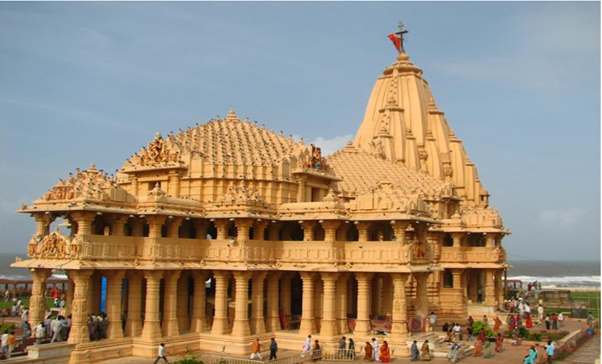
Located in Prabhas Patan near Veraval, Gujarat, Somnath is revered as the first of the twelve Jyotirlingas of Lord Shiva. For centuries, it has been a beacon of faith and culture, drawing nearly 92–97 lakh devotees annually. The temple symbolizes India’s spiritual geography and civilisational continuity, surviving repeated invasions through the collective resolve of its followers and leaders like Devi Ahilya Bai Holkar.
The present temple, consecrated in 1951 after India’s Independence, was built in the Kailash Mahameru Prasad architectural style. The 150-foot Shikhar crowned with a 10-tonne Kalash, the 27-foot Dhwajdand, and 1,666 gold-plated Kalash together represent generations of devotion, artistry, and faith. Cultural initiatives like the Light and Sound Show and the Vande Somnath Kala Mahotsav continue to engage devotees and preserve India’s rich heritage.
Spiritual Celebrations and Padayatra
The Parv featured a 72-hour Akhand Omkar chanting, representing unity, continuity of faith, and collective spiritual energy. Saints from Girnar Tirthkshetra and other sacred centres participated in a Padayatra from Shankh Chowk to the temple, accompanied by 75 drummers from the Siddhivinayak Dhol Group. Devotional chants of “Har Har Mahadev” and floral showers created a spiritually charged atmosphere, offering devotees a profound experience of faith and fulfilment.
Women Empowerment and Sustainability at Somnath
Somnath Temple Trust has prioritized women empowerment and sustainable practices. Among 906 employees, 262 are women, engaged in managing Bilva Van, prasad distribution, and temple dining services. Approximately 363 women earn around ₹9 crore annually, reflecting economic self-reliance. Sustainability initiatives include vermicomposting flowers, converting plastic waste into paver blocks under Mission LiFE, rainwater harvesting, and a Miyawaki forest of 7,200 trees absorbing 93,000 kilograms of CO₂ annually. Purified Abhishek water, Somgangajal, benefits over 1.13 lakh families.
Prime Minister’s Participation and Key Events
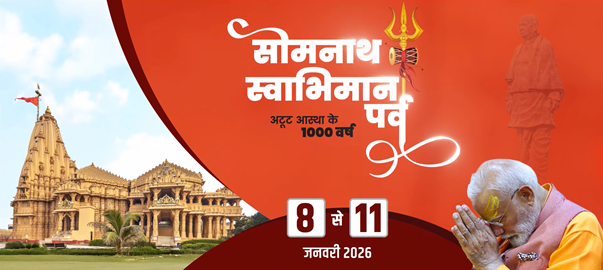
Prime Minister Narendra Modi actively participated in the Omkar Mantra chanting and witnessed a drone show celebrating the temple’s resilience. On 11 January, he led the Shaurya Yatra, symbolising courage and the indomitable spirit that preserved Somnath across centuries. He also offered prayers and addressed the gathering, reflecting on the temple’s civilisational importance and the enduring message of faith, resilience, and self-respect.
A Millennium of Resilience
From the first attack in 1026 to the reopening of the temple in 1951 under Sardar Vallabhbhai Patel, Somnath has remained a living symbol of India’s cultural pride and spiritual endurance. The Swabhiman Parv reinforces the message that faith, righteousness, and unity outlast destruction, inspiring generations to uphold India’s civilisational legacy.