 Key Areas of Collaboration
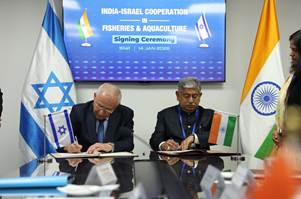
The Joint Declaration outlines multiple areas of mutual interest, including:
- Joint research and development in Recirculating Aquaculture Systems (RAS), biofloc, cage culture, aquaponics, and oceanarium systems.
- Breeding high-yield species and pathogen-free seed improvement, along with broodstock development.
- Genetic improvement programs and sustainable mariculture practices.
- Application of Israeli water-saving technologies for aquaculture.
- Support and exchange of start-ups in fisheries and aquaculture sectors.
- Promotion of responsible fishing, marine resource conservation, and technology-based fisheries monitoring systems.
- Capacity building initiatives including deep-sea fishing, vessel design, and modern fish processing techniques.
- Facilitation of trade through export-import dialogues, tariff solutions, and technology-driven traceability systems.
Strengthening the Blue Economy
Both nations agreed to explore the establishment of new Indo-Israel Centres of Excellence for Fisheries and Aquaculture, similar to the 43 agricultural centres already operational. The collaboration is expected to enhance innovation, promote sustainable practices, and drive economic growth in the fisheries and aquaculture sectors of both countries.
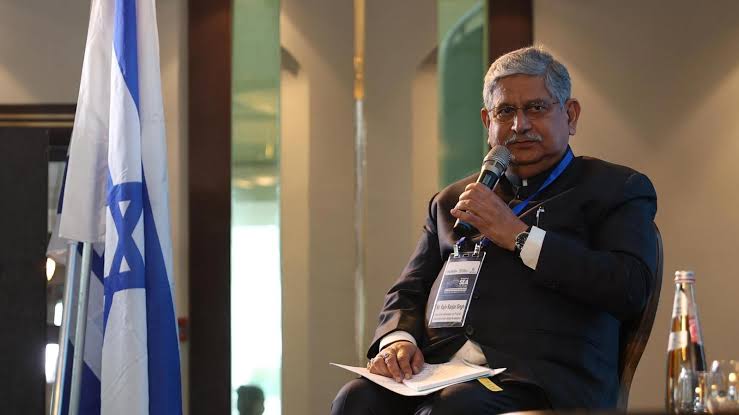
Shri Rajiv Ranjan Singh highlighted that the partnership leverages Israel’s advanced technological expertise alongside India’s vast aquatic resources, fostering a shared commitment to food security, climate-resilient development, and long-term sustainability.
Exchange and Capacity Building
The declaration also emphasizes exchange programs for fishers, aqua farmers, scientists, and policymakers, alongside training in modern fish processing, marketing, and infrastructure development, including fishing harbours and landing centers. Capacity building and knowledge transfer will be pivotal in ensuring the resilience and competitiveness of the fisheries sector in both countries.