 Election Process Begins January 19
According to the BJP’s election schedule, the nomination process for the post of national president will commence on January 19. The party’s chief election officer, K. Lakshman, will oversee the proceedings and formally announce the new president on January 20.
As per reports, three sets of nomination papers are expected to be filed. One set will bear the signatures of over 20 elected BJP state presidents, demonstrating organisational backing. Another set will reportedly be endorsed by senior leaders including Prime Minister Narendra Modi, Defence Minister Rajnath Singh, Home Minister Amit Shah, and outgoing BJP president JP Nadda.
The third set of nomination papers will be signed by members of the BJP National Council, underlining broad consensus within the party. Given the lack of any visible challenger, Nitin Nabin is widely expected to be elected unopposed.
Who Is Nitin Nabin?
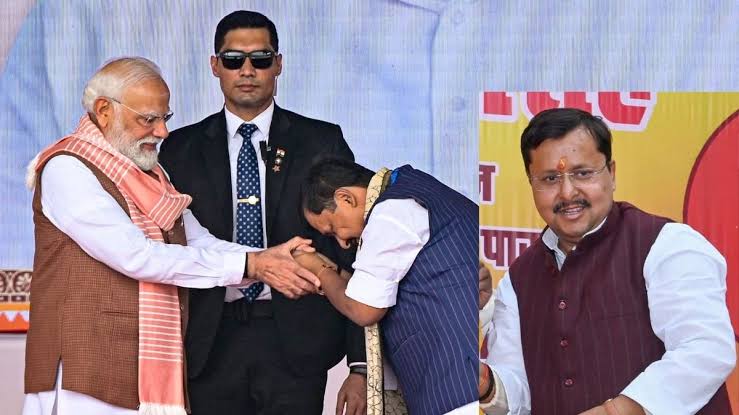
Nitin Nabin, 45, is a five-time MLA from Bihar’s Bankipur assembly constituency and is regarded within party circles as an ideologically grounded leader with strong organisational roots. He was appointed as BJP’s national working president in December last year, a move that many saw as preparation for a larger leadership role.
The son of late BJP veteran and former MLA Nabin Kishore Prasad Sinha, Nabin has long been associated with the Rashtriya Swayamsevak Sangh (RSS). His political journey reflects a blend of grassroots engagement and administrative experience.
He has served twice as a minister in the Bihar government and is known for his organisational discipline and accessibility to party workers. Senior BJP leaders consider him a leader who understands both electoral politics and cadre-based party functioning.
Continuity With Past Leadership
The expected elevation of Nitin Nabin follows a familiar pattern within the BJP. Outgoing party president JP Nadda was first appointed as national working president in June 2019 before being elected unopposed as the BJP’s national president in January 2020, succeeding Amit Shah.
This structured transition underscores the BJP’s emphasis on organisational grooming before assigning the party’s top post. Analysts believe this model ensures continuity, stability, and ideological consistency within the party’s leadership framework.
JP Nadda’s tenure saw the BJP navigate multiple state elections, organisational restructuring, and preparations for the 2024 general elections, which the party successfully won under Prime Minister Narendra Modi’s leadership.
Political Significance Ahead of Key Elections
The announcement of a new BJP national president comes at a crucial time, with several state elections scheduled over the next two years and preparations already underway for future national contests. The party’s organisational strength is considered central to its electoral success.
Political observers note that Nitin Nabin’s likely appointment reflects the BJP’s strategy to promote leaders who combine loyalty to the organisation with administrative experience. His age and background are also seen as aligning with the party’s broader goal of leadership renewal.
For the BJP cadre, the leadership transition is expected to reinforce internal cohesion while maintaining the party’s ideological direction rooted in nationalism and governance-led politics.
What Lies Ahead
Once formally elected, the new BJP president will be tasked with strengthening the party’s organisational machinery, coordinating with state units, and steering election strategies across regions. Maintaining momentum after consecutive electoral victories will be a key challenge.
The announcement on January 20 is therefore not just a procedural exercise but a moment that could shape the BJP’s political direction in the coming years.