 Face-to-Face Session with K. P. Ramanunni
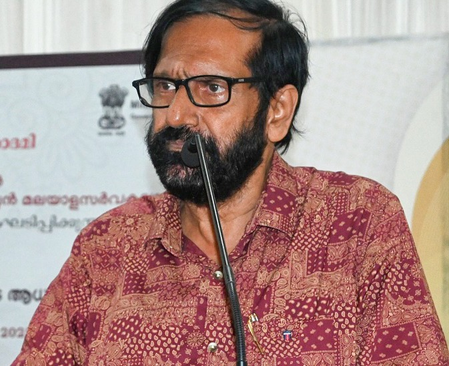
The highlight of the day was the face-to-face session with eminent Malayalam writer and Sahitya Akademi Award recipient, Sri K. P. Ramanunni. Hailing from Kozhikode, India’s first UNESCO-recognised City of Literature, Ramanunni shared insights from his literary journey, blending personal experiences with broader societal themes.
During the session, he read excerpts from his Malayalam short story MTP translated into English by Abu Bakar Kaba. The narrative, structured as a seven-part play, delves into the emotional and ethical dimensions of medical termination of pregnancy, reflecting the author’s own life experiences. Ramanunni also spoke candidly about his teenage years, when reading both spiritual and communist texts led to inner conflict, eventually seeking psychiatric consultation. This challenging phase, he revealed, shaped his path as a writer.
Panel Discussion on India’s Intellectual Traditions
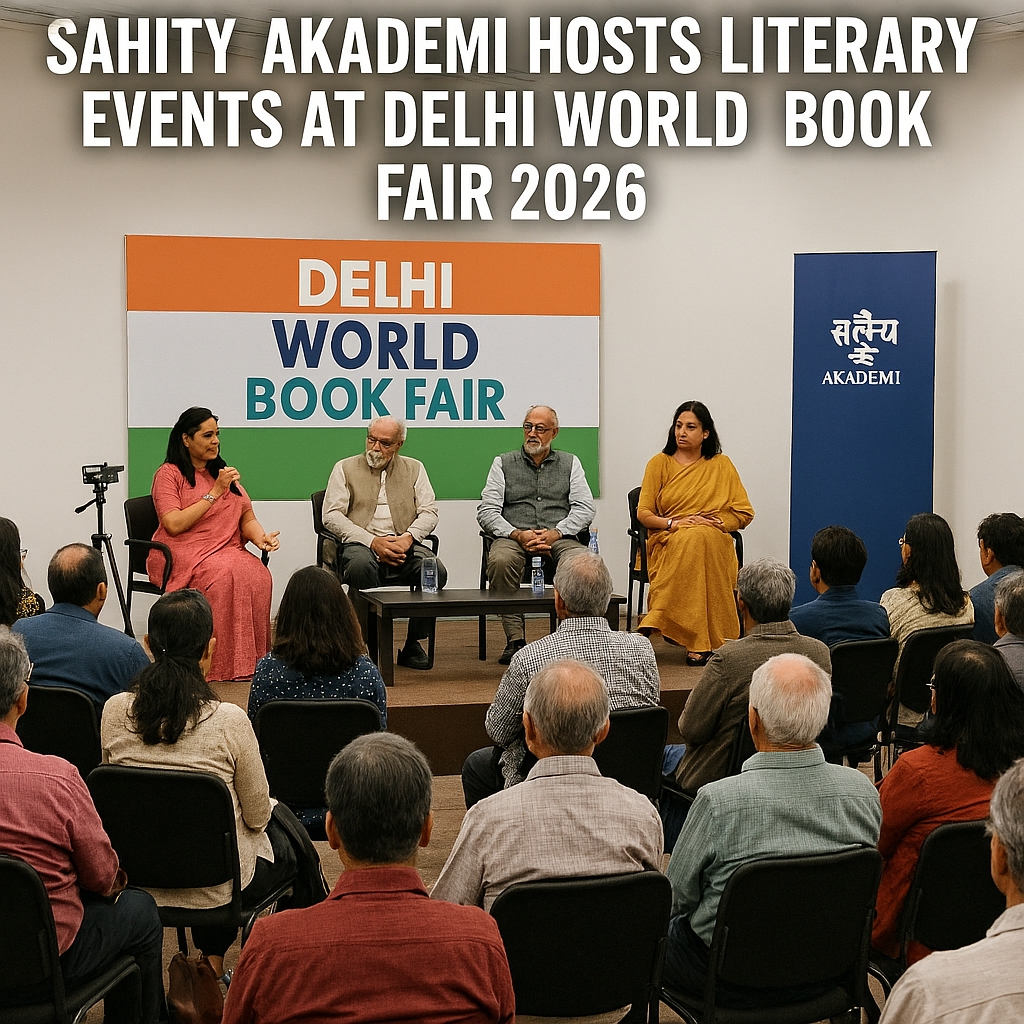
Following the session, a panel discussion explored India’s intellectual heritage. Esteemed scholars Prof. Rawail Singh, Prof. Harekrishna Satapathy, and Prof. Basavaraj Kalgudi examined diverse aspects of India’s knowledge systems.
Prof. Rawail Singh traced Punjab’s intellectual legacy from Takshashila to Sufism, Nath Yogis, and Sikhism. Prof. Harekrishna Satapathy highlighted contrasts between ancient and contemporary education systems, invoking Vedic shlokas and the roles of the Aadigurus Brahma, Vishnu, and Mahesh. Prof. Basavaraj Kalgudi focused on peripheral knowledge systems, discussing both oral and written traditions, and underscored the significance of tribal and agrarian wisdom in ancient India.
Audience Engagement and Reception
The programs were well received by a diverse audience of students, educators, writers, and literature enthusiasts, generating meaningful discussion and interactive exchanges. Dr Sandeep Kaur, Assistant Editor of Sahitya Akademi, proposed the vote of thanks, concluding a day of literary exploration and intellectual discourse.