 What Is an Annular Solar Eclipse?
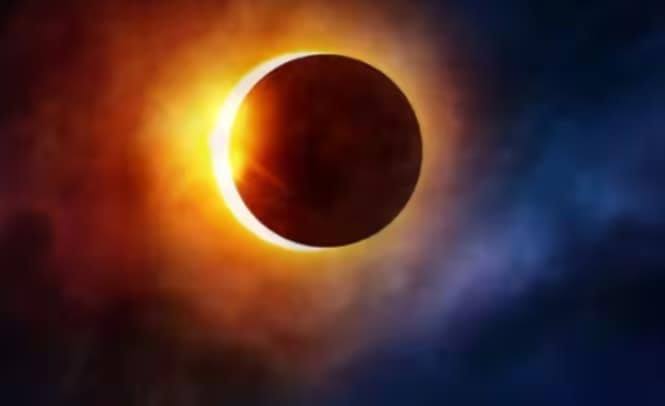
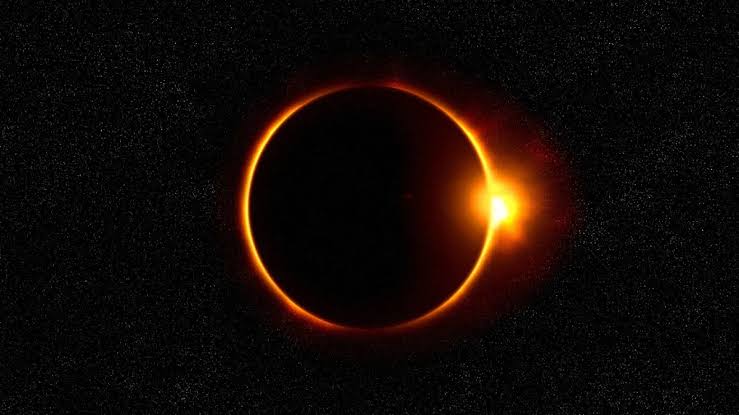
According to NASA, an annular solar eclipse happens when the Moon is at or near its farthest point from Earth during its orbit. Because of this distance, the Moon appears smaller than the Sun and cannot fully cover it. The Sun remains visible as a glowing ring around the Moon, creating the dramatic “Ring of Fire” effect.
Unlike a total solar eclipse, where daylight briefly turns into darkness, annular eclipses maintain a bright sky. However, the visual spectacle remains scientifically important, offering astronomers opportunities to study the Sun’s outer edges and refine eclipse prediction models.
Date and Time of Annular Solar Eclipse 2026
The annular solar eclipse will occur on February 17, 2026. As per global astronomical observations, the partial phase of the eclipse will begin around 09:56 UTC. The eclipse will reach its maximum annular phase at approximately 12:12 UTC and conclude by about 14:27 UTC.
These timings may vary slightly depending on observation location and atmospheric conditions. Space agencies and observatories across the world are expected to livestream the event for public viewing.
Will the Eclipse Be Visible in India?
Unfortunately for Indian skywatchers, the February 17 annular solar eclipse will not be visible from anywhere in India. The eclipse path will pass exclusively over remote regions of the Southern Hemisphere.
The path of annularity will begin in the southern Indian Ocean, move across coastal parts of Antarctica, and end in the southern Atlantic Ocean. A few research stations in Antarctica, including Concordia Station and Mirny Station, will witness the full annular phase.
How Can People Watch the Eclipse?
For those unable to view the eclipse directly, space agencies such as NASA and international astronomical organizations often provide live streaming of major celestial events. Viewers in India can follow these official broadcasts online to witness the eclipse safely.
NASA regularly shares eclipse updates and educational resources through its official website and social media platforms, making the event accessible to a global audience.
Safety Precautions While Watching Solar Eclipses
Experts strongly advise against viewing any solar eclipse with the naked eye. Direct observation of the Sun can cause permanent eye damage. Certified solar eclipse glasses or indirect viewing methods, such as pinhole projectors, should always be used.
Regular sunglasses, camera lenses, or tinted glass do not provide adequate protection. Safety guidelines issued by space agencies and scientific institutions should be strictly followed.
Scientific Importance of Solar Eclipses
Solar eclipses offer valuable insights into the Sun’s behavior, orbital mechanics, and Earth-Moon dynamics. Annular eclipses, in particular, help scientists study the Sun’s edges and refine atmospheric and solar radiation models.
Such events also spark public interest in astronomy and science education, encouraging observational learning and awareness about space phenomena.