 Trade Talks Gain Urgency Amid Global Tensions
India and the EU have negotiated a free trade agreement intermittently for nearly two decades. However, the latest phase of talks has accelerated sharply as both sides seek to reduce exposure to geopolitical risks and trade disruptions.
The uncertainty surrounding US trade policy, particularly the continuation of high tariffs under President Donald Trump, has pushed Brussels and New Delhi to diversify their economic partnerships and strengthen ties with reliable trading partners.
Strategic Signalling Through Republic Day Diplomacy
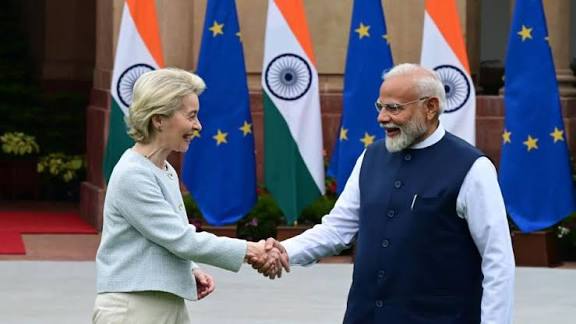
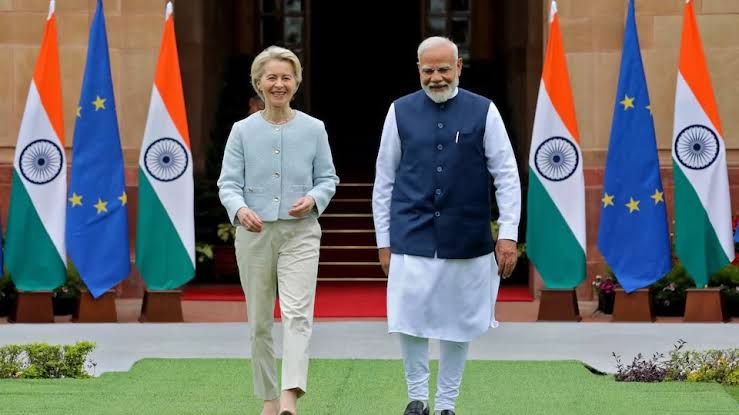
By inviting top European leaders to Republic Day, India has sent a strong diplomatic message about its commitment to a multi-aligned foreign policy. Analysts say the move reflects New Delhi’s intent to deepen ties beyond Washington while navigating global trade volatility.
Experts note that the timing of the engagement underscores India’s desire to safeguard its economic interests as trade disputes with the US spill over into the new year.
Why the Deal Matters to Europe
For the European Union, closer trade ties with India offer access to one of the fastest-growing major economies in the world. India is now the world’s fourth-largest economy and is on track to cross the $4 trillion mark in gross domestic product.
European leaders believe that a trade pact with India could create a vast market of nearly two billion people, accounting for roughly a quarter of global GDP, and reduce dependence on less predictable partners.
India’s Economic Gains from an FTA
The EU is already India’s largest trading bloc, and an agreement would restore preferential access under the Generalised System of Preferences, which was withdrawn in recent years. The loss of these benefits had reduced the competitiveness of several Indian exports.
An FTA could lower tariffs on key Indian products such as garments, pharmaceuticals, steel, petroleum products and machinery, helping exporters offset the impact of higher US tariffs.
Sensitive Sectors and Phased Liberalisation
Despite progress, India is expected to shield politically sensitive sectors like agriculture and dairy from immediate liberalisation. Tariff reductions on automobiles, wines and spirits are likely to be implemented gradually.
This phased approach mirrors India’s strategy in previous trade agreements and allows New Delhi to balance economic openness with domestic political considerations.
Key Challenges Remain
Significant differences still exist. The EU is seeking stronger intellectual property protections, stricter patent rules and enhanced data safeguards. India, meanwhile, has raised concerns over Europe’s Carbon Border Adjustment Mechanism.
The carbon levy, which comes into effect this year, could act as an indirect tax on Indian exports and pose compliance challenges, particularly for small and medium-sized enterprises.
Long-Term Strategic Impact
Despite these hurdles, analysts believe the deal could ultimately prove transformative. By reducing dependence on volatile markets, both India and the EU stand to gain greater stability in trade and supply chains.
Experts argue that the agreement could help both sides navigate an era marked by trade weaponisation, tariff uncertainty and shifting geopolitical alliances.