 Engineering Excellence and Safety Measures
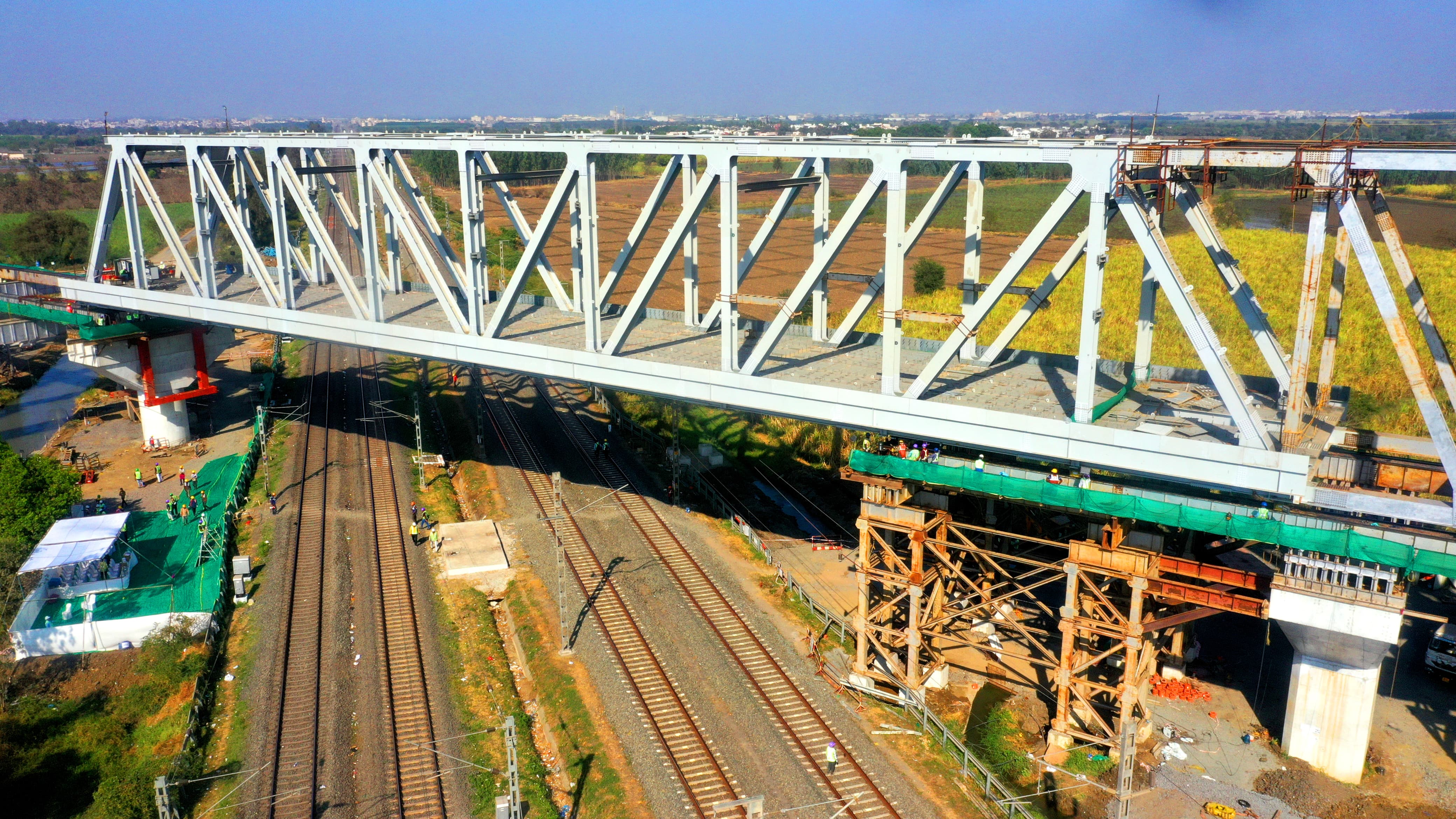
The Bullet Train viaduct in Ahmedabad employs span-by-span (SBS) construction, with typical spans of 30–50 meters. At this location, the alignment passes over the underground metro tunnel connecting Kalupur and Shahpur stations. To avoid transferring load onto the metro tunnel, the bridge’s span was increased to 100 meters, and the structure was redesigned from an SBS viaduct to a steel truss bridge, ensuring the safety of both the high-speed rail and metro infrastructure.
Construction Details and Indigenous Manufacturing
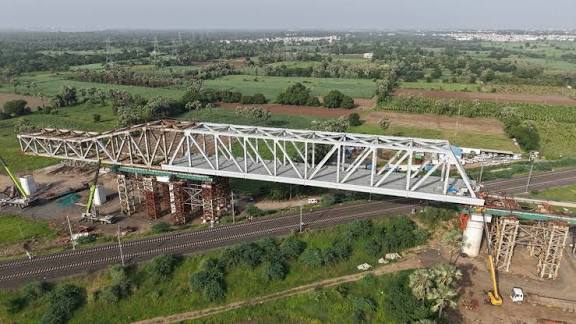
The bridge, weighing 1,098 metric tons, stands 14 meters tall and 15.5 meters wide, constructed parallel to the Ahmedabad–Sabarmati main line of Western Railways. Fabricated in Wardha, Maharashtra, it was transported to Ahmedabad and assembled 16.5 meters above the ground on temporary trestles. After assembly, the structure was carefully lowered onto permanent supports, maintaining structural accuracy and safety. Approximately 45,186 Tor-Shear Type High Strength bolts were used, along with C5 protective coating and elastomeric bearings for durability.
Impact on High-Speed Rail Connectivity
This steel bridge is a key component in ensuring seamless integration of the Bullet Train corridor with existing urban transport networks. The successful completion demonstrates Indian Railways’ commitment to delivering safe, reliable, and future-ready infrastructure for passengers. It also highlights India’s growing capability in indigenous manufacturing and engineering under the Make in India initiative.
With four more steel bridges under construction in Gujarat, Indian Railways continues to strengthen high-speed rail infrastructure and enhance passenger safety, ensuring timely progress toward operationalization of the Mumbai–Ahmedabad Bullet Train corridor.