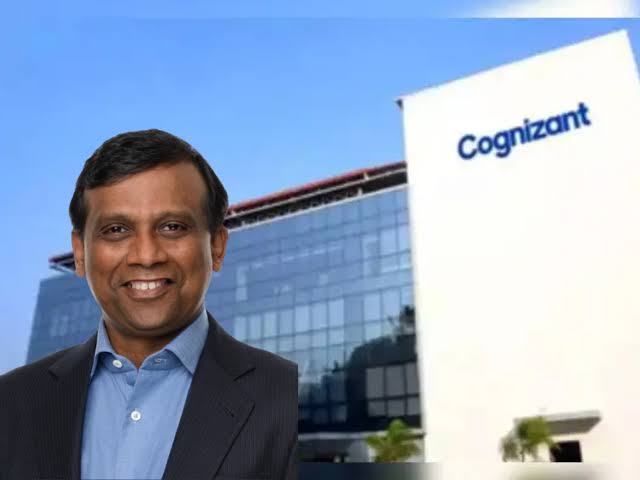
New Delhi: As global markets reel from fresh artificial intelligence fears, Cognizant Technology Solutions has pushed back against assumptions that new AI tools will rapidly dismantle the IT services industry.
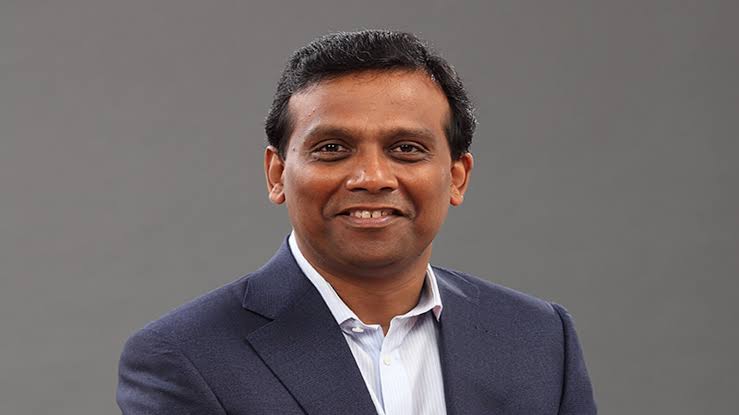
Addressing these fears during Cognizant’s post-earnings press conference on February 4, CEO Ravi Kumar S said the belief that AI can be “plugged in” to enterprise systems for instant productivity gains is deeply flawed.
 ‘AI Value Has Not Magically Shifted to Enterprises’
While acknowledging rapid advances in AI models and tooling, Kumar argued that real economic value from these technologies has not yet migrated into enterprise balance sheets.
“If AI tools could be simply plugged into enterprise landscapes and magically start delivering output, we would have already seen that shift over the last three years since ChatGPT’s launch,” he said. “The reality is that much of the value still sits at the infrastructure layer.”
This assessment challenges the narrative that recent AI breakthroughs represent an immediate existential threat to IT services firms, particularly those heavily exposed to system integration and managed services.
Complexity Keeps IT Services Relevant
Cognizant emphasised that enterprise AI adoption is far more complex than consumer-facing use cases. Integrating AI into live business environments requires redesigning workflows, aligning probabilistic AI systems with deterministic legacy software, and ensuring human oversight.
According to the company, this complexity sustains demand for IT services rather than eliminating it. Enterprises need partners to integrate AI across digital, physical, and operational layers to achieve meaningful transformation.
“You need bridges to move value from infrastructure to enterprise outcomes,” Kumar noted, adding that companies like Cognizant are positioned to build those bridges over time.
Strong Q4 Numbers Offer Reassurance
The commentary came alongside a solid quarterly performance. Cognizant reported fourth-quarter revenue of $5.3 billion, up 4.9 percent year-on-year, beating its own guidance. Full-year revenue rose 7 percent to $21.1 billion.
Operating margins for the year expanded by 140 basis points to 16.1 percent, suggesting early returns from the company’s billion-dollar investments in AI-led transformation and efficiency.
However, management remained cautious on near-term demand visibility, noting that enterprise spending decisions remain measured amid global economic uncertainty.
Industry Leaders Echo Similar Views
Cognizant’s stance aligns with views expressed by several technology leaders. Former Infosys CEO Vishal Sikka recently described generative AI as creating a “jagged frontier,” where certain tasks see sharp productivity gains but the broader services stack remains intact.
Nvidia CEO Jensen Huang has also dismissed fears that AI will replace software entirely, pointing to past platform shifts that expanded, rather than collapsed, technology ecosystems.
Evolution, Not Disruption
Cognizant maintains that AI will reshape delivery models and improve productivity but insists the transition will be evolutionary. The shift of value from infrastructure providers to enterprise outcomes is expected to unfold over several years.
This gradualist view counters fears of an immediate structural disruption and suggests that Indian IT firms may have more time to adapt business models and reskill workforces.
For policymakers and industry watchers, the message is clear: AI is transformative, but not an overnight switch.