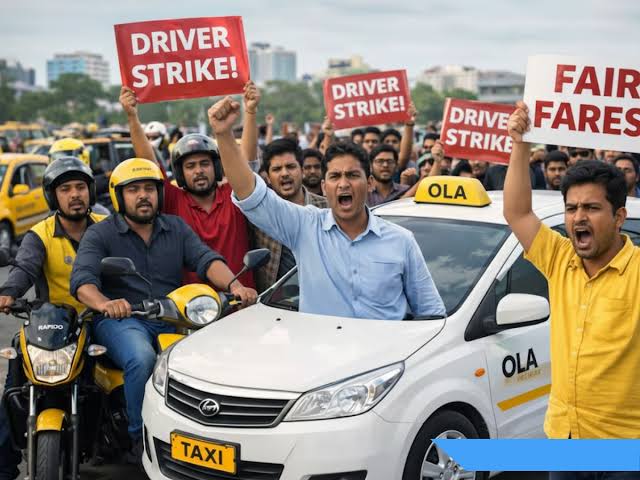
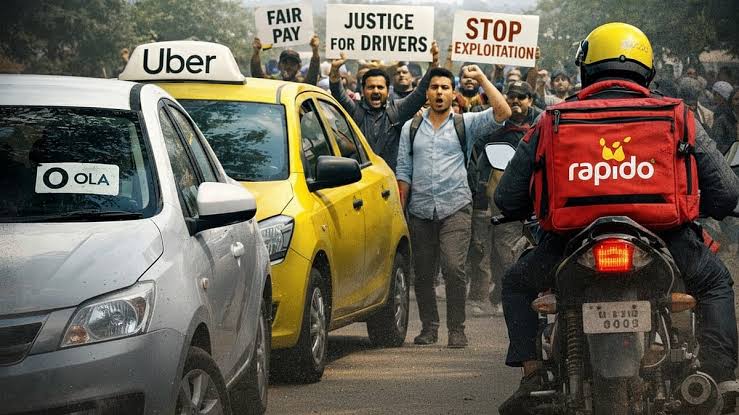
 Protest Against Illegal Bike Taxi Services
Driver unions allege that bike taxi services are operating illegally in several states despite repeated warnings from transport authorities. They claim these services continue to function openly, bypassing regulatory norms that apply to licensed auto-rickshaws and taxis.
According to union representatives, the absence of clear legal backing for bike taxis has led to serious safety risks. In cities like Mumbai, unions say there have been fatal accidents involving bike taxis, leaving victims and families without insurance coverage or legal protection.
“When services operate outside the law, passengers and drivers are both exposed to danger,” union leaders said, calling the issue a public safety emergency rather than a competitive dispute.
Fare Policies and Platform Practices Under Fire
Another major grievance highlighted by the unions relates to fare structures imposed by app-based aggregators. Drivers allege that commissions charged by platforms have steadily increased, while passenger fares remain low, squeezing driver earnings.
Many drivers claim they are forced to work longer hours to maintain basic income levels, raising concerns about fatigue, road safety, and long-term health. The unions have demanded transparent fare regulation and minimum earning guarantees for gig workers.
Panic Button Costs Add Financial Burden
Drivers also raised concerns about the mandatory installation of panic button devices. While the central government has approved multiple service providers, several state governments have declared many of them unauthorised, creating confusion and financial loss for drivers.
Union estimates suggest that drivers have been forced to spend up to ₹12,000 multiple times to replace panic buttons, significantly increasing compliance costs without any compensation or clarity from authorities.
Open Permit Policy Hits Auto-Rickshaw Drivers
The unions further criticised the open auto-rickshaw permit policy adopted in several states, saying it has led to a sharp increase in the number of vehicles on the road. This, they argue, has reduced average earnings and worsened traffic congestion in major cities.
Driver bodies have called for a review of permit policies, arguing that unregulated expansion undermines the sustainability of urban transport systems.
Unions Call for Dialogue, Fair Regulation
Dr Keshav Nana Kshirsagar, President of the Maharashtra Kamgar Sabha and the Indian Gig Workers Forum, described the strike as a democratic step to seek fair regulation, driver safety, and economic justice.
“We are not against technology or innovation. We are against lawlessness and exploitation. The government must regulate platforms, protect drivers, and ensure public safety,” he said.
The unions have urged central and state governments to initiate immediate talks to resolve the issues, warning that prolonged inaction could lead to further protests.