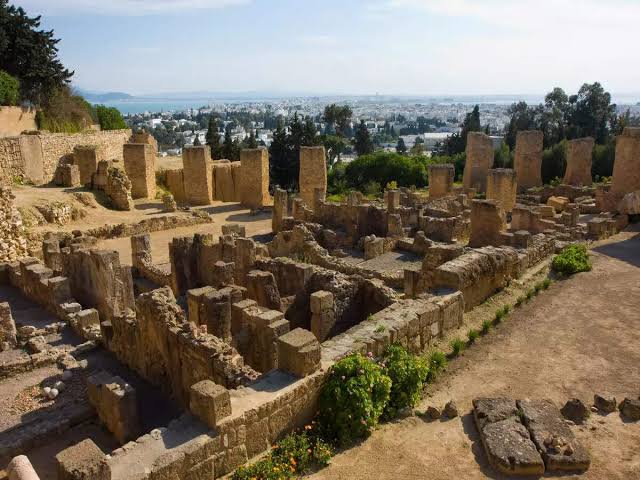
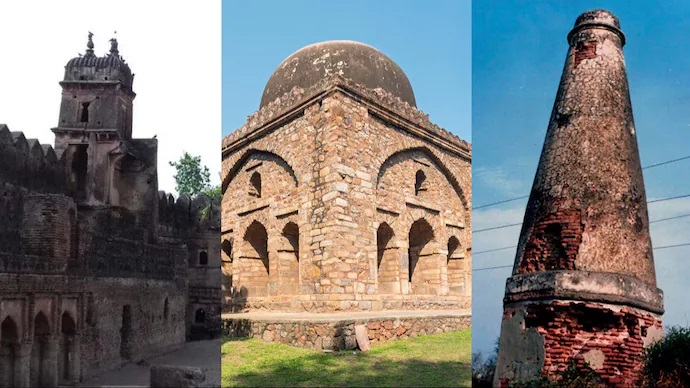
New Delhi: The Central Government has delisted 18 monuments from the list of protected monuments after determining that they no longer meet the criteria of national importance under the Ancient Monuments and Archaeological Sites and Remains (AMASR) Act, 1958. The development was disclosed by Union Minister for Culture and Tourism Shri Gajendra Singh Shekhawat in a written reply in the Rajya Sabha.
 Review Conducted Under Legal Provisions
The Ministry of Culture clarified that the monuments were removed following a detailed review process in accordance with provisions of the AMASR Act, 1958. The law empowers the Centre to declare monuments as protected sites of national importance and also to withdraw such status when they no longer fulfill prescribed criteria.
The government emphasized that no protected monument is currently missing and that the decision aims to ensure better allocation of conservation resources.
Monuments Across Six States Affected
The delisted monuments are located in Delhi, Haryana, Madhya Pradesh, Rajasthan, Uttarakhand, and Uttar Pradesh. In Delhi, structures such as the Nicholson Statue near Kashmiri Gate, Bara Khamba Cemetery, and Inchla Wali Gumti have been removed from the protected category.
Haryana’s Kos Minars in Gurugram and Karnal districts are also among the sites. Rajasthan and Madhya Pradesh saw inscriptions and a 12th-century temple removed from the list.
Uttar Pradesh accounts for several entries, including cemeteries and tombs in Lucknow, Banda, Jhansi, and Ghazipur, as well as ancient temple remains in Mirzapur and Buddhist ruins in Varanasi. A historic tablet on the Treasury Building in Varanasi was also delisted.
Understanding the AMASR Act
The Ancient Monuments and Archaeological Sites and Remains Act, 1958 governs the preservation and protection of monuments and archaeological sites deemed to be of national importance. The Archaeological Survey of India (ASI) administers the Act and oversees conservation, maintenance, and regulation of activities near protected monuments.
Officials stated that periodic reassessment of protected monuments is part of administrative due diligence to maintain accuracy in the national heritage register.
Manuscript Digitization Gains Momentum
Providing an update on heritage preservation efforts, the Minister informed Parliament that more than 7.5 lakh manuscripts have been digitized under the Gyan Bharatam Mission. Of these, 1.29 lakh manuscripts are currently available online through the official portal at https://gyanbharatam.com.
The digitization initiative seeks to preserve India’s documentary and intellectual heritage while enabling scholars and researchers to access rare manuscripts digitally.
Support for Folk and Tribal Traditions
The Indira Gandhi National Centre for the Arts (IGNCA) continues to document endangered folk and tribal art forms through field surveys, research, and audio-visual recordings. Workshops, seminars, exhibitions, and publications are also organized to promote traditional knowledge systems.
These initiatives form part of broader efforts to safeguard India’s intangible cultural heritage.
Security Measures at Monuments
To ensure the safety of protected monuments, Multi-Tasking Staff have been deployed for watch and ward duties based on requirements. At selected sites with high visitor footfall or security sensitivity, private security personnel have also been engaged.
The Central Industrial Security Force (CISF) continues to guard high-profile monuments such as the Red Fort in Delhi and the Taj Mahal in Agra.