Once celebrated as the BJP’s “Singham” in Tamil Nadu, former IPS officer K Annamalai now finds himself navigating uncertain political terrain. His dramatic rise and equally visible marginalisation ahead of the state Assembly elections underline the complex interplay of alliance politics, caste equations and internal strategy shifts within the BJP.
From ‘Mr Clean’ Officer to Political Firebrand
Born into a farming family in Karur district, Annamalai studied engineering at PSG College of Technology, Coimbatore, and later management at IIM Lucknow before joining the Indian Police Service in 2011. Serving in Karnataka, he built a reputation for integrity and decisive action, earning the nickname “Singham” among admirers.
In 2019, he resigned as Deputy Commissioner of Police in Bengaluru, citing personal reasons. Within a year, he joined the BJP and, by 2021, became the party’s youngest Tamil Nadu state president. His entry injected new energy into the BJP’s state unit, which has traditionally struggled to gain a strong foothold in Dravidian-dominated politics.
 Aggressive Campaigning and Media Spotlight
As state chief, Annamalai kept the BJP consistently in the headlines. He launched sharp attacks on the ruling DMK, released what he termed “DMK Files” alleging corruption, and undertook the ‘En Mann, En Makkal’ yatra covering all 234 Assembly constituencies ahead of the 2024 Lok Sabha polls.
While the BJP failed to win any of the 23 seats it contested in 2024, it claimed its vote share rose to around 11 percent. Political observers note that while this marked a numerical increase compared to 2014, the expansion was not transformative in electoral terms.
Alliance Politics and Leadership Change
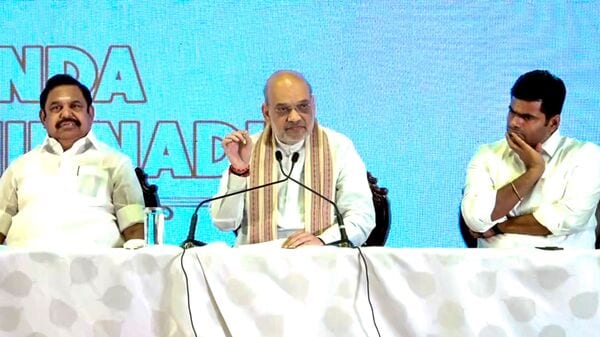
The turning point came in April 2025 when the BJP replaced Annamalai as state president with Nainar Nagenthran. The move was widely viewed as an attempt to smoothen alliance negotiations with the AIADMK under Edappadi K Palaniswami.
Annamalai’s relentless criticism of the AIADMK had strained ties. Reports suggested that his removal was a precondition for reviving the alliance ahead of Assembly elections. Both leaders belong to the Gounder community, adding another layer to the political equation.
Reduced Role and Internal Dissent
In February 2026, Annamalai stepped down as election in-charge for six constituencies, citing his father’s ill health. However, party insiders indicated dissatisfaction over his reduced responsibilities. His exclusion from the BJP’s Legislative Assembly election management committee further fuelled speculation about his diminishing influence.
At the same time, the removal of a key organisational functionary following internal deliberations hinted at ongoing churn within the state unit.
Strategy Missteps or Cultural Disconnect?
Political analysts argue that Annamalai’s centralised leadership style may not have aligned with Tamil Nadu’s consensus-driven political culture. His strong social media presence and combative rhetoric energised supporters but also polarised opinion.
Some controversies, including allegations made in sensitive cases that were later contradicted by investigative findings, dented his image among moderate voters. Critics also pointed to the induction of controversial figures into party roles during his tenure.
What Lies Ahead?
Despite setbacks, Annamalai retains a dedicated support base, particularly among young voters drawn to his bureaucratic background and assertive persona. Speculation about his future ranges from a post-election comeback within the BJP to a long-term strategic repositioning.
At 41, Annamalai remains one of the BJP’s most recognisable faces in Tamil Nadu. Whether his political journey mirrors the cinematic heroism associated with his nickname or settles into a quieter chapter will depend on electoral outcomes and party strategy in the months ahead.