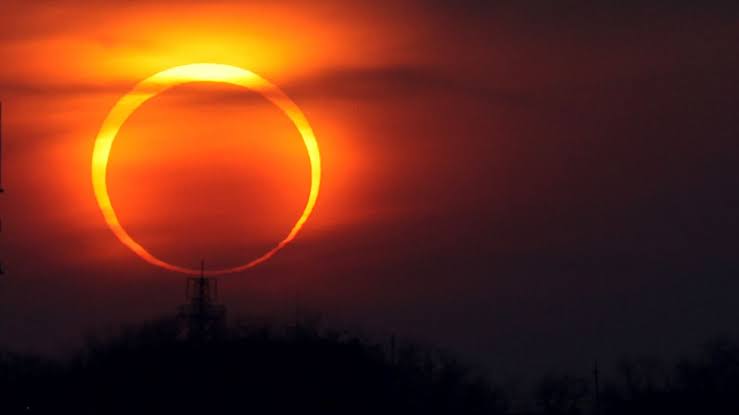
New Delhi: Skywatchers around the world are gearing up for the first solar eclipse of 2026, scheduled for February 17. The celestial event will be an annular solar eclipse, popularly known as the “Ring of Fire.” However, a key question remains for Indian astronomy enthusiasts will it be visible in India?
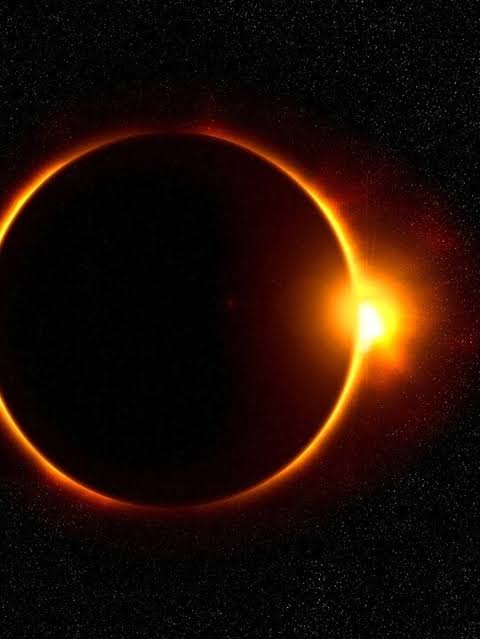 What Is an Annular Solar Eclipse?
A solar eclipse occurs when the Moon passes between the Earth and the Sun, temporarily blocking sunlight. In an annular solar eclipse, the Moon is farther from Earth in its elliptical orbit. As a result, it does not completely cover the Sun.
This creates a glowing ring around the dark silhouette of the Moon a phenomenon famously called the “Ring of Fire.” Unlike a total solar eclipse, a thin outer edge of the Sun remains visible.
Will the 17 February 2026 Solar Eclipse Be Visible in India?
Unfortunately, the annular solar eclipse on February 17 will not be visible from India. The main annular path is confined to remote parts of Antarctica.
However, partial phases of the eclipse will be visible from select regions including parts of Antarctica, Africa, South America, and surrounding oceanic regions. India falls outside the eclipse’s visible path.
Indian sky enthusiasts can still witness the event through live streaming on NASA’s official platforms and other global observatories.
Solar Eclipse Timings in IST
The maximum annular phase is expected to last up to 2 minutes and 20 seconds, depending on viewing location.
Why Few People May Witness It Directly
The eclipse’s path passes largely over Antarctica, one of the most remote and least populated regions on Earth. Only a handful of research stations lie within the annular shadow.
Experts have noted that reaching the annular viewing zone would be logistically challenging. As a result, very few individuals may witness the event in person.
Safety Guidelines for Viewing
Looking directly at the Sun without proper eye protection can cause severe and permanent eye damage. Experts strongly recommend using ISO 12312-2 certified eclipse glasses.
Ordinary sunglasses are not safe for solar viewing. Those watching via live stream can safely enjoy the phenomenon without risk.
Upcoming Major Eclipses in 2026
The February event is just the beginning of an active year for skywatchers. A total lunar eclipse is scheduled for March 3, 2026, visible in parts of Asia, Australia, the Pacific Islands, and the Americas.
Later, on August 12, 2026, a total solar eclipse will sweep across Greenland, Iceland, Spain, Russia, and parts of Portugal. A partial lunar eclipse will follow on August 27–28.