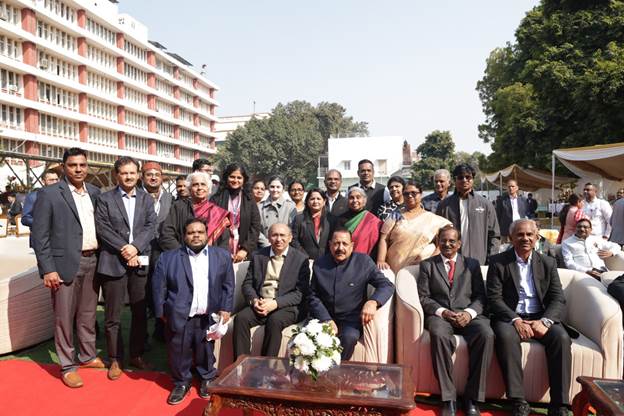
Mandi Gobindgarh, February 16: The Ministry of Steel has stepped up India’s green steel transition with a focused Chintan Shivir at the National Institute of Secondary Steel Technology (NISST), bringing policymakers and industry leaders together to chart a low-carbon future for the secondary steel sector.
 Secondary Steel Sector at the Core
The one-day deliberation marked a significant step in aligning India’s fast-growing steel industry with sustainability goals. The secondary steel sector, which accounts for nearly 47% of the country’s total steel production, was the central focus of discussions.
Shri Sandeep Poundrik, Secretary, Ministry of Steel, emphasized that India stands out globally as production, consumption and installed capacity in steel continue to grow annually at 8–10%. He stressed that decarbonising the secondary sector is crucial to sustaining this growth while meeting climate commitments.
NISST’s Expanding Role in Certification
The National Institute of Secondary Steel Technology has emerged as a key institution in the green transformation process. Officials noted that NISST now conducts training programmes twice a month across major steel clusters to enhance technical capabilities and environmental standards.
The institute has also been designated as the nodal agency for green steel certification. So far, it has issued green steel certificates to 76 industries, covering approximately 10.98 million tonnes of production.
The Ministry is simultaneously working on an incentive scheme aimed at encouraging technological upgrades in the secondary steel segment to further reduce carbon emissions.
Hydrogen and Low-Carbon Innovation
Technical sessions at the Chintan Shivir focused on emerging low-carbon technologies that could reshape steel manufacturing in India. Experts discussed green hydrogen injection into blast furnaces to significantly reduce carbon dioxide emissions.
The potential use of hydrogen in rotary kiln-based iron-making processes was also examined. These technologies are expected to lower dependence on fossil fuels while improving operational efficiency.
Another major topic was vertical shaft-based Direct Reduced Iron (DRI) production using water gas as a reductant, which offers flexibility in fuel usage and lower emission intensity.
Battery Storage and Renewable Integration
Industry representatives also deliberated on deploying Battery Energy Storage Systems (BESS) within the secondary steel ecosystem. BESS can reduce grid dependence and help industries optimise renewable energy consumption during off-peak hours.
Participants highlighted that integrating renewable power solutions would not only reduce emissions but also enhance cost competitiveness in the long term.
Export Opportunities and CBAM Challenges
The session reviewed export opportunities for alloy steel products amid evolving global climate regulations. Particular attention was given to the Carbon Border Adjustment Mechanism (CBAM), which may affect Indian steel exports to certain markets.
Stakeholders agreed that early adoption of green certification and compliance with international standards could provide Indian manufacturers a strategic advantage.
Shri Daya Nidhan Pandey, Joint Secretary, Ministry of Steel and Chairman of NISST, reiterated the institute’s commitment to capacity building so that smaller and mid-sized players can actively participate in the green transition.
Policy, Industry and Sustainability Alignment
The Chintan Shivir underscored the importance of coordinated action among government bodies, CPSEs and private industry leaders. Policymakers and technical experts exchanged insights on innovation pathways, cost challenges and financing requirements.
The deliberations concluded with a clear message: sustainable growth and environmental responsibility must move together in India’s steel sector. With certification mechanisms, policy incentives and technological breakthroughs gaining momentum, the secondary steel industry is set to play a defining role in India’s decarbonisation journey.