 From Ornamental to Ecological Plantations
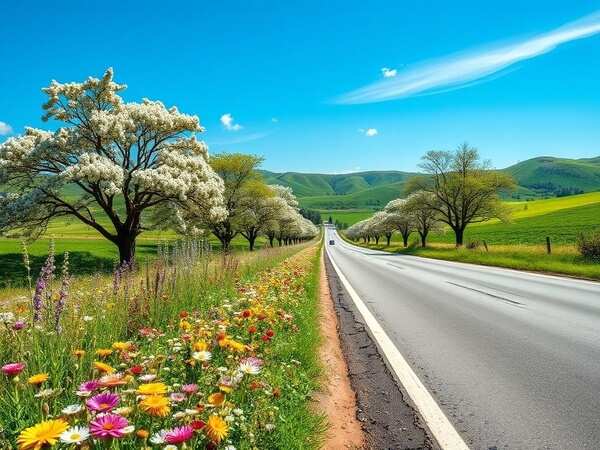
Under the Bee Corridor programme, highway plantations will focus on nectar- and pollen-rich species that flower across different seasons. The objective is to create a near-continuous blooming cycle throughout the year, ensuring a steady food source for bees.
NHAI will plant a mix of trees, shrubs, herbs and grasses. Native species such as Neem, Karanj, Mahua, Palash, Bottle Brush, Jamun and Siris have been identified for their pollinator-friendly properties and adaptability to Indian agro-climatic conditions.
The corridors will retain natural elements by allowing flowering weeds to bloom and preserving dead wood and hollow trunks, which serve as nesting and resting habitats for wild pollinators.
Strategic Corridor Planning
NHAI field offices across the country will identify suitable highway stretches and vacant land parcels for developing pollinator corridors. Clusters of flowering trees will be planted at intervals of approximately 500 metres to 1 kilometre — matching the average foraging range of honeybees and wild bees.
Each field office has been tasked with planning and developing at least three pollinator corridors during the financial year 2026–27. The initiative will be implemented in phases, tailored to local climatic and ecological conditions.
This targeted spacing strategy is designed to create interconnected ecological pathways rather than isolated patches of greenery.
40 Lakh Trees Targeted
For the year 2026–27, NHAI plans to plant around 40 lakh trees along National Highways. Significantly, nearly 60 percent of these plantations will fall under the Bee Corridor initiative.
Officials describe the effort as part of a broader push toward environmentally responsible highway development. Plantation drives will now be evaluated not only for aesthetic value but also for measurable ecological impact.
The move reflects NHAI’s recognition that infrastructure growth must integrate sustainability goals to mitigate biodiversity loss and climate challenges.
Supporting Agriculture and Ecosystems
Pollinators such as honeybees are indispensable for agricultural and horticultural productivity. A decline in pollinator populations has raised concerns globally, with implications for food security and ecosystem stability.
By developing Bee Corridors, NHAI aims to reduce ecological stress and strengthen pollination services. The initiative is expected to indirectly benefit farmers and enhance crop yields in adjoining regions.
Environmental experts note that integrating biodiversity into linear infrastructure like highways can significantly expand habitat networks across large landscapes.
A Model for Green Infrastructure
The Bee Corridor programme underscores a larger transition in India’s infrastructure planning — from purely functional design to environmentally integrated models. National Highways, which span thousands of kilometres, present a unique opportunity for large-scale ecological restoration.
Through this initiative, NHAI seeks to demonstrate that economic growth and ecological conservation can coexist. By aligning plantation activities with pollinator conservation, the Authority aims to create replicable models for green infrastructure.