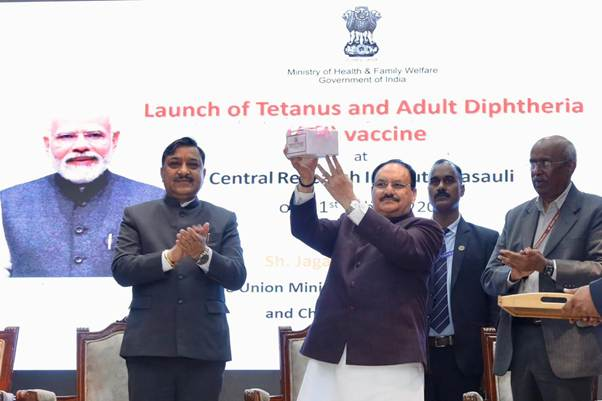
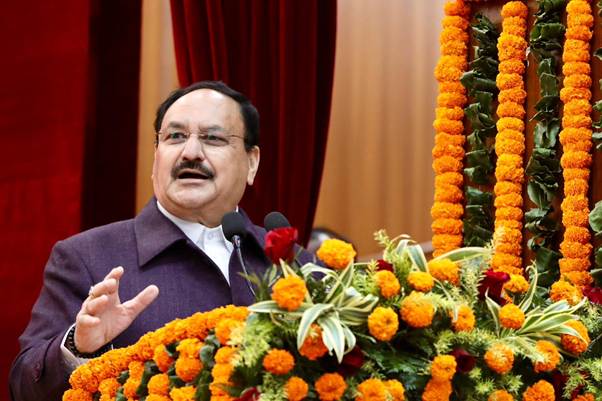
 Addressing the gathering, Shri Nadda congratulated the scientists, technical experts, and staff of CRI, calling the launch a significant step toward India’s vision of Atmanirbhar Bharat in health and medicine. He emphasized that the government under Prime Minister Shri Narendra Modi has set clear goals for self-reliance in pharmaceuticals and healthcare.
The vaccine has been formally introduced under the Universal Immunization Programme (UIP), with CRI scheduled to supply 55 lakh doses by April 2026. Production is expected to scale up in the coming years to further bolster India’s largest immunization initiative, which currently provides protection against 12 vaccine-preventable diseases.
Highlighting India’s global leadership in vaccines, Shri Nadda noted that India is recognized as the “pharmacy of the world” and has achieved Maturity Level 3 in the World Health Organization’s global benchmarking of regulatory systems. He credited institutions like CRI for their critical role in maintaining robust vaccine standards and regulatory frameworks.
Shri Nadda recalled India’s rapid vaccine development during the COVID-19 pandemic, delivering two indigenous vaccines within nine months and administering over 220 crore doses. He also highlighted India’s global solidarity under the Vaccine Maitri initiative, supplying vaccines to nearly 100 countries, including 48 nations free of cost.
CRI is the first government institute to manufacture vaccines under Good Manufacturing Practices (GMP), reflecting modernization of public sector manufacturing. The Minister emphasized the crucial role of digital platforms like U-WIN in tracking pregnant women and children for immunization, enabling India to achieve nearly 99% vaccine coverage—a transformative milestone in public health.
Shri Nadda also referenced Ayushman Bharat – Pradhan Mantri Jan Arogya Yojana, the world’s largest publicly funded health coverage scheme, benefitting over 62 crore citizens. Institutional deliveries have increased from 79% to 89%, demonstrating strengthened maternal health services across the nation.
The Minister concluded that these interventions, along with CRI’s contributions, reinforce India’s health security and demonstrate the impact of sustained governance in public health.