 Expanding Science and Technology Partnership
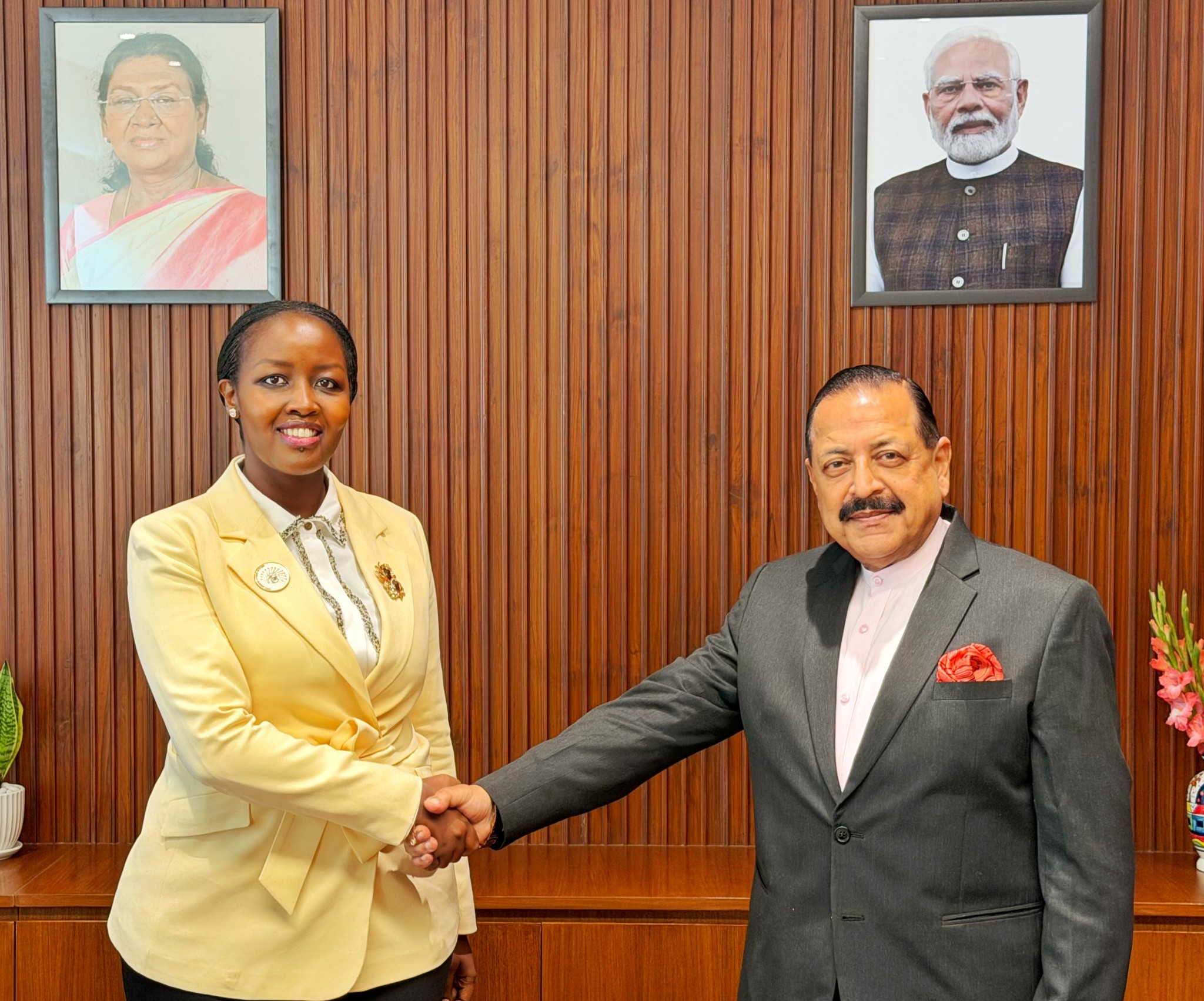
Dr Jitendra Singh recalled the long-standing ties between India and Rwanda and noted that cooperation in science and technology has steadily expanded under the India–Africa Forum Summit framework. He appreciated Rwanda’s selection as the first country to implement the Technology Transfer Programme for Africa.
The Minister also referred to the India–Rwanda Innovation Growth Programme, which has become a model for similar collaborations across the continent. According to him, India’s engagement with Africa is increasingly driven by knowledge exchange, skill development and innovation-led growth.
AI, Startups and Deep-Tech Opportunities
Highlighting India’s position as the world’s third-largest startup ecosystem, Dr Singh said innovation has become a key driver of economic expansion and employment generation. Over the past decade, India has accelerated progress in artificial intelligence, quantum technologies, space applications and advanced research.
He emphasised that India now follows an open, collaborative model that integrates government institutions, academia, private industry and startups. Sensitive sectors such as space and nuclear energy have also been opened to private participation, creating new avenues for global cooperation.
The discussions also touched upon policy reforms enabling private players in the nuclear sector, including work on Small Modular Reactors (SMRs), an area of potential collaboration.
Genomics and Bio-Manufacturing in Focus
Dr Singh underscored India’s advances in life sciences, genomics and biotechnology. He highlighted national programmes in gene therapy and bio-manufacturing, including the Bio-Manufacturing Shakti Mission, launched with an initial allocation of ₹10,000 crore to promote affordable and high-quality medical devices and advanced healthcare solutions.
He invited Rwanda to partner in India’s expanding deep-tech sector, particularly in areas that combine research with scalable industrial application. The approach, he said, is to create practical, time-bound collaboration frameworks rather than broad declarations.
Rwanda’s Vision as a Tech Hub
On her part, Minister Paula Ingabire outlined Rwanda’s ambition to emerge as a Pan-African technology and innovation hub. She highlighted initiatives such as Kigali Innovation City and the AI Scaling Hub supported by global partners.
With nearly 70 percent of its 14 million population under the age of 25, Rwanda is investing heavily in digital skills, innovation-led entrepreneurship and technology adoption. The Rwandan delegation expressed interest in strengthening cooperation in AI, health technologies, life sciences and energy.
Structured Framework for Cooperation
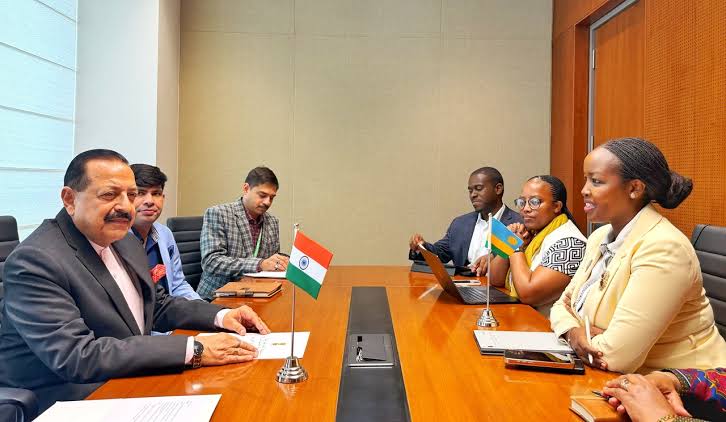
Both sides discussed connecting Indian innovation hubs, incubators and startups with their counterparts in Rwanda for mentoring, training and joint research. A draft Memorandum of Understanding on Science, Technology and Innovation cooperation has been shared through diplomatic channels.
The Department of Science and Technology conveyed its preference to first identify priority programmes and specific activities so that the proposed MoU remains focused and outcome-driven. The meeting concluded with an understanding to maintain close coordination through respective ministries and the High Commission to finalise next steps.
Technology as a Pillar of Bilateral Growth
The Rwandan High Commissioner to India referred to growing bilateral engagement across defence, healthcare, education and capacity building. Both sides agreed that science, technology and innovation can become a defining pillar of the next phase of India Rwanda relations.
The talks underscore a broader shift in India–Africa engagement from traditional cooperation models to partnerships rooted in emerging technologies and shared growth. With AI, genomics and nuclear energy on the agenda, the India–Rwanda dialogue marks a significant step toward a future-oriented strategic partnership.