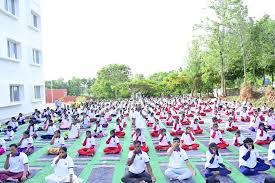
Teleconsultation services at AAMs have reached over 426.6 million consultations as of December 31, 2025. The centres also conduct preventive health initiatives, including more than 58 million yoga and wellness sessions and screenings for non-communicable diseases. Notable achievements include 401.3 million hypertension screenings, 398.6 million diabetes screenings, 338.3 million oral cancer screenings, and 158.6 million breast cancer screenings.
 Pradhan Mantri-Ayushman Bharat Health Infrastructure Mission (PM-ABHIM)
Launched in 2021, PM-ABHIM aims to strengthen health infrastructure from grassroots to district levels. The mission supports the establishment and upgradation of AAMs, block public health units, integrated district public health laboratories, and critical care hospital blocks. A total of ₹32,928.82 crore (~$3.63 billion USD) has been allocated from 2021–22 to 2025–26 for these developments.
Key infrastructure targets include 9,519 building-less sub-health centres, 5,456 urban AAMs, 2,151 block public health units, 744 integrated public health labs, and 622 critical care blocks at district hospitals and medical colleges. The mission also emphasizes pandemic preparedness with a real-time, IT-enabled disease surveillance network.
Digital Health Integration
The Ayushman Bharat Digital Mission (ABDM) has created over 863 million Ayushman Bharat Health Accounts (ABHA) as of February 27, 2026. These digital IDs enable secure access to medical records and teleconsultations with verified healthcare professionals. India also runs the Tele MANAS initiative, providing 24×7 mental health counselling in multiple languages, serving over 3.28 million individuals.
Innovations include drone-based medical deliveries under the i-DRONE initiative in regions like Himachal Pradesh, Manipur, and Nagaland, improving accessibility for vaccines, TB samples, and emergency medical logistics.
Immunisation and Vaccination Milestones
The National Health Mission (NHM) continues to advance maternal, child, and adolescent health, supported by over 1.03 million Accredited Social Health Activists (ASHAs). The Universal Immunisation Programme (UIP) serves 26.7 million newborns and 29 million pregnant women annually, offering vaccines including Hepatitis B, Polio (OPV/IPV), DPT, MR, Rotavirus, Pneumococcal Conjugate Vaccine, and Japanese Encephalitis.
In a landmark step, the government launched a nationwide HPV vaccination drive on February 28, 2026, administering the WHO-approved Gardasil-4 vaccine to adolescent girls aged 14 years. Approximately 11.5 million girls are eligible, with the 90-day campaign ensuring maximum coverage.
AI and Technology in Healthcare
India is integrating artificial intelligence (AI) across healthcare through the Strategy for AI in Healthcare for India (SAHI). Tools like Eka Doc support triaging and record management, while MadhuNetrAI aids retinal screenings for diabetic patients. AI predictive analytics in TB management has reduced adverse outcomes by 27%, enhancing disease control and proactive care.
Affordable Medicines and Biopharma Growth
The Pradhan Mantri Bhartiya Janaushadhi Pariyojana (PMBJP) offers over 2,000 essential medicines at 50–90% lower prices. The AMRIT initiative complements tertiary care with 255 pharmacies providing affordable drugs and implants. India’s pharmaceutical sector, the third-largest globally, supplies 20% of generic medicines worldwide and 70% of global anti-retroviral medicines, while also producing vaccines that meet UNICEF’s global demand.
Through initiatives like Biopharma SHAKTI and the National Biopharma Mission, India is advancing biopharmaceutical manufacturing, clinical trials, and workforce development, with innovations including affordable biosimilars and DNA-based vaccines.
Medical Education Expansion
Medical education has expanded with 2,045 colleges, including 780 allopathy, 323 dental, and 942 AYUSH institutions. MBBS seats increased 130% to 1,18,190 and postgraduate seats by 138% to 74,306, supporting India’s growing healthcare demands.
Conclusion
India’s integrated approach combining primary care, digital health, AI, vaccination campaigns, and affordable medicines positions the nation as a model for health equity. From over 1.8 lakh AAMs to the world’s largest digital health ecosystem, India ensures accessible and high-quality healthcare for all citizens, supporting its vision of Viksit Bharat by 2047.