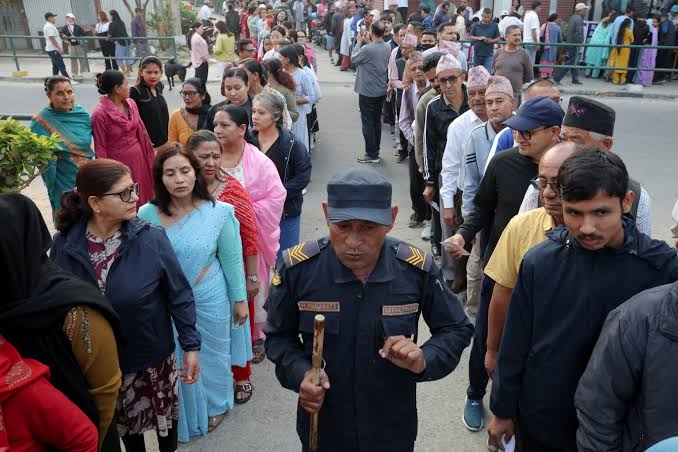
Kathmandu: Nepal is holding crucial parliamentary elections on Thursday as millions of citizens head to polling stations to choose a new government months after youth-led protests forced the previous administration from power.
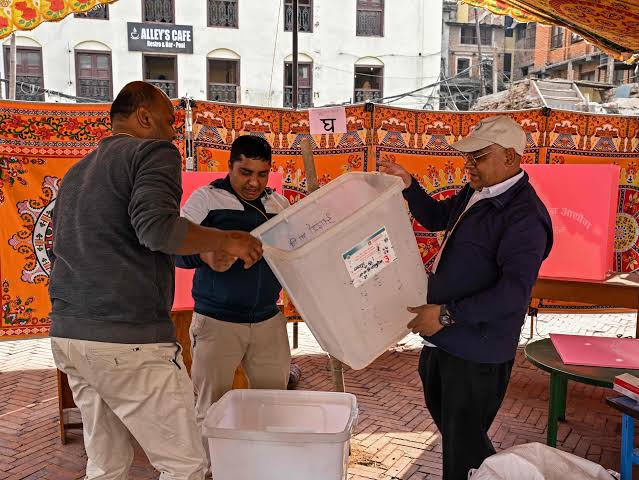 Historic Vote After Political Turmoil
The 2026 parliamentary election is widely seen as one of the most significant in Nepal’s recent history. The vote comes after large-scale youth-led protests in September 2025 that resulted in the collapse of the government and triggered fresh elections.
Those protests, driven largely by Generation Z activists, began after a controversial ban on multiple social media platforms. Demonstrations quickly expanded into nationwide calls for accountability, economic reform, and an end to political corruption.
The unrest turned violent in several areas, leaving at least 77 people dead and leading to the resignation of key political leaders. Following the crisis, an interim administration took charge and scheduled national elections to restore a stable government.
Millions of Voters Participate
According to Nepal’s Election Commission, nearly 19 million eligible voters are participating in the election to choose representatives for the 275-member House of Representatives.
The voting process began at 7 am and will continue until 5 pm across all 77 districts of the Himalayan nation. Early turnout figures suggested steady participation, with about 18 percent of voters casting ballots by noon and the figure rising steadily through the afternoon.
The Kathmandu Valley recorded relatively higher voter participation compared with several rural regions, reflecting strong interest in the election among urban residents.
Authorities have deployed security personnel across the country to ensure smooth polling. Vehicle movement was also temporarily restricted on election day to maintain order and prevent disruptions.
Major Political Contenders
The election has drawn intense competition among several political figures representing both traditional parties and emerging political movements.
Former Prime Minister KP Sharma Oli, representing the Communist Party of Nepal (Unified Marxist–Leninist), is attempting to return to power. Oli remains one of the most influential figures in Nepalese politics despite the collapse of his previous government.
Another prominent candidate is Gagan Thapa, leader of the Nepali Congress party, who has positioned himself as a reformist voice advocating stronger governance and economic reforms.
The race has also drawn attention due to the rising influence of independent candidates and youth leaders. Among them is Kathmandu mayor Balendra “Balen” Shah, a former rapper whose political rise reflects growing support for alternative leadership.
Youth Voters May Shape Results

A notable feature of the 2026 elections is the increasing influence of young voters. Election data indicates that more than half of Nepal’s electorate is between the ages of 18 and 40.
This demographic shift has significantly altered the political landscape, with parties focusing heavily on issues such as employment, corruption, governance reforms and economic growth.
Political analysts say youth voters could determine the final outcome in several constituencies, particularly in urban regions where dissatisfaction with traditional political leadership has been strongest.
Electoral System Explained
Nepal uses a mixed electoral system combining first-past-the-post voting with proportional representation. Voters cast two ballots — one for a candidate in their constituency and another for a political party.
Out of the 275 parliamentary seats, 165 are filled through direct constituency contests while the remaining 110 are allocated through proportional representation based on party vote share.
This system is designed to ensure both local representation and broader political balance in the federal parliament.
Key Issues in the Election
Economic challenges, unemployment and corruption have dominated the campaign. Nepal continues to face high youth unemployment and widespread poverty, with roughly one-fifth of the population living below the poverty line.
Foreign relations are also an important factor. Nepal must balance ties with its two powerful neighbours — India and China — both of which play major roles in trade and development projects.
India accounts for nearly two-thirds of Nepal’s international trade, making bilateral relations particularly significant. Information about India-Nepal cooperation can be found on the Ministry of External Affairs website.
Additional official information about Nepal’s democratic process can also be accessed through the Election Commission of India for comparative electoral frameworks.
Results Expected Soon
Election officials say ballot counting will begin immediately after polling ends and preliminary results could emerge within hours.
However, final results are expected to take several days as votes from remote mountain regions are transported to counting centres.
The outcome will determine the political direction of Nepal as it attempts to recover from months of instability and rebuild public trust in democratic institutions.