
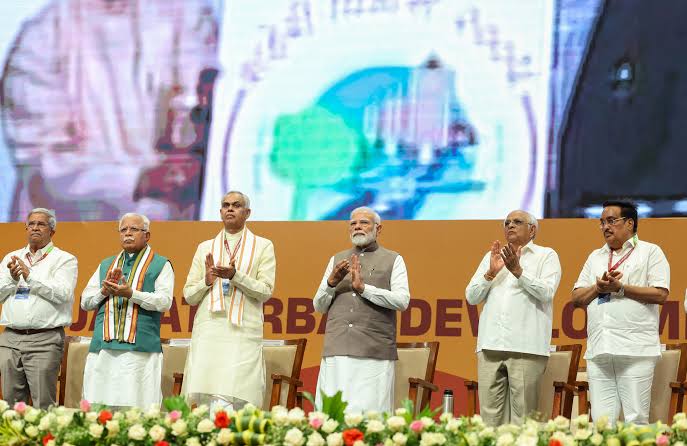
In a heartfelt address marking two decades of Gujarat’s Urban Growth Story, Prime Minister Narendra Modi spoke with conviction and clarity about India’s developmental journey and its aspirations for the future. Speaking in Gandhinagar, the Prime Minister reflected on Gujarat’s transformation over the last 20 years and outlined a bold roadmap for the decades ahead—one where India not only dreams of becoming a developed nation by 2047 but also takes deliberate steps to make that dream a reality.
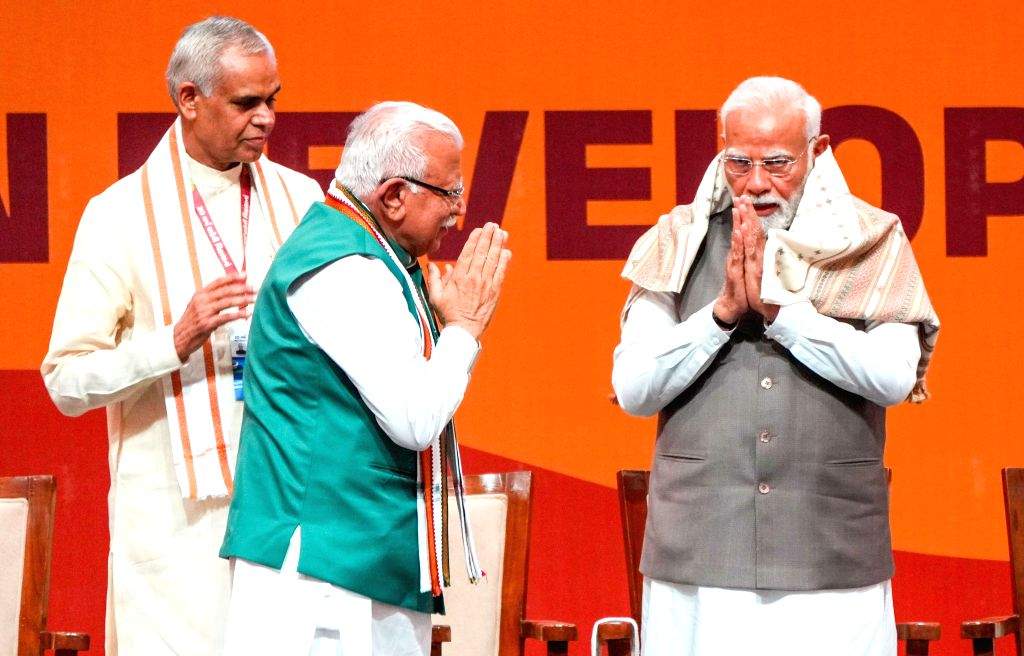

The Prime Minister launched the Urban Development Year 2025 as a continuation of the landmark 2005 initiative that had reshaped Gujarat’s urban landscape. He lauded the state’s long-term planning, emphasizing that Gujarat’s success came not from temporary fixes but from sustained vision and strategic execution. He remembered the skepticism that had once surrounded Gujarat’s potential and proudly pointed out how the state transformed from a salt-producing region to a global diamond hub, a result of years of relentless effort and collective determination.
Addressing the spirit of patriotism sweeping across the nation, PM Modi described the overwhelming response he witnessed in Gujarat and beyond following the success of Operation Sindoor. He noted how every Indian heart beats with renewed national pride. He recalled the long shadow of terrorism that India has endured since 1947, expressing sorrow over the lives lost to cross-border violence and underlining that terrorism today is not merely a proxy war but a deliberate, structured military tactic. With a somber tone, he stated that India’s response must be equally resolute and strategic, with transparency and integrity guiding every step.
Yet, even while addressing these grave concerns, the Prime Minister’s words carried a deep message of peace. Quoting the ancient Indian philosophy of Vasudhaiva Kutumbakam—the world is one family—he reaffirmed that India seeks no hostility, only progress and shared well-being. He reiterated that India’s strength is not in aggression but in unity, compassion, and resilience.
Turning his attention to the youth and the future, PM Modi urged every Indian to become a stakeholder in building a Viksit Bharat—a developed India by 2047. Drawing parallels with the sacrifices of freedom fighters like Bhagat Singh and Netaji Subhas Chandra Bose, he reminded citizens that their collective spirit had once brought independence, and the same resolve today can make India globally admired by its centenary of freedom.
The Prime Minister didn’t shy away from critiquing past governance, citing issues like neglected water resources in Jammu and Kashmir and bureaucratic inertia that delayed development. He emphasized the need to break away from silos within the government and foster a culture of cooperation. The Aspirational Districts Programme, he said, is now a global model for effective and inclusive governance.
He painted a vivid picture of urban India’s future—not just expanding cities, but vibrant economic hubs. He encouraged municipal bodies to not just build infrastructure, but to create economic ecosystems that uplift every citizen. He noted with pride the surge of start-ups in Tier-2 and Tier-3 cities, many led by women, as a sign of a new India rising from the grassroots.
The Prime Minister’s message was not just about economic metrics. He spoke of hearts and hopes, of the pride we must feel in “Made in India” products and the need to replace imported goods with locally produced alternatives. He called upon citizens to look into their daily lives, identify foreign products, and make conscious choices to support domestic manufacturing.
Reflecting on his journey from Gujarat’s Chief Minister to the nation’s Prime Minister, PM Modi spoke with humility and gratitude, remembering the trust people have placed in him. He credited the people of Gujarat for teaching him valuable lessons in governance and reaffirmed his commitment to serve with dedication.
As India rises to the fourth-largest economy in the world, he acknowledged the pressure and excitement of striving for the third. But he reminded everyone that the journey is not his alone—it is one to be taken together, by all 140 crore Indians. Operation Sindoor, he emphasized, is more than a military action—it is a call to every citizen to take responsibility for the nation’s progress.
The event was graced by the Governor of Gujarat, Shri Acharya Devvrat, Chief Minister Shri Bhupendrabhai Patel, and Union Ministers Shri Manohar Lal and Shri C.R. Patil, among other dignitaries. It was not just a celebration of Gujarat’s urban achievements but a reaffirmation of India’s collective mission—towards peace, progress, and pride.
In the Prime Minister’s closing message lay a simple but powerful appeal: let us all come together, shoulder to shoulder, with unwavering resolve, to shape the India of our dreams—strong, self-reliant, and admired by the world.