

Shri Rajesh Kumar Singh noted that consistent policy reforms, improved ease of doing business, and targeted government interventions have strengthened domestic defence manufacturing. The ecosystem today includes Defence Public Sector Undertakings (DPSUs), private industry, MSMEs, and a vibrant start-up sector working together to design and manufacture advanced defence platforms.
He pointed out that over 788 industrial licences have been issued to 462 companies, significantly expanding private sector participation. Defence exports crossing ₹23,162 crore in 2025 mark a nearly 35-fold increase since 2014, reflecting India’s growing credibility as a defence manufacturing and export hub.
Showcasing Indigenous Defence Capabilities
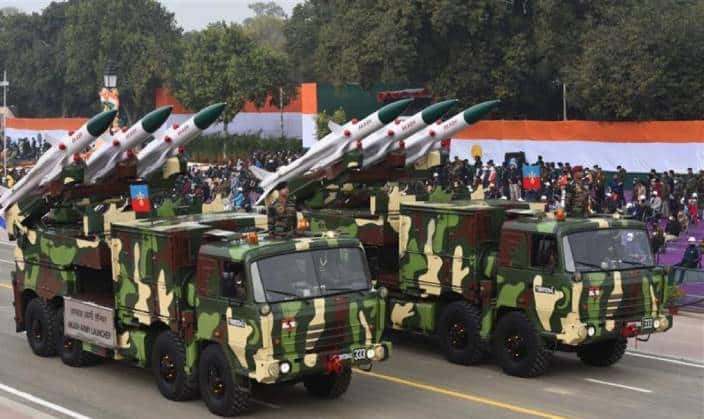
Citing examples of successful indigenous platforms, the Defence Secretary highlighted the Light Combat Aircraft Tejas, Astra Beyond Visual Range Missile, Dhanush artillery guns, armoured vehicles, UAVs, sensors, and India’s first indigenous aircraft carrier INS Vikrant. These platforms, he said, demonstrate the synergy between industry, research institutions, and skilled manpower.
He stressed that Aatmanirbharta in defence is not merely an economic objective but a strategic imperative aimed at reducing vulnerabilities and ensuring operational readiness in a rapidly changing geopolitical environment.
Human Capital at the Core of Strategic Autonomy
Highlighting the importance of human capital, Shri Rajesh Kumar Singh said true self-reliance requires sovereignty over skills, technology, and intellectual capital. He referred to the government’s initiatives under the Skill India Mission, with institutions such as the National Skill Development Corporation and the Directorate General of Training mapping current capabilities and future skill requirements for the defence and aerospace sectors.
He also spoke about the Prime Minister’s Skilling and Employment through Technology Upgradation (PM-SETU) programme, launched with an outlay of ₹60,000 crore over five years. The programme aims to bridge gaps between academia, industry, and defence R&D through Centres of Excellence, dual apprenticeships, AI-enabled training tools, and structured skilling pathways for Agniveers and veterans.
Punjab’s Potential and Role of Agniveers
The Defence Secretary highlighted Punjab’s untapped potential in defence manufacturing and called for stronger defence ecosystem networks, MSME linkages with R&D institutions, and dedicated testing and skilling infrastructure. He expressed confidence that Punjab and the northern region can emerge as major contributors to defence-led economic growth.
Emphasising the role of Agniveers, he said the Agnipath scheme has created a pool of disciplined and technically trained youth who can be seamlessly integrated into defence manufacturing and strategic sectors through National Skill Qualification Framework-aligned certifications.