
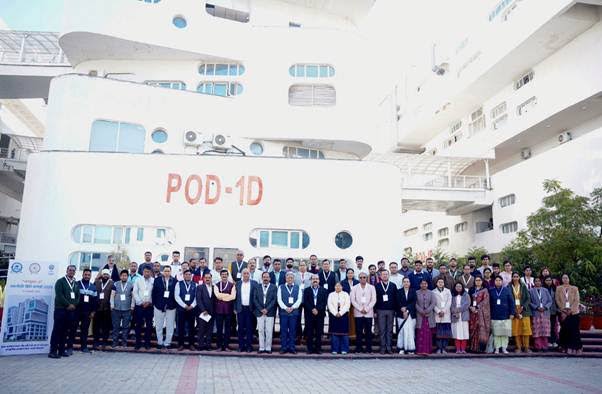
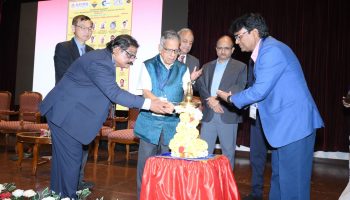

The symposium served as a significant platform to strengthen science communication in Hindi, enabling research outcomes and technological innovations to reach diverse audiences. A total of 25 research papers were presented by scholars, focusing on themes such as biodiversity and medicinal plants, biological waste management, human–AI collaboration, social and technological innovation, and the integration of Rajbhasha Hindi with emerging technologies.
CSIR-NIScPR, a Delhi-based constituent laboratory of the Council of Scientific and Industrial Research (CSIR), played a central role in conceptualising and supporting the event. The institute continues to work towards making science accessible in Indian languages, particularly Hindi, thereby empowering students, educators, innovators, and citizens with scientific awareness.
Expert Views on Science Communication in Hindi
Addressing the gathering, Shri C. B. Singh, Chief Scientist and Head of the Popular Science Division at CSIR-NIScPR, emphasised the importance of Technical Hindi in effective science communication. He highlighted the institute’s long-standing commitment to disseminating scientific knowledge in Hindi, notably through the publication of the popular science magazine “Vigyan Pragati”, which has been in circulation since 1952.
The symposium underlined that communicating science in the language of the masses plays a crucial role in enhancing public understanding, informed decision-making, and societal participation in scientific progress.
Role of IITs in Promoting Hindi in Technical Education
Prof. Suhas Joshi, Director of IIT Indore, spoke about the institute’s initiatives to promote Hindi in technical education. These include scientific discussions in Hindi, preparation of PhD abstract compilations in line with official language standards, and select undergraduate lectures delivered in Hindi to improve conceptual clarity among students.
Prof. Avinash Kumar Agrawal, Director of IIT Jodhpur, observed that “Abhyuday-3” has initiated meaningful technical discourse in Hindi. He noted that such initiatives would play a vital role in strengthening the use of Hindi in technical research, higher education, and innovation ecosystems across the country.
Research Presentations and Smarika Release
The symposium featured technical sessions, invited talks, panel discussions, and special lectures on contemporary themes including artificial intelligence, startups, innovation, higher education, and the use of Hindi in administration. Eminent scientists, educators, technical experts, official language officers, and researchers from across India actively participated in the deliberations.
A major highlight of the event was the release of the Smarika, a peer-reviewed publication compiling 26 accepted research papers. These were presented under two technical sessions Science and Engineering, comprising 12 papers, and Digital Technology and Innovation, featuring 14 papers. The publication reflects the growing academic engagement in Technical Hindi and serves as a valuable resource for researchers and policymakers.
Strengthening Inclusive Science Communication
In the valedictory session, Dr. Manish Mohan Gore, Senior Scientist at CSIR-NIScPR, highlighted the key takeaways of the symposium. He stressed the need for more such platforms that encourage scientists and scholars to discuss socially relevant scientific developments in Indian languages, including Hindi.
Through “Abhyuday-3”, CSIR-NIScPR reaffirmed its commitment to inclusive science communication, promotion of Technical Hindi, and strengthening the interface between science, technology, and societal needs. The symposium contributed significantly to the broader national goal of making science more accessible, participative, and socially relevant for citizens across India.