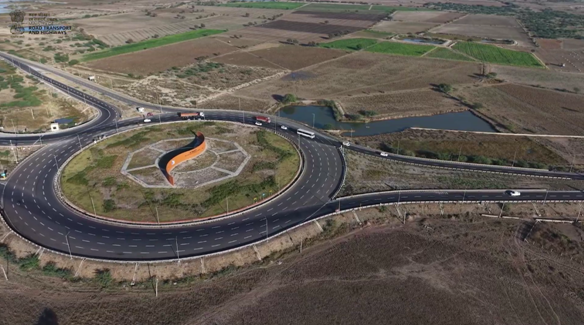
Ahmedabad, February 27, 2026: The 109-kilometre Ahmedabad–Dholera Greenfield Expressway (NE-8) is rapidly emerging as a transformative infrastructure corridor in Gujarat, cutting travel time, strengthening economic connectivity and promoting environmentally responsible construction under the Bharatmala Pariyojana.
 Strategic Connectivity to Dholera SIR
Stretching across Ahmedabad and Bhavnagar districts, the ₹5,800-crore expressway provides seamless connectivity to the Dholera Special Investment Region (DSIR) and links to the existing coastal highway network. Built as a greenfield project, it is designed to redefine mobility and unlock economic opportunities in the region.
Currently opened for public testing, commuters are experiencing significantly smoother and faster travel while final operational readiness assessments continue.
The expressway has been particularly impactful for regular travellers commuting between Gandhinagar, Ahmedabad and Bhavnagar.
Time Saved, Families Closer
Frequent traveller Narendra Singh Chudasma says the difference is substantial. Earlier, the journey between Gandhinagar and Bhavnagar would take between three and a half to four hours. Now, the same trip can be completed in approximately two and a half hours.
The saved time, he notes, has translated into more family time. What was once exhausting road travel has now become a manageable commute, improving work-life balance.
Boost to Investment in Dholera
The expressway is also strengthening Dholera’s position as a major investment destination. Improved connectivity has addressed one of the primary concerns for investors ease of access.
Reaching Dholera from Ahmedabad now takes around 45 minutes, compared to over two hours earlier. This dramatic reduction in travel time is expected to accelerate industrial and commercial interest in the region.
Residents of villages such as Pipli say the new highway has psychologically reduced distances. What once felt like a remote stretch is now closely integrated with Ahmedabad’s urban landscape.
Environment-First Infrastructure
A defining feature of the Ahmedabad–Dholera Expressway is its sustainable construction approach. Around 60 lakh metric tonnes of municipal waste from Ahmedabad have been reused in embankment construction, reducing landfill burden.
Additionally, 22 lakh metric tonnes of fly ash have been utilised, lowering industrial waste and carbon impact. A massive plantation drive accompanies the project, including over 2.7 lakh plants in the median and more than 1.5 lakh avenue plantations.
This blend of scale and sustainability demonstrates how large infrastructure projects can balance growth with environmental responsibility.
Modern Features and Future Expansion
The expressway includes a 30-metre-wide median designed for future expansion up to eight lanes. It provides direct connectivity to Dholera International Airport through an interchange at Chainage 67.
A planned semi high-speed rail corridor will run parallel to the expressway, with a 30-metre right-of-way already acquired. The project also features a closed tolling system for seamless travel and two modern way-side amenities.
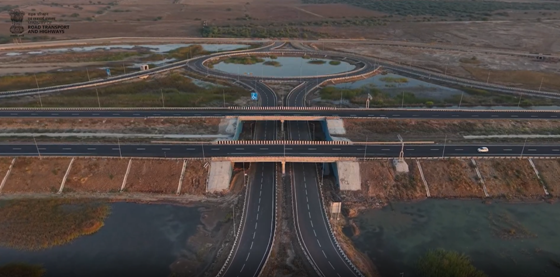
Infrastructure structures include three railway overbridges, eleven interchanges, fourteen flyovers, eighty-six underpasses and more than two hundred culverts, ensuring uninterrupted movement.
Drastic Reduction in Travel Time
The impact of the Ahmedabad–Dholera Expressway is clearly visible in reduced travel distances and time. The Ahmedabad to Dholera route has been cut from about 100 kilometres and over two hours to 83 kilometres and roughly 45 minutes.
Similarly, travel between Ahmedabad and Bhavnagar has reduced from 169 kilometres and over three hours to 141 kilometres and around one hour and forty-five minutes.
These reductions are not just numbers they translate into productivity gains, fuel savings and enhanced economic integration.