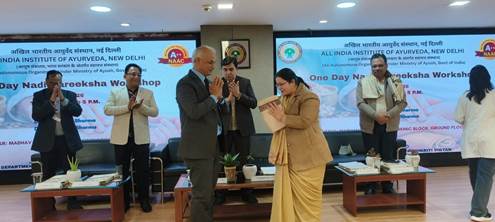
 Inaugural Ceremony Led by AIIA Leadership
The inaugural session was graced by Prof. (Vd.) P. K. Prajapati, Director of AIIA, who formally inaugurated the workshop. The ceremony was attended by senior academic and administrative leaders including Dr. R. K. Yadav, Dean (Post Graduate Studies), Dr. Raja Ram Mahato, Medical Superintendent (AMS), and Dr. Vivek Aggarwal, Head of the Department of RNVV.
The presence of the institute’s leadership underscored the strategic importance being accorded to diagnostic sciences within Ayurveda education and clinical research at the national level.
Focus on Strengthening Ayurvedic Diagnostic Skills
Addressing the gathering, Prof. (Vd.) P. K. Prajapati emphasised the urgent need to reinforce diagnostic competence in Ayurveda through practical, systematic, and evidence-based approaches. He highlighted that accurate diagnosis forms the backbone of effective treatment and long-term patient care in classical Ayurvedic practice.
He noted that Nadi Pareeksha, one of the most subtle and refined diagnostic tools described in Ayurvedic texts, continues to hold immense relevance in modern clinical settings when applied with discipline and scientific rigor.
Honouring Legacy and Embracing Technology
In his presidential address, Prof. Prajapati fondly remembered eminent Vaidyas who made significant contributions to the science of Nadi Pareeksha. He paid tribute to stalwarts such as Vaidya Basant Lad, Prof. R. K. Singh, and Prof. M. S. Baghel for their lifelong dedication to advancing Ayurvedic diagnostics.
He also stressed the importance of validating traditional diagnostic methods through modern technological tools. Referring to innovations such as the Nadi Tarangini application and emerging diagnostic technologies, he called for their thoughtful integration to enhance accuracy, documentation, and wider clinical acceptance.
Expert Sessions by Renowned Nadi Vaidyas
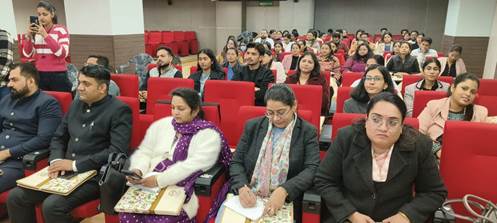
The workshop featured expert sessions by renowned Nadi Vaidyas Dr. Sudha Sharma and Dr. Rajiv Sharma, who served as guest speakers. Drawing from decades of clinical experience, the experts conducted practical demonstrations and hands-on training sessions that focused on the interpretative nuances of Nadi Pareeksha.
Participants were introduced to advanced techniques of pulse examination, including correlation with doshic imbalances, disease prognosis, and individualized treatment planning.
Interactive Learning and Clinical Integration
Interactive discussions, live demonstrations, and case-based analyses formed the core of the workshop’s academic structure. These sessions enabled scholars and faculty members to bridge theoretical understanding with real-world clinical application.
The experts also discussed the integration of classical Ayurvedic wisdom with contemporary diagnostic frameworks, helping participants appreciate the evolving role of Nadi Pareeksha in integrative healthcare models.
Capacity Building in Ayurveda Education
The primary objective of the workshop was to disseminate the practical and clinical dimensions of Nadi Pareeksha at both academic and practitioner levels. Organisers emphasised that strengthening diagnostic proficiency among educators and scholars is essential for ensuring consistency and authenticity in Ayurvedic education.
AIIA’s Commitment to Authentic Ayurveda
The successful conduct of the national workshop reflects AIIA’s sustained commitment to academic excellence, capacity building, and the promotion of authentic diagnostic methodologies. By fostering dialogue between tradition and technology, the institute aims to strengthen Ayurveda’s position within India’s evolving healthcare landscape.
As Ayurveda gains increasing global recognition, initiatives such as this workshop are seen as crucial steps toward preserving its classical foundations while enabling scientific validation and wider clinical application.