
Crash Details: What Happened on June 12?
On June 12, 2025, Air India Flight 171, a Boeing 787-8 Dreamliner, crashed shortly after takeoff from Ahmedabad, Gujarat. The tragedy claimed 260 lives, including passengers and crew. The aircraft lost engine thrust just moments after liftoff and crashed near a residential area, causing widespread devastation and grief.
The crash is being jointly investigated by India’s Aircraft Accident Investigation Bureau (AAIB) and the NTSB, as per international aviation norms. Boeing has also extended technical support.


According to AAIB’s preliminary findings, both fuel control switches in the cockpit were briefly turned to the “cutoff” position. This move cut fuel supply to the engines during a critical phase of takeoff. Although the switches were reset after 10 seconds, it was too late—the aircraft had already lost thrust.
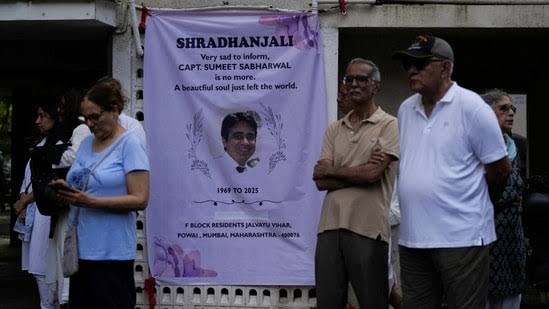
The cockpit voice recorder captured First Officer Clive Kunder asking Captain Sumeet Sabharwal, “Why did you cutoff?” to which the captain replied that he had not done so. The exchange has triggered speculation about human error, but investigators stress that the full context is not yet known.
NTSB’s Firm Stand Against Speculation
In a statement shared on X (formerly Twitter), NTSB Chairwoman Jennifer Homendy reaffirmed the agency’s commitment to transparency and due process:
“Recent media reports on the Air India 171 crash are premature and speculative. India’s Aircraft Accident Investigation Bureau just released its preliminary report. Investigations of this magnitude take time. We fully support the AAIB’s public appeal… All investigative questions should be addressed to the AAIB.”
The NTSB emphasized that drawing conclusions before a complete technical and human factor analysis is irresponsible and risks undermining the investigation process.
Air India and AAIB Urge Public Patience
Air India CEO Campbell Wilson also urged restraint. “Speculation is unhelpful at this stage. We request all stakeholders, including media, to wait for the final report,” he said.
The AAIB echoed this stance, requesting the public to avoid forming narratives based on incomplete information. The bureau will release a final report after examining black box data, maintenance logs, and interviews with surviving crew and Air India officials.
Fallout and Industry-Wide Impact
In response to the findings, India’s civil aviation regulator, DGCA, ordered mandatory inspections of fuel control systems in all Boeing 787 and 737 aircraft operated in the country. Airlines were asked to review standard operating procedures related to cockpit switch protocols.
This crash has once again highlighted the importance of robust training, safety audits, and aircraft system integrity in India’s growing aviation sector.
Pilot Associations Criticize Western Media
Indian pilot unions and aviation experts have also condemned Western media reports for prematurely blaming the captain. A retired Indian Air Force pilot publicly questioned the legitimacy of reports from the Wall Street Journal, which suggested pilot error without access to full evidence.
“Blaming a deceased pilot without full context or investigation is unethical and violates ICAO norms,” said a senior commander at Indian Pilots’ Guild.
A Call for Responsible Journalism
Accidents like Flight 171 require time, technical expertise, and collaboration across borders. Investigations often uncover a chain of events—not just a single point of failure. Whether it’s human error, technical malfunction, or a mix of both, facts must lead the narrative—not assumptions.
Until then, the best way to honor the victims is to demand thoroughness, not sensationalism.