
Amazon Leads H-1B Sponsorship
Federal data shows that Amazon Com Services LLC tops the list with 10,044 H-1B visa holders. Indian IT giants like Tata Consultancy Services (5,505) and major US tech firms such as Microsoft (5,189), Meta (5,123), Apple (4,202), and Google (4,181) follow closely. Other notable sponsors include Cognizant Technology Solutions (2,493), JP Morgan Chase & Co (2,440), Walmart (2,390), and Deloitte Consulting (2,353).
Impact on Indian Diaspora
Indian nationals constitute nearly 70% of H-1B visa holders in the United States. The fee surge poses a significant challenge, as many IT outsourcing companies may struggle to absorb the new costs. This may influence employment stability for thousands of skilled Indian professionals.


The Trump administration claims the H-1B program has been “systemically abused” by IT outsourcing firms to replace American workers. Commerce Secretary emphasized that the increase encourages US companies to hire more American talent while prioritizing foreign workers with extraordinary skills.
Visa Cap and Green Card Backlog
US Citizenship and Immigration Services (USCIS) confirmed that petitions have already reached the 65,000 H-1B visa regular cap and the 20,000 advanced degree master’s cap for FY 2026. With the fee hike, employers must decide whether sponsoring foreign workers remains financially viable, especially given the decades-long Green Card wait for Indian professionals.
Temporary Restriction and Proclamation
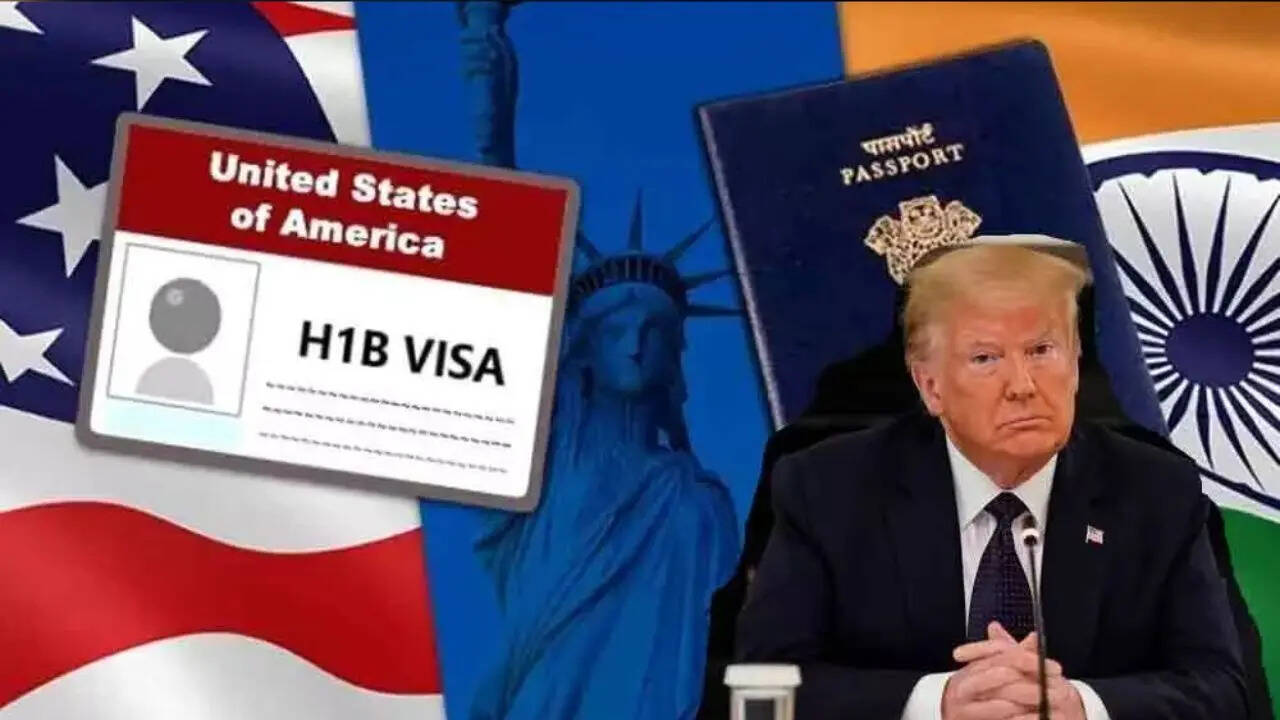
Trump’s proclamation, “Restriction on Entry of Certain Nonimmigrant Workers,” mandates that all H-1B petitions must be accompanied by the $100,000 payment. Unless extended, this restriction will expire 12 months from September 21, 2025.
The new policy signals a major shift in US immigration and labor strategy, emphasizing domestic employment while carefully selecting high-value foreign talent. Indian IT professionals and global tech companies will need to navigate this significant policy change in the coming months.