 Bastar’s Journey from Conflict to Confidence
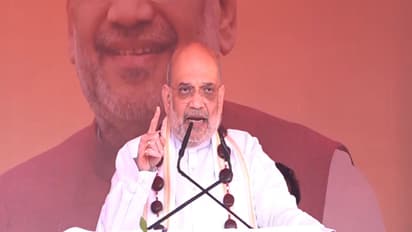
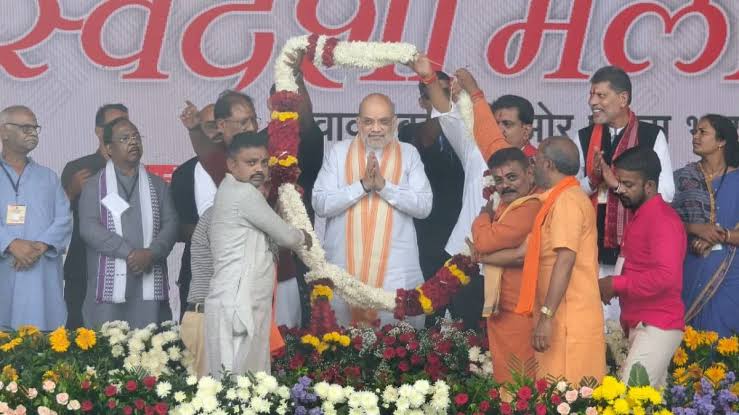
Addressing the gathering, Shah recalled the government’s resolve to end Left Wing Extremism before March 2026 and asserted that the goal is now within reach. He said that when the Bastar Olympics 2026 are held next year, the region will be entirely free of Naxal violence.
The Home Minister noted that Bastar, once known for slogans of “Lal Salaam,” now resonates with chants of “Bharat Mata Ki Jai.” He described this transformation as a reflection of restored trust between the people and the government, driven by security, development and inclusive governance.
Sports as a Bridge to the Mainstream
A major highlight of the Bastar Olympics 2025 was the participation of more than 700 youth who had earlier surrendered and given up the path of Naxalism. Shah said their presence on the sports field sends a powerful message across the country.
“These young men and women chose hope over fear and development over destruction,” he said, adding that sports has emerged as a bridge bringing misguided youth back into the national mainstream. One dedicated team in the Olympics was composed entirely of surrendered Naxalites.
Record Participation and Women’s Leadership
The Union Home Minister highlighted the unprecedented scale of participation in this year’s Olympics. As many as 3.91 lakh players took part in the Bastar Olympics 2025, a sharp rise from 1.65 lakh participants last year.
He emphasized that women athletes outnumbered men in growth rate, with female participation rising nearly threefold. Shah described this as a sign of growing confidence among tribal women and a reflection of social transformation in the region.
Vision for a Developed Bastar
Shah outlined an ambitious roadmap to make the Bastar division comprising Kanker, Kondagaon, Bastar, Sukma, Bijapur, Narayanpur and Dantewada the most developed tribal region in India within the next five years.
He said the government is committed to ensuring housing, electricity, drinking water, toilets, LPG connections, food security and free healthcare of up to ₹5 lakh for every family. Roads, railways, banking facilities within a five-kilometre radius and a dense network of primary and community health centres are also part of the plan.
Jobs, Industry and Cultural Revival
The Home Minister said cooperative-based forest produce processing units, dairy development and new industries will be established to boost income and employment. Bastar’s tribal districts are expected to emerge as leading milk-producing regions among tribal areas.
He also spoke about preserving Bastar’s rich cultural heritage, including tribal art, music, dance and traditional games. The Chhattisgarh government has begun recording traditional songs in modern studios, while festivals once suppressed by violence are being revived.
Appeal to Naxalites and Community Leaders
Shah reiterated that the government’s objective is not to eliminate misguided youth but to bring them back into society. More than 2,000 Naxalites have already surrendered, he said, and attractive rehabilitation schemes are being prepared for those who lay down arms or were affected by Naxal violence.
He appealed to tribal leaders, social workers and community elders to persuade armed Naxalites to return to the mainstream. “Only peace can pave the way for development,” he said, stressing that violence benefits no one.
From Fear to the Future
Shah concluded by stating that Bastar is no longer synonymous with fear but with the future. Where gunfire once echoed, school bells now ring. Where roads were once a dream, highways and railway tracks are taking shape.
With the joint efforts of the Central and Chhattisgarh governments, Bastar is poised to become a model of peace, sports-led development and tribal empowerment, reflecting the vision of a new and confident India.