
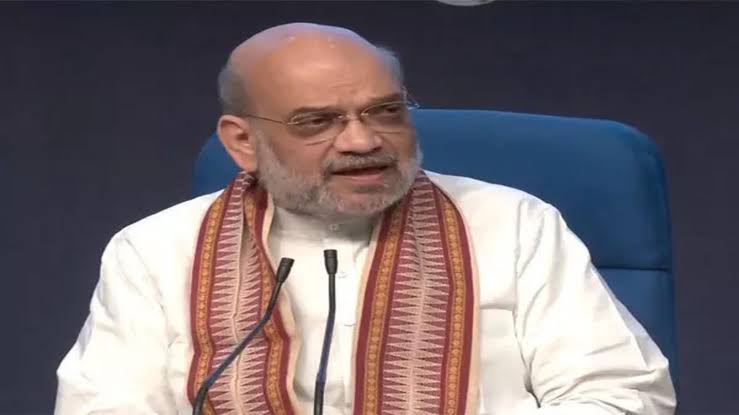
New Delhi, May 20 — In a significant step toward transforming India’s dairy industry, Union Home Minister and Minister of Cooperation Shri Amit Shah chaired a high-level meeting today in the national capital, focusing on sustainability and circular practices in the cooperative dairy sector. The meeting brought together key stakeholders, including Union Minister of State Shri Krishan Pal Gurjar, Shri Murlidhar Mohol, senior officials from the Ministry of Cooperation and the Department of Animal Husbandry and Dairying, as well as heads of leading institutions such as NDDB and NABARD.


Shah passionately spoke about ensuring that the benefits of carbon credit systems directly reach farmers. “If we truly want to uplift our rural communities, we must empower our dairy cooperatives to lead in sustainability and circular economy initiatives,” he said. He advocated for strengthening milk unions, expanding food processing in dairy plants, and integrating scientific models to raise farmers’ income while reducing environmental impact.
Highlighting the emotional and economic importance of dairy cooperatives, Shah noted their role in supporting millions of rural families. These cooperatives not only provide a stable income but also extend vital services such as veterinary care and credit access, significantly enhancing the livelihoods of small farmers and increasing the participation of rural women.
He envisioned a future where cooperative societies take charge of services currently dominated by the private sector—technical support, animal health, feed production, and efficient processing. “We must journey together from sustainability to circularity. This is the only way forward for a self-reliant and prosperous India,” he added.
Drawing inspiration from iconic models like Amul, the Minister reaffirmed the government’s commitment to expanding the reach and capacity of village-level cooperatives. These initiatives, Shah believes, are central to achieving the broader national goal of a developed India.
He also commended institutions such as the NDDB, NABARD, and the National Cooperative Development Corporation for their tireless efforts. In particular, he lauded NDDB’s work in promoting biogas and cow dung management models, which are now being scaled across the country.
With warmth and determination, Shah concluded by reiterating that the cooperative movement holds the key to inclusive growth. “Through unity, trust, and collaboration, we can ensure that every farmer benefits from our collective progress. It is not just about development—it’s about dignity, self-reliance, and a shared future.”