
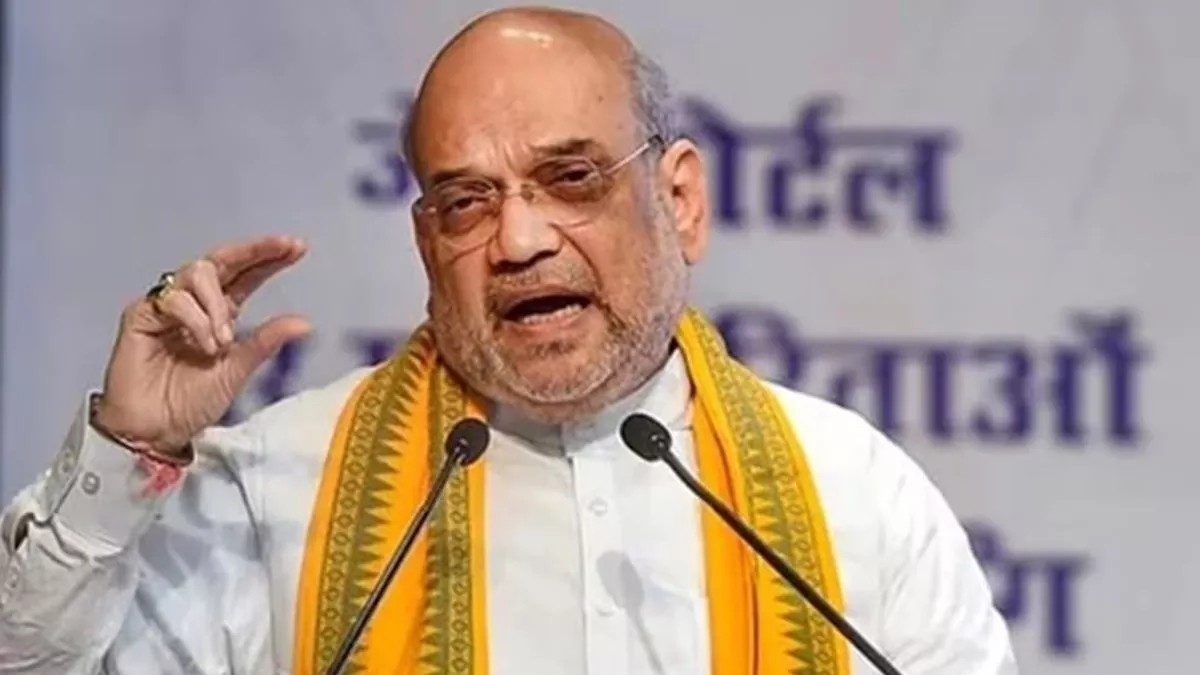
Government Acts Swiftly as Disaster Strikes Himachal
Himachal Pradesh has faced a relentless monsoon in 2025, marked by cloudbursts, flash floods, and devastating landslides. Villages have been swept away. Roads and bridges have collapsed. Families are displaced, and the terrain has undergone massive environmental degradation.
In response, Home Minister Amit Shah has directed the formation of a multi-sectoral central team to coordinate efforts, conduct scientific assessments, and advise on long-term recovery.


The team comprises top specialists from key institutions:
- National Disaster Management Authority (NDMA)
- Central Building Research Institute (CBRI), Roorkee
- Indian Institute of Tropical Meteorology (IITM), Pune
- Indian Institute of Technology (IIT), Indore
- Renowned geologists and climate scientists
This integrated approach ensures that the team includes experts in structural engineering, meteorology, hydrology, and geoscience—crucial for a state with fragile ecosystems like Himachal.
Proactive Steps: Inter-Ministerial Central Team Visits
Even before the state submitted any formal memorandum, the Central Government deputed an Inter-Ministerial Central Team (IMCT) to assess on-ground conditions. This team is currently visiting the most affected districts from July 18–21, 2025.
Such preemptive action underlines the government’s commitment to preparedness over reaction.
PM Modi’s Vision: Standing with States in Crisis
“The Centre stands firmly with all states in times of disasters, without any discrimination,” said Home Minister Amit Shah, echoing Prime Minister Modi’s mantra of cooperative federalism.
This vision was reflected in the high-level committee’s decision to allocate a massive ₹2006.40 crore to Himachal Pradesh for recovery and reconstruction post the 2023 monsoon havoc. Out of this, ₹451.44 crore was released as the first installment on 7 July 2025.
Immediate Relief Measures Rolled Out
As torrential rains battered the hills, the Centre stepped in with fast-track support. On 18 June 2025, it released ₹198.80 crore from the State Disaster Response Fund (SDRF) to support immediate relief operations in Himachal Pradesh.


Caption: Union Home Minister Amit Shah announces the formation of a multi-sectoral disaster team for Himachal Pradesh
Image Description: Amit Shah addressing officials and media after a high-level review meeting on Himachal Pradesh’s disaster situation.
NDRF and Armed Forces to the Rescue
The Centre has deployed 13 teams of the National Disaster Response Force (NDRF) across the worst-hit zones. Army columns and Indian Air Force choppers are also on standby for evacuation and supply drops in remote areas.
This large-scale coordination between agencies reflects a strong federal disaster response strategy.
Science-Driven Solutions for a Fragile Region
Himachal’s unique topography makes it prone to severe rainfall-triggered disasters. Experts from IITM Pune and CBRI Roorkee will help understand patterns, recommend safe infrastructure designs, and suggest early-warning mechanisms.
By including institutions like IIT Indore and NDMA, the government aims to make disaster management more data-driven and preventive than merely reactive.
Why This Matters: Lessons from 2023 and 2025
The 2023 monsoon caused widespread destruction in Himachal—an early warning. The intensified disasters in 2025 confirm the climate risks in hilly regions. This team’s formation is a step towards long-term resilience and local capacity-building.
Conclusion: United for Himachal’s Safety
Under the leadership of Prime Minister Modi and with swift decisions by Amit Shah, the central government is not just offering financial aid but also strategic expertise. The formation of a multi-sectoral central team signals a new, holistic approach to disaster risk management in India.
The people of Himachal Pradesh now have stronger institutional backing, quicker response systems, and scientific minds working to protect lives and livelihoods.