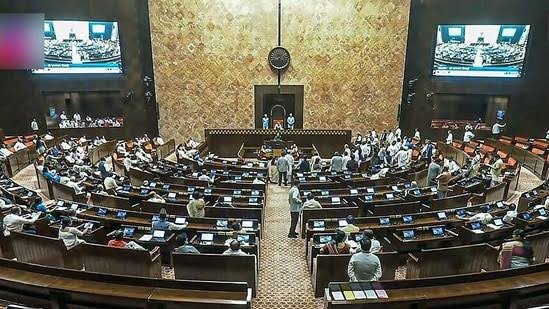
New Delhi, July 29, 2025 — The Lok Sabha turned into a battlefield of words as Home Minister Amit Shah defended the government’s military response to the Pahalgam terror attack, dubbed Operation Sindoor. In a powerful statement, Shah said, “Pakistan had no choice but to surrender.”
 Operation Sindoor: What Triggered It?
On April 22, 2025, a brutal terrorist attack in Pahalgam claimed 26 lives—25 Indians and one Nepali. The government blamed Pakistani-backed militants. Within a week, India convened a high-level CCS meeting. Swiftly, it suspended the Indus Water Treaty and expelled Pakistani citizens in India. This marked the beginning of a high-stakes military counter-offensive—Operation Sindoor.
Defence Minister Rajnath Singh had earlier said the action was “paused, not ended.” He warned of reactivation if Pakistan dares another provocation.
Amit Shah’s Parliament Bombshell
Speaking in the Lok Sabha on July 29, Shah detailed the massive damage inflicted during the operation. “Eleven Pakistani airbases were destroyed—including Chaklala, Murid, Jacobabad, and Bholari,” he said.
Shah claimed six radar systems and several missile systems were also wiped out. “Pakistan’s offensive capabilities were neutralized. That’s why they called for a ceasefire,” he declared.
Operation Mahadev: Retaliation with Precision
Shah also introduced a parallel operation—Operation Mahadev—that eliminated three high-ranking Lashkar-e-Taiba terrorists allegedly behind the Pahalgam attack. Suleiman (aka Faizal Jat), Afghan, and Jibran were tracked and killed in a joint mission by the Indian Army, CRPF, and J&K Police between May 22 and July 22.
“We used human intelligence and sensor signals in mountainous terrain to locate them,” Shah said. Ballistics and forensic data confirmed that weapons recovered from the dead terrorists matched those used in the Pahalgam massacre.
Political Firestorm in Lok Sabha
While the BJP hailed the operation as a historic success, the Congress questioned its timing, objectives, and the sudden ceasefire. Senior Congress leader P. Chidambaram demanded “proof” of Pakistani involvement. Shah hit back, accusing Congress of “giving Pakistan a clean chit.”
“We have their Pakistani voter IDs, gun licenses, even their chocolates. How much more proof do you need?” he thundered.
Opposition Walkout and SIR Protests
Meanwhile, Rajya Sabha saw another day of disruption. Opposition MPs protested against the Special Intensive Revision (SIR) of electoral rolls in Bihar and the treatment of Bengali migrant workers. The Upper House was adjourned without business for the sixth consecutive session.
Deputy Chairman Harivansh rejected all adjournment motions, triggering louder protests. “We are not even allowed to raise people’s concerns,” said a TMC MP.
Congress Divided, Tharoor Opts Out
Adding to the drama, senior Congress MP Shashi Tharoor reportedly declined to participate in the Operation Sindoor debate, choosing instead to speak on the Indian Ports Bill. Tharoor’s nuanced stance on security and foreign policy continues to set him apart from his party line.
Shah’s Emotional Pitch: “India Will Not Forgive”
In his closing remarks, Shah drew upon national sentiment. “The 130 crore citizens of India will not forgive those who question our soldiers,” he said. He reminded the House of sacrifices made by security forces and slammed the Opposition for “playing politics with national security.”
Conclusion: A Parliament Session Like No Other
The July 29 Parliament session was a reflection of a deeply polarized political climate. While the government projects Operation Sindoor as a decisive victory, the Opposition remains skeptical. Meanwhile, the people of India watch closely—some proud, some concerned.
What remains clear is that national security has now become the centerstage of India’s political discourse.