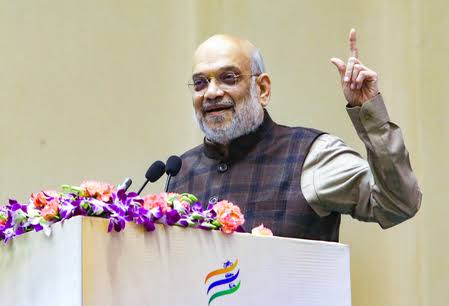
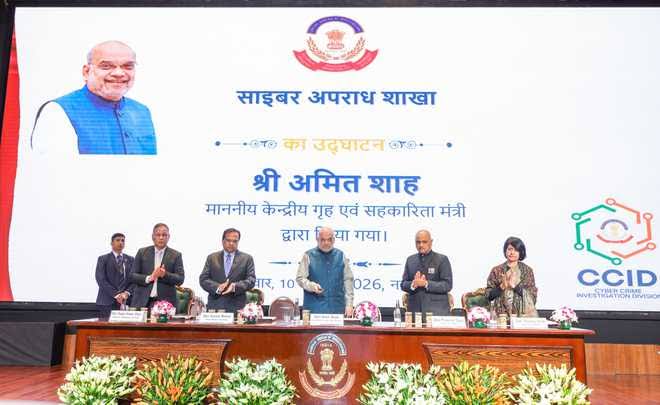
Union Home Minister and Minister of Cooperation Shri Amit Shah on Tuesday underscored the need for coordinated national action to dismantle cyber-enabled fraud networks, as India rapidly advances toward a digitally empowered society. Addressing the National Conference on “Tackling Cyber-Enabled Frauds & Dismantling the Ecosystem” in New Delhi, he said cyber security has now become an inseparable component of national security.
 Digital India’s Growth Brings New Responsibilities
The Home Minister highlighted the unprecedented transformation under the Digital India initiative over the last 11 years. India has grown from 25 crore internet users to over 100 crore users today, while broadband connections have expanded nearly 16 times. Data costs have dropped by 97 percent, making digital access widespread from Parliament to Panchayats through the BharatNet project.
He noted that more than 2 lakh village panchayats are now digitally connected, compared to just 546 a decade ago. India has also emerged as a global leader in digital payments, recording over 181 billion digital transactions in 2024 alone, with a transaction value exceeding ₹233 trillion.
Cybercrime Now Institutional and Organised
Shri Shah warned that cybercrime has evolved from isolated acts into an organised and institutionalised ecosystem. Criminals now exploit mule accounts, telecom misuse, and automated technologies to commit large-scale frauds. He stressed that combating this requires real-time reporting, advanced forensic capabilities, capacity building, and sustained inter-agency coordination.
He said the Ministry of Home Affairs has adopted a multi-dimensional strategy involving law enforcement agencies, financial institutions, telecom operators, regulators, and technology platforms to stay ahead of cybercriminals.
Major Gains in Cybercrime Prevention
The Home Minister lauded the achievements of I4C and partner agencies, stating that ₹8,189 crore has been frozen or returned to victims out of an estimated ₹20,000 crore involved in cyber fraud cases. Between January 2020 and November 2025, the national cybercrime reporting portal received over 23 crore visits and registered more than 82 lakh complaints.
As of December 2025, 62 banks and financial institutions have been onboarded on the I4C platform. The government aims to integrate all banks, including cooperative banks, by December 2026. He also revealed that over 12 lakh SIM cards have been cancelled, IMEI numbers of 3 lakh mobile phones blocked, and 20,853 accused arrested to strengthen cyber security.
Helpline 1930 and Banking Sector’s Role
Shri Shah emphasized the importance of the national cybercrime helpline 1930, urging police forces across the country to ensure adequate call handlers. Delayed responses, he said, often result in irreversible financial losses for victims.
He also called upon all banks to adopt the Mule Account Hunter software developed jointly by the Government of India and the Reserve Bank of India, stating that customer security must be treated at par with financial performance indicators.
Building a Cyber-Secure Future
Highlighting India’s financial inclusion achievements, the Home Minister noted that over 57 crore Jan Dhan accounts have been opened, along with nearly 40 crore RuPay debit cards. Direct Benefit Transfers exceeding ₹48 lakh crore have reached nearly 176 crore beneficiaries, further expanding the digital ecosystem.
He stressed that with 795 institutions connected to I4C, including banks, fintech firms, NBFCs, and e-commerce platforms, swift cooperation and accountability are essential. Awareness campaigns, cyber hygiene, training programmes like CyTrain, and forensic infrastructure development will remain key priorities.