
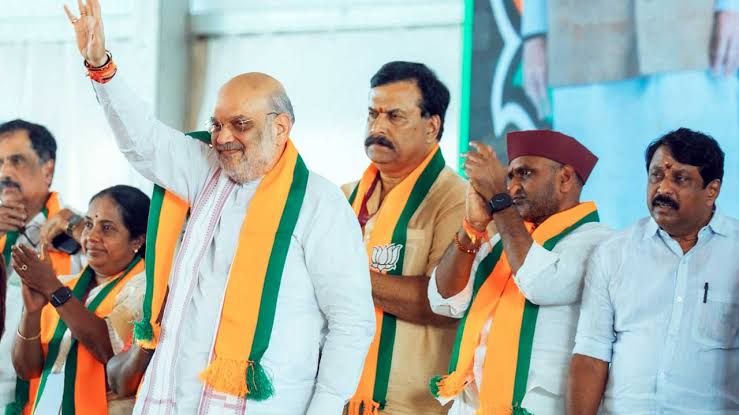
Amit Shah’s ‘Mission Tamil Nadu’: BJP’s Southern Push in 2026
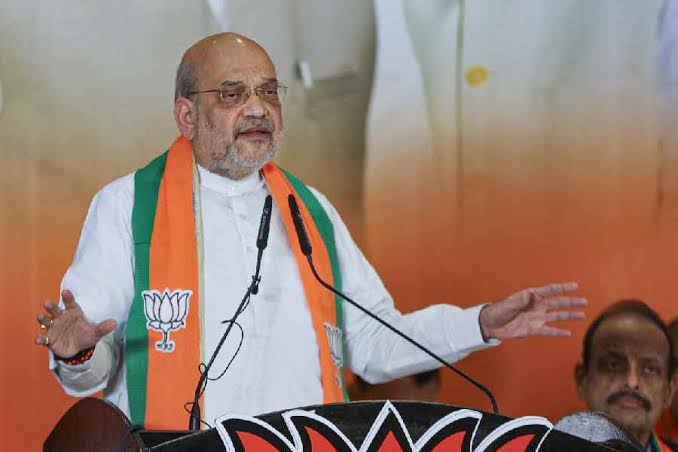

While AIADMK remains the BJP’s major ally in Tamil Nadu, internal factional issues within the NDA coalition—including unresolved tensions between AIADMK leaders Edappadi K. Palaniswami and O. Panneerselvam—have prompted the BJP to strengthen its own organizational base in the state. Shah’s closed-door meetings with district and mandal-level party workers reflect this effort.
More than just an alliance manager, the BJP now wants to position itself as a dominant political force, not just a junior partner to AIADMK. According to political observers, this is a direct attempt to bypass the Dravidian political binary of AIADMK vs DMK.
Religious Mobilisation as a Political Tool
An interesting part of BJP’s Tamil Nadu push involves religious outreach and symbolic politics. The upcoming Lord Murugan Devotees Conference, and the politicisation of temple sites like Madurai Meenakshi Amman Temple, hint at the party’s attempt to weave Hindutva into the Tamil cultural fabric.
This mirrors BJP’s cultural strategy in West Bengal, where the party heavily engaged in Durga Puja celebrations to broaden its voter base. However, Tamil Nadu has a distinctly different socio-political ethos rooted in rationalism, linguistic pride, and anti-caste movements, making religious mobilisation a more complex task.
Alliance Challenges: Cracks Within the NDA
The rift between AIADMK and DMDK, along with family feuds in PMK, further complicates the BJP’s alliance-building. Edappadi Palaniswami’s refusal to reconcile with OPS, Sasikala, or TTV Dhinakaran shows deep-rooted internal resistance. The BJP now faces a double challenge: maintain its existing coalition and expand independently.
With AIADMK losing mass traction post-Jayalalithaa, BJP is trying to occupy the emerging political vacuum, asserting leadership in the NDA and possibly preparing for a scenario where it goes solo.
The Bigger Picture: From State Politics to National Ambition
BJP’s strategy in Tamil Nadu isn’t just about winning seats. It’s also about extending Hindutva politics in South India, where it has historically faced resistance. Following relative successes in Odisha and Delhi, the party now wants to crack the “Dravidian code” and penetrate what has long been seen as its final frontier.
But Tamil Nadu’s electorate has unique concerns. Issues like language rights, Centre-state relations, and NITI Aayog’s role in resource allocation are crucial here. Without addressing these, the BJP’s approach may come off as tone-deaf to local aspirations.
Conclusion: High Stakes, Uncertain Gains
Mission Tamil Nadu is an ambitious project—not just to defeat DMK, but to reimagine Tamil Nadu’s political narrative beyond Dravidian identity. Whether BJP can balance alliance politics, regional sensitivities, and its core ideology remains to be seen. What’s certain is that 2026 will mark a defining moment in southern Indian politics.