
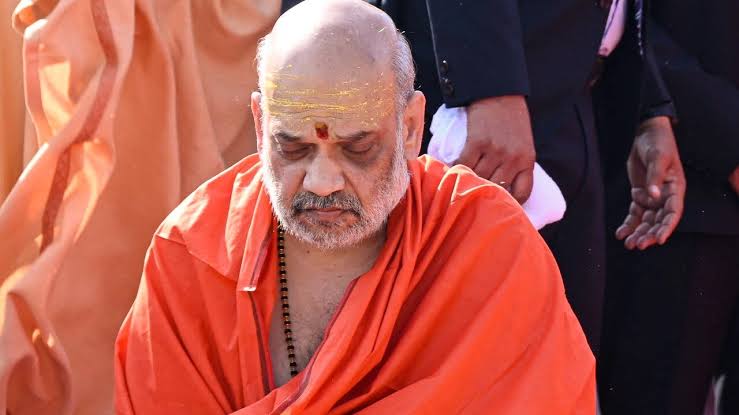
A Glimpse Beyond Politics
Union Home Minister Amit Shah, known for his relentless energy and pivotal political role, has shared a rare personal insight. At 60, the BJP stalwart opened up about what life after politics might look like.
In a candid statement on Wednesday, Shah revealed that his post-retirement vision involves deep immersion in the Vedas and Upanishads. Alongside spiritual learning, he plans to embrace natural farming, advocating for an agriculture system free from chemicals.
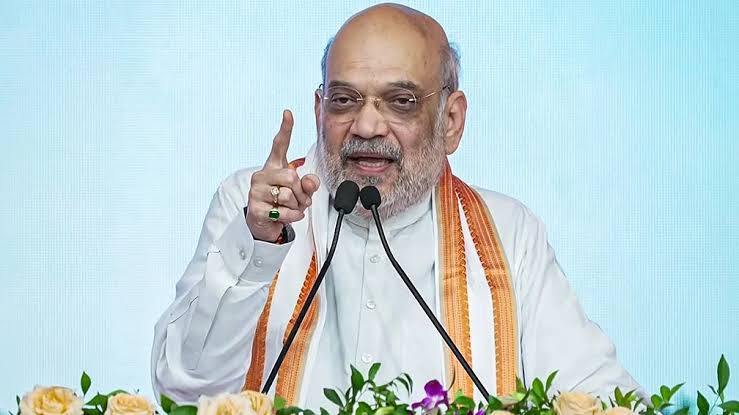

Shah, a key strategist behind many of BJP’s electoral victories, has always portrayed the image of a tireless taskmaster. But now, his words hint at a softer, more reflective side—one drawn toward India’s ancient wisdom and sustainable living.
“I want to spend time studying the Vedas and Upanishads,” he reportedly said. “There is so much to learn from our scriptures. They hold the key to personal peace and collective wisdom.”
Why Natural Farming?
His other focus—organic and natural farming—is not just a personal preference. It is a statement on India’s agricultural future. Shah emphasized the health risks linked to chemical fertilizers and pesticides. He urged wider adoption of traditional farming techniques that nourish the soil and protect consumer health.
His stance aligns with the Centre’s increasing promotion of Natural Farming Mission and Prime Minister Modi’s frequent praise of “zero-budget natural farming.”
India’s Growing Organic Movement
India is already witnessing a shift. According to the Ministry of Agriculture, over 4.4 million hectares are under organic cultivation. The government supports this with programs like Paramparagat Krishi Vikas Yojana (PKVY) and Bhartiya Prakritik Krishi Paddhati (BPKP).
Shah’s backing adds political weight to this movement. “If leaders of his stature promote organic farming,” says agriculturist Ashok Gulati, “it inspires policy and grassroots change.”
The Spiritual Turn in Public Life
Shah’s reference to the Upanishads and Vedas also reflects a broader trend in Indian politics. Many leaders, as they grow older, turn toward philosophy, meditation, and ancient texts.
Prime Minister Narendra Modi too is known to read ancient scriptures and write poetry. Former President A.P.J. Abdul Kalam famously spent time studying the Bhagavad Gita and the Quran.
“The Upanishads teach detachment, humility, and deeper reflection,” says Swami Adityananda of Chinmaya Mission. “For those who’ve lived active public lives, these texts offer silence and wisdom.”
What Retirement Could Look Like
Though he hasn’t announced a retirement date, Shah’s remarks signal his mindset shift. “He’s a planner,” noted a senior BJP leader anonymously. “So, if he’s saying this now, it may mean he’s preparing for that chapter—gradually.”
His likely retreat into farming and philosophy could also shape how future Indian politicians approach retirement—not as an end, but a transition to a meaningful second act.
Key Takeaways
- Amit Shah plans to study the Vedas and Upanishads post-retirement.
- He strongly supports chemical-free, natural farming.
- His views align with India’s national push for organic agriculture.
- This personal shift reflects a broader trend among Indian political leaders.
- Shah’s statements may influence future policy and cultural discourse.
Conclusion: Legacy Beyond Politics
Whether it’s in the silence of a field or the pages of the Upanishads, Amit Shah’s next chapter appears rooted in India’s ancient traditions. For a man who helped reshape modern Indian politics, the turn toward nature and spirituality feels both surprising and symbolic.
As India looks to the future, Shah’s pivot reminds us that even the busiest lives can seek balance. In wisdom. In soil. In silence.