
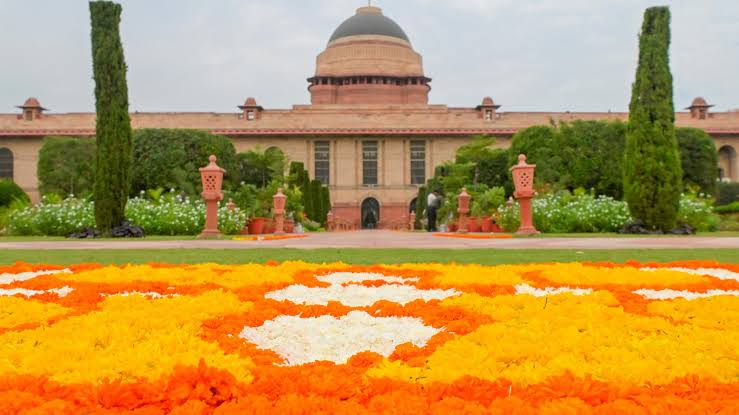


According to official information, Amrit Udyan will be open for visitors six days a week, from Tuesday to Sunday. The garden will remain closed on Mondays, which are designated maintenance days to preserve the lawns, flower beds, and heritage features.
Visitors can enter the garden between 10:00 am and 6:00 pm, with the last entry permitted at 5:15 pm. The garden will also remain closed on March 4, 2026, on account of Holi, in line with standard public holiday protocols.
Free Entry with Online and Walk-In Booking
In a move aimed at encouraging maximum public participation, entry to Amrit Udyan has been kept completely free of cost. Visitors are required to register in advance through the official Rashtrapati Bhavan portal to manage footfall and ensure visitor safety.
For those who arrive without prior registration, Self-Service Visitors’ Registration Kiosks will be available near the entry point to facilitate on-the-spot registration.
Entry Gate and Visitor Movement
To streamline visitor movement and security, entry and exit for all visitors will be through Gate No. 35 of the President’s Estate. The gate is located near the junction where North Avenue meets Rashtrapati Bhavan, making it easily accessible from central Delhi.
Clear signage and on-ground staff will guide visitors, ensuring smooth entry, exit, and crowd management during peak visiting hours, especially on weekends and public holidays.
Shuttle Service for Public Convenience
To further enhance accessibility, a dedicated shuttle bus service will operate from the Central Secretariat Metro Station to Gate No. 35 of the President’s Estate. The service will be available every 30 minutes from 9:30 am to 6:00 pm.
Shuttle buses will be clearly marked with banners reading “Shuttle Service for Amrit Udyan,” helping visitors easily identify the service. The initiative is expected to reduce private vehicle congestion and promote public transport use.
Amrit Udyan: A Symbol of Heritage and Sustainability
Amrit Udyan is renowned for its diverse collection of seasonal flowers, ornamental shrubs, rare plant species, and water features. The garden reflects India’s rich horticultural traditions while incorporating modern sustainability practices in landscaping and maintenance.
The annual opening of the garden has become a cultural event in itself, allowing citizens to engage with the heritage of Rashtrapati Bhavan.