
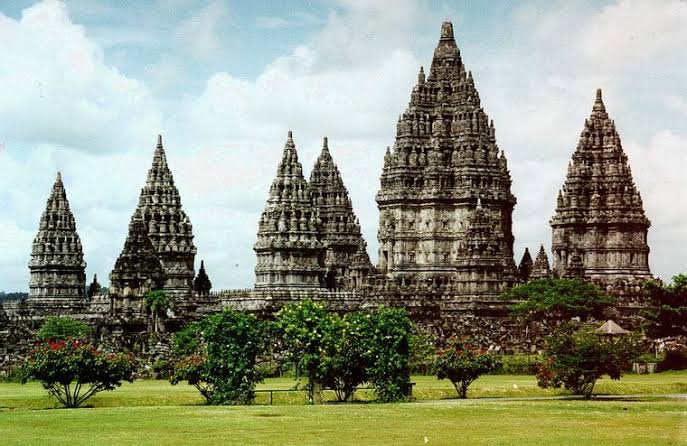


Buddhism, emerging around the 6th century BCE, became one of the earliest vehicles of India’s philosophical export. Simultaneously, Hindu thought spread through the Amravati, Gupta, Pallava, Pala, and Chola dynasties. Temples, literature, and rituals traveled across borders, shaping the religious and cultural identity of these regions.
Iconic sites like Angkor Wat in Cambodia, Prambanan in Java, and the Borobudur temple in Indonesia exemplify India’s architectural and philosophical imprint. In Thailand and Cambodia, local adaptations of the Ramayana and Mahabharata continue to be celebrated in literature, theatre, and festivals. Sri Lanka’s Anuradhapura Stupa, with its Bodhi tree originating from Gaya, India, remains a living testament to Buddhist influence.
Language, Symbols, and Art Forms
Sanskrit and Pali served as the primary carriers of India’s cultural export. Thai, Khmer, Javanese, and Balinese languages retain Sanskrit vocabulary and grammar, while Pali preserved Buddhist texts such as the Tripitaka. Tamil remains officially recognized in Malaysia and Singapore, highlighting India’s linguistic footprint.
Indian culture also spread through art, symbols, and daily practices. Lotus motifs, Garuda, Apsaras, and Nagas, along with mudras like namaste, rituals, festivals, textiles, cuisine, astrology, and even political thought from Chanakya’s Arthashastra, were adopted across these regions.
Foundations of a Peaceful Cultural Spread
Trade, maritime routes, pilgrimages, and migration contributed to this peaceful cultural expansion. However, the deeper reason lies in India’s civilizational ethos. Ancient Indian philosophy encouraged debate, pluralism, and inclusivity. Texts like the Upanishads, Bhagavad Gita, and Brahma Sutras were dialogic in nature, and the Rig Veda’s Nasadiya Sukta promoted inquiry over dogma.
Hinduism’s acceptance of heterodoxy allowed schools like Charvaka and Tantric practices to coexist, while Buddhism and Jainism emerged within this tolerant framework. The Indian principle of “Udaar charitanam vasudhaiva kutumbukam” (the world is a family for the big-hearted) reflects a worldview conducive to cultural exchange without coercion.
Ultimately, India did not rely on conquest to influence the world. Ancient sages embraced the idea that “Ekam sat vipra bahudha vadanti” – truth is one, though wise men call it by different names – ensuring India’s cultural legacy could flourish peacefully across Asia.