 Strategic Push Driven by Changing Threats
Military planners point out that India’s armoured upgrades are a response to an evolving security environment marked by volatile borders, rapid force mobilisation by adversaries and the possibility of a two-front contingency. These challenges have accelerated India’s focus on mobility, firepower and survivability.
The emphasis has also shifted towards self-reliance under the government’s defence indigenisation push, reducing dependence on imports while ensuring faster upgrades and logistical resilience. According to the Ministry of Defence, indigenous platforms now form a growing share of the Army’s combat inventory.
Arjun Mk-1A: India’s Most Powerful Tank
The Arjun Mk-1A stands out as the most heavily armed and protected tank ever inducted by the Indian Army. Designed and developed domestically, it reflects the maturing capabilities of India’s defence research and manufacturing ecosystem.
Armed with a 120 mm rifled gun, the tank can fire a variety of ammunition, including laser-guided missiles, enabling accurate long-range engagements. Advanced fire-control systems, modern sensors and improved crew survivability features significantly enhance its battlefield effectiveness.
Despite its 68-tonne weight, the Arjun Mk-1A maintains high mobility, particularly in desert terrain, with speeds approaching 70 kmph. Enhanced armour protection and AI-assisted target tracking further widen the gap between the Arjun and comparable regional platforms.
T-90 Bhishma: The Army’s Armoured Backbone
Complementing the Arjun is the T-90 Bhishma, which remains the backbone of India’s armoured regiments. Adapted to Indian operational requirements, the tank combines reliability with modern upgrades.
Its 125 mm smoothbore gun, capable of firing anti-tank guided missiles, ensures lethality against enemy armour. Thermal sights, night-fighting capability and reactive armour make it effective across diverse combat scenarios.
With extensive domestic production, the T-90 Bhishma benefits from streamlined logistics and maintenance, allowing rapid deployment during crises. Weighing around 50 tonnes, it offers a balanced mix of firepower, protection and speed.
Zorawar: Filling the High-Altitude Gap
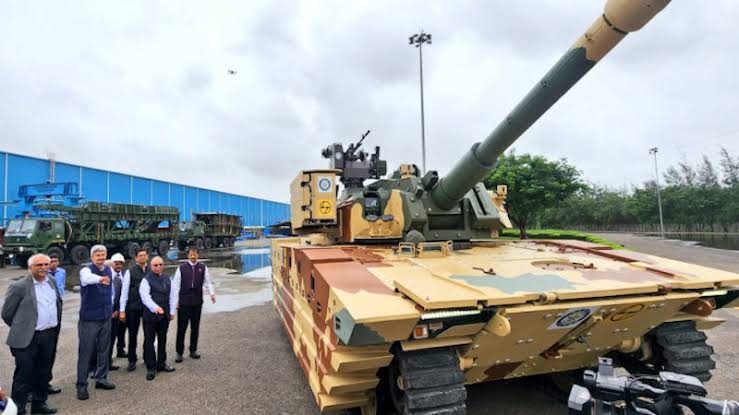
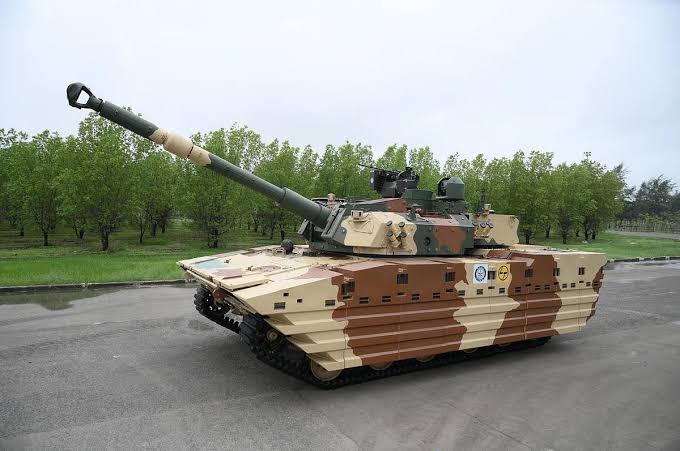
The induction of the Zorawar light tank marks a major milestone in India’s preparedness along its northern borders. Developed by DRDO in collaboration with industry, the tank has been specifically designed for high-altitude warfare.
Weighing approximately 25 tonnes, the Zorawar can operate effectively at altitudes above 4,000 metres, where heavier tanks face severe limitations. Its 105 mm gun, advanced thermal sights and modular armour provide a potent combination of firepower and protection.
Following extensive trials, the Army plans large-scale induction of the platform, strengthening India’s capability to counter similar deployments by China in the Himalayan region.
Infantry-Level and Legacy Systems Still Matter
Beyond tanks, India has enhanced infantry-level anti-armour capabilities through weapons such as the Carl Gustaf recoilless rifle. Lightweight and versatile, it enables foot soldiers to neutralise armoured threats in urban and mountainous terrain.
Meanwhile, upgraded T-72 Ajay tanks continue to serve as dependable reserves. Improved night-fighting systems, communications and protection ensure their relevance in secondary roles.
Together, these systems form a layered armoured posture that enhances both combat readiness and deterrence.