
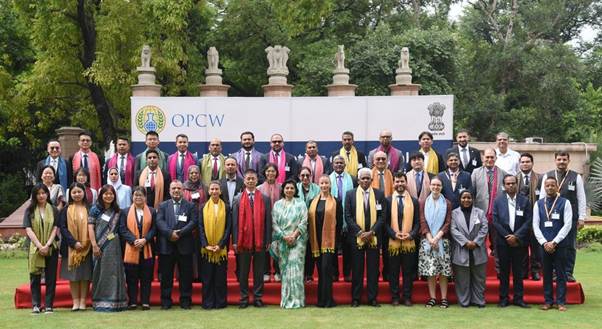
Asia’s Chemical Safety Dialogue Begins in New Delhi
The Organisation for the Prohibition of Chemical Weapons (OPCW) and India’s National Authority Chemical Weapons Convention (NACWC) jointly hosted the 23rd Regional Meeting of National Authorities of States Parties in Asia from July 1–3, 2025 at Vanijya Bhawan, New Delhi.
This landmark event aimed to bolster regional cooperation on the Chemical Weapons Convention (CWC) and foster secure, responsible chemical practices across Asia. The convention, in effect since 1997, is globally enforced by OPCW and boasts 193 member states, committed to verifiably eliminating chemical weapons.


India, a founding signatory of the CWC, plays a pivotal role in advancing its goals. The NACWC leads India’s domestic implementation of the Convention. In 2024, India mentored Kenya’s National Authority under the OPCW Mentorship/Partnership Programme, showcasing its global leadership in chemical security.
Another proud moment came when the Indian Chemical Council (ICC) became the first-ever industry body worldwide to receive the OPCW-The Hague Award 2024, recognizing its excellence in promoting chemical safety and compliance.
Delegates from 24 Asian Nations Convene
The event saw participation from 38 delegates representing 24 Asian countries, including Australia, China, Iraq, Singapore, Vietnam, and many others. The United Nations Regional Centre for Peace and Disarmament in Asia and the Pacific (UNRCPD) also joined the gathering.
Sessions explored:
-
National legislative frameworks
-
Role of stakeholders like the chemical industry
-
Use of Artificial Intelligence in chemical safety
-
Synergies with UN Security Council Resolution 1540
The event focused on sharing best practices, tackling national-level challenges, and enhancing mutual cooperation.
India’s Role in Advancing Regional Capacity
The Ministry of External Affairs and Cabinet Secretariat, Govt. of India, emphasized the need for collaborative regional action. The gathering facilitated in-depth discussions about national implementation hurdles and successful interventions.
Through interactive sessions and expert panels, countries discussed tools to enforce the Convention, safeguard chemical facilities, and integrate digital and AI-driven solutions into safety protocols.
What This Means for Asia’s Chemical Security
By enabling constructive dialogue and peer learning, the regional meeting enhances the ability of Asian nations to implement the CWC effectively. It also promotes:
-
Better legislative alignment
-
Chemical industry participation
-
More robust chemical monitoring and enforcement systems
India’s leadership and the active involvement of OPCW suggest a renewed regional commitment to peace, safety, and disarmament.
Looking Ahead
With chemical threats evolving and the geopolitical climate becoming more complex, the OPCW’s collaborative approach—facilitated by meetings like this—ensures proactive and harmonized action among member states.
India remains committed to driving policy-level and technological innovation to uphold global chemical safety standards.