
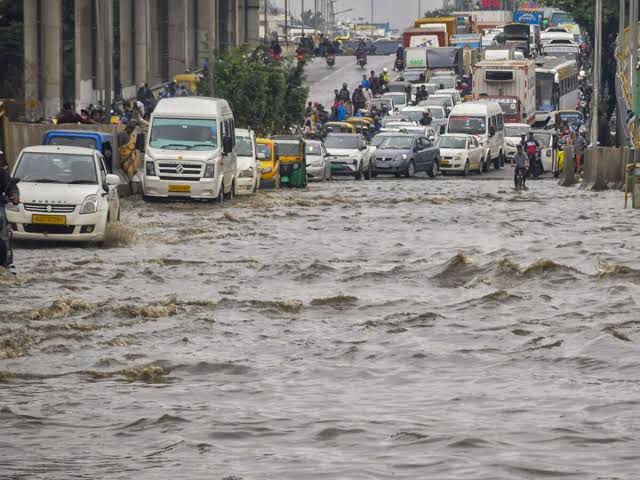
Bengaluru, along with several districts in Karnataka, is battling intense pre-monsoon rains that have brought the city to a near standstill. Streets have turned into streams, homes are inundated, and the daily lives of thousands have been thrown into disarray. As residents wade through waist-deep waters and navigate gridlocked roads, the city’s resilience is once again being tested.


In the past 24 hours alone, Bengaluru received a significant 105.5 mm of rainfall—its second-highest in over a decade for the month of May. The downpour began early on May 19 and continued through the following morning, with the HAL airport recording 46.5 mm and the city station registering 37.2 mm. This intense rainfall has led to widespread waterlogging in key areas, especially around the under-construction Central Silk Board metro station, where commuters faced severe delays and disruptions.
Authorities have responded with urgency. The Bruhat Bengaluru Mahanagara Palike (BBMP) Chief Commissioner M. Maheshwar Rao conducted spot inspections in severely affected areas such as Silk Board Junction, urging officials to implement both immediate relief and long-term solutions. Meanwhile, zonal commissioners were seen assessing the flood-hit localities under their jurisdiction, a small but visible effort toward addressing the grievances of suffering residents.
Despite these measures, many flood-prone areas like Sri Sai Layout in Mahadevapura and Rainbow Drive Layout near Sarjapur Road continue to reel under recurring floods. These localities have become unfortunate symbols of administrative neglect, where families are forced to evacuate and spend significant amounts repairing water damage year after year.
The India Meteorological Department (IMD) has issued an orange alert for Bengaluru, warning of very heavy rainfall in the range of 8 to 10 cm, likely accompanied by gusty winds. More alarmingly, a red alert has been declared for the coastal districts of Dakshina Kannada and Udupi until May 22, with advisories asking fishermen to stay ashore and avoid venturing into the sea until May 23 due to turbulent conditions.
In Chikkamagaluru, the district administration has urged residents to avoid low-lying areas and riverbanks, given the increased risk of landslides. The district, along with several other parts of Karnataka, remains under red and yellow alerts in the coming days, underscoring the need for heightened vigilance.
Traffic across Bengaluru has been another casualty of the relentless rains. Major junctions like Ibbluru, Hoodi Bridge, and Pai Layout reported heavy waterlogging, while multiple vehicle breakdowns and even tree falls added to the chaos. Commuters were forced to take alternate routes, with temporary road closures along critical stretches like Hosur Road, causing massive delays.
The state government, led by Chief Minister Siddaramaiah, has begun reviewing rain-relief operations from the BBMP war room. He emphasized the need to clear encroachments and silt from stormwater drains and promised action against violators. However, the recurring nature of the floods has drawn sharp criticism from the opposition BJP, which demanded ₹1,000 crore in relief funds and held the ruling government accountable for the situation, citing it as a blow to Bengaluru’s global image.
Amid all this, there are stories of quiet heroism and endurance. In Sai Layout, residents were evacuated using boats and tractors as floodwaters entered their homes for the second time this year—even before the official onset of the monsoon. Civic volunteers and officials distributed food and water in the worst-hit areas, providing some relief to those struggling with the immediate aftermath.
As the rains show no signs of abating and forecasts predict more showers in the days ahead, Bengaluru continues to grapple with nature’s fury. For many, this is a stark reminder of the urgent need for better urban planning, resilient infrastructure, and above all, empathetic governance that prioritizes people’s safety over cosmetic development.