
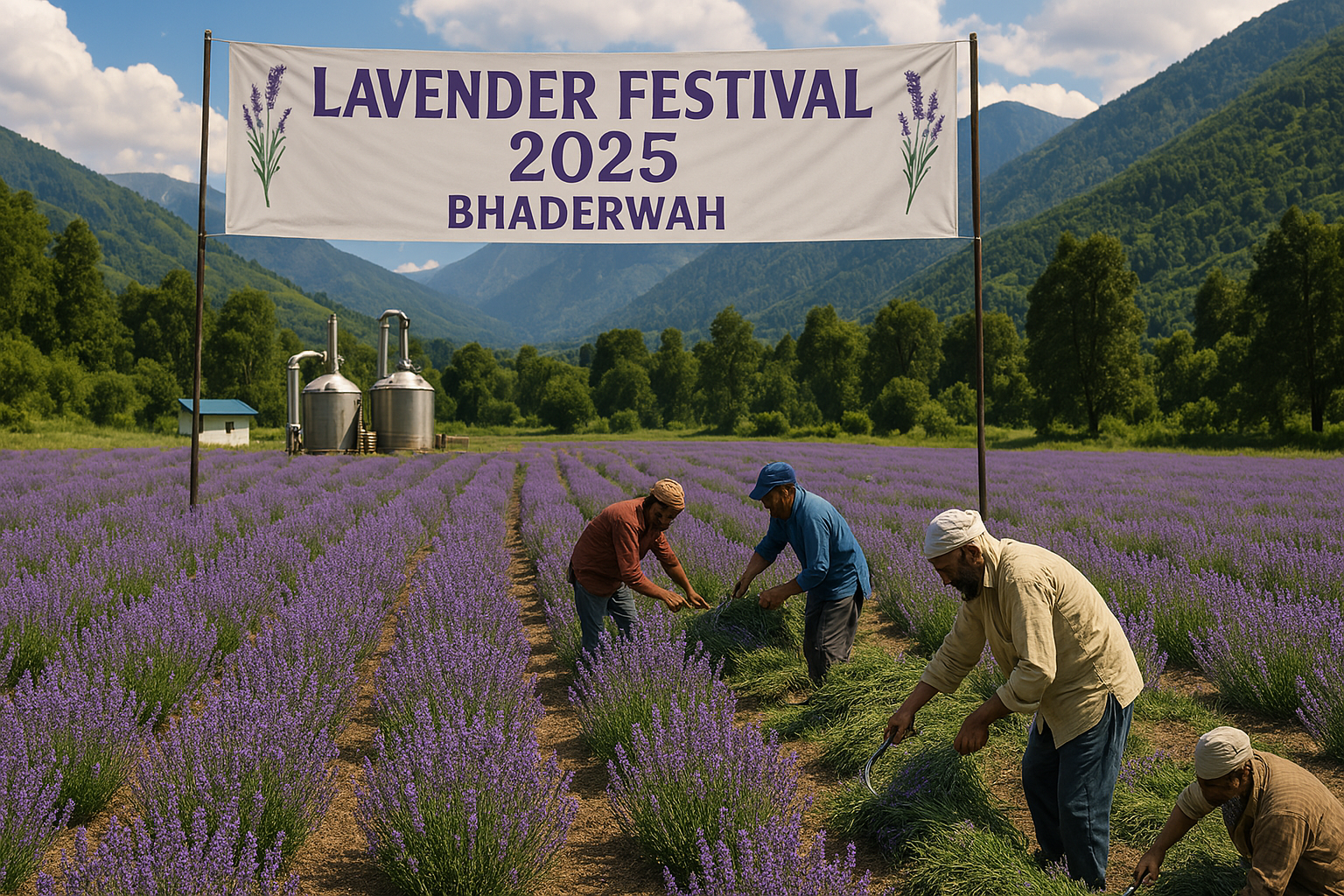
Bhaderwah, Jammu & Kashmir – June 1, 2025:
Lavender is no longer just a flower—it’s now a symbol of rural transformation and entrepreneurial success in Bhaderwah, a picturesque town in Jammu & Kashmir. Union Minister of Science and Technology, Dr. Jitendra Singh, inaugurated the two-day Lavender Festival 2025, organized by CSIR–IIIM Jammu, celebrating this remarkable success story.
“Lavender has given Bhaderwah a national identity and a role in India’s economic journey,” said Dr. Singh during the event. Once a quiet, lesser-known hilly town, Bhaderwah has emerged as the epicenter of India’s “Purple Revolution,” leading a new wave of rural, agriculture-based startups.
Lavender: From Local Crop to National Icon
The festival highlighted how lavender farming has transformed lives. Young entrepreneurs in the region are now earning an average of ₹65 lakh annually through lavender cultivation and related products like essential oils, perfumes, and wellness items.
With over 50 lavender distillation units operating in Bhaderwah, products are being sold in states such as Maharashtra, and interest is growing in neighboring states like Himachal Pradesh, Uttarakhand, and even the Northeast. Delegations from these states attended the festival to learn from Bhaderwah’s success.
“This model proves that StartUps aren’t just about software or big cities. You don’t need a foreign degree or tech background—just passion, dedication, and support from institutions like CSIR-IIIM,” Dr. Singh said.
PM Modi’s Vision Sparks a Rural Startup Movement
Dr. Singh credited Prime Minister Narendra Modi for bringing national attention to Bhaderwah’s lavender farming through his popular radio show ‘Mann Ki Baat’. “When the Prime Minister spoke about Bhaderwah for nearly ten minutes, it was the biggest endorsement we could ever imagine,” he said.
He emphasized that this success aligns with PM Modi’s Startup India and Standup India vision, launched from the Red Fort. “It sparked the entrepreneurial spirit in remote regions that were previously overlooked on India’s development map,” Singh added.
A Model of Inclusive and Scalable Growth
Dr. Singh also highlighted how this agricultural startup model is inclusive and scalable. Contrary to the belief that startups are for the young, he announced that next year’s festival will include a special exhibition featuring entrepreneurs over 60.
“This isn’t just a local experiment—it’s a national template,” he said. The lavender success story is expected to encourage more agricultural innovation across India.
He also stressed that India’s economy has grown from the 5th largest to the 4th largest globally, with sectors like lavender farming playing a key role in job creation and value addition.
New Economic Frontiers Amid Global Challenges
Responding to skepticism about India’s economic strength during geopolitical challenges, Dr. Singh said, “Even amid critical operations like Sindoor, our economy has remained strong. Lavender is just one of the many examples of how India is building economic resilience from the grassroots.”
Festival of Fragrance and Future
Dr. Singh praised the efforts of Dr. Zabeer and the CSIR–IIIM team for organizing such a unique and successful event. He invited visitors to explore the lavender fields in the next 10–15 days, during peak bloom, and meet the farmers and entrepreneurs shaping this fragrant revolution.
Bhaderwah’s purple hills are no longer just scenic—they’re symbolic of a new India where rural innovation, sustainable agriculture, and grassroots entrepreneurship bloom together.